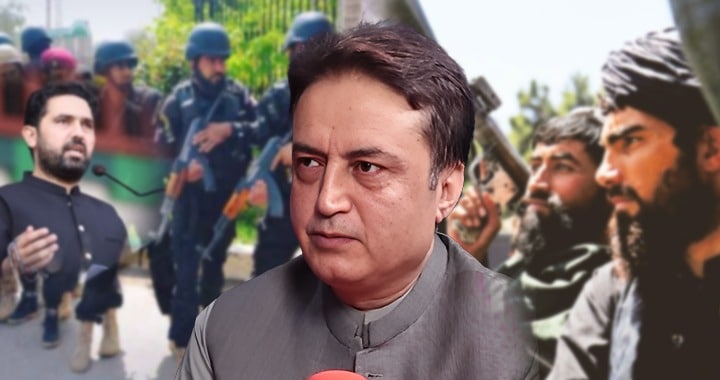
(Arif Yousafzai)
For more than two decades, I have been tracking the Taliban, Al-Qaeda, and the constellation of militant organizations that have carved their influence across Pakistan’s northwest. I have watched them rise, retreat, regroup, and return stronger, smarter, and more determined each time. I say this not to boast of experience, but to warn with the authority that only sustained observation can provide: what we are witnessing today in Khyber Pakhtunkhwa, and particularly in Peshawar, is not a routine escalation. It is the opening chapter of something far more dangerous, and our governments federal and provincial are sleepwalking through it.
Let me be direct. The Tehrik-i-Taliban Pakistan is not the same organization it was five years ago. Its operations are no longer sporadic, reactive, or confined to the remote tribal belt. They are organized, strategic, and increasingly urban. When TTP militants drive onto Peshawar’s Ring Road, film themselves, and upload those videos to social media, they are not being reckless. They are making a deliberate statement: We are here. This city is within our reach. And no one is stopping us.
That statement should shake every elected official in this country out of their comfortable complacency. Sadly, it has not.
To understand the gravity of the present threat, one must appreciate how dramatically the nature of these operations has changed. In the early years of Pakistan’s counterterrorism struggle roughly from 2002 onwards militancy was largely concentrated in Waziristan and the tribal areas. After the Red Mosque operation in 2007, everything changed. Maulana Fazlullah took over Swat, turning the once-peaceful valley into a theatre of terror. Umar Khalid Khurasani emerged as a mobile commander of devastating effectiveness. Bajaur, Mohmand, Malakand, Buner, Dir, Chitral one by one, these areas fell under the shadow of the gun.
Major military operations pushed the militants back. Peace returned, tentatively and unevenly. Civilians came home. But that peace was never consolidated, and that failure was not military it was civilian. Pakistan’s security forces did their job. It was the civilian governments that failed to follow through, to rebuild institutions, to deliver governance, to give communities a stake in their own stability. When the soldiers withdrew and the dust settled, the political machinery that should have filled the vacuum simply wasn’t there.
And so the militants returned. They always do, when the space is left open for them.
Today, the TTP has rebranded its operational philosophy. Gone are the days of the Al-Khandaq operations a defensive, trench-oriented posture. The new campaign, launched under the banner of Operation Khyber, is explicitly offensive. Their own press releases have declared it: they will go behind enemy lines, into the forts, into the compounds, into the very bases of Pakistan’s security apparatus. The attack on the Fateh Khel police compound in Bannu, the assault on Musa Fort in Hassan Khel carried out simultaneously from three directions the killing of security personnel, the taking of prisoners whose videos were then broadcast to the world: these are not the acts of a ragged insurgency. This is a military organization operating with tactical precision.
At the same time, Hafiz Gul Bahadur’s network has reorganized with similar discipline. Daesh continues to strike at carefully selected targets. The militants are not competing with each other in these spaces — they are, in effect, creating a combined pressure on the state that the state is struggling to absorb.
Here is what frightens me most, as someone who has spent a professional lifetime studying these movements: Peshawar, the provincial capital of Khyber Pakhtunkhwa, is being approached from multiple directions simultaneously.
From the Charsadda road corridor, through Tangi and beyond. From the Khyber belt to the west. From the southern approaches that touch the city’s outskirts. Areas like Matani, Hassan Khel, and Muzaffarabad which had some militant presence historically are now more deeply under TTP influence than ever before. The militants are not storming the city gates. That is not how they operate. They infiltrate, establish presence, cultivate networks, and then when the moment is right they act.
I have watched this pattern repeat itself across the northwest. The early signs are always the same: videos on roads, shadow governance in neighbourhoods, extortion rackets replacing state authority. By the time the government recognizes what has happened, the cost of reversing it has multiplied tenfold.
If the provincial government does not act urgently and decisively, I genuinely fear that within a year, Peshawar will witness attacks of a scale and character that will shock even those of us who have been watching this deterioration unfold.
I want to be fair, and I want to be precise. Pakistan’s security forces the army, and even the police despite being wholly inadequate for this task are fighting. They are taking casualties. In North Waziristan, operations are ongoing, key commanders are being eliminated, fighters are being killed in significant numbers. The army has not abandoned the field.
But the army cannot do this alone. It never could. Sustainable peace requires governance, and governance is the responsibility of elected civilian authorities.
What, then, has the PTI-led provincial government delivered?
Chief Minister Suhail Afridi has spoken of Jirgas. He has convened a few gatherings in comfortable drawing rooms and called it engagement. His provincial assembly committee on peace produced a roadmap of fifteen to seventeen points that has since been quietly forgotten by the committee’s own chairman, it would seem. When pressed on military operations, Afridi says he does not believe in them. He argues that operations would hurt people from his own region, his own community. This may be a politically understandable position. But it is not a governing position. A government cannot simultaneously claim authority and refuse the responsibilities that come with it.
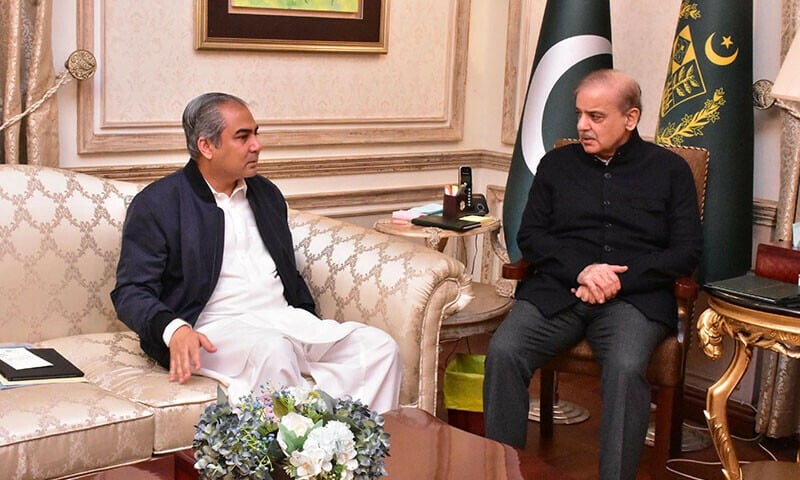
Meanwhile, the Chief Minister meets quietly secretly with federal Interior Minister Mohsin Naqvi and senior military commanders. Why secretly? Because his own party, his own voters, his own provincial workers have been conditioned since Imran Khan’s arrest to view the military establishment as the enemy. If these meetings were held openly, Afridi would face the fury of his own base. So he deceives his supporters to do what governance requires, while providing none of the public accountability that governance demands.
This is not leadership. This is political survival dressed up as administration.
The provincial government has, in effect, outsourced the security of Khyber Pakhtunkhwa entirely to the federal military while providing nothing in return: no complementary intelligence, no civilian counterterrorism strategy, no community engagement programs, no rehabilitation pathways, no economic initiatives to pull young men away from recruitment pipelines. They have left the people of Pakhtunkhwa to Allah’s mercy which is a beautiful sentiment for a private individual but an unconscionable dereliction for an elected government.
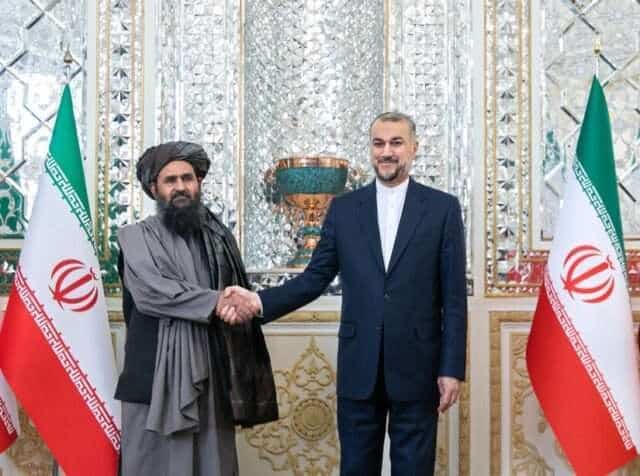
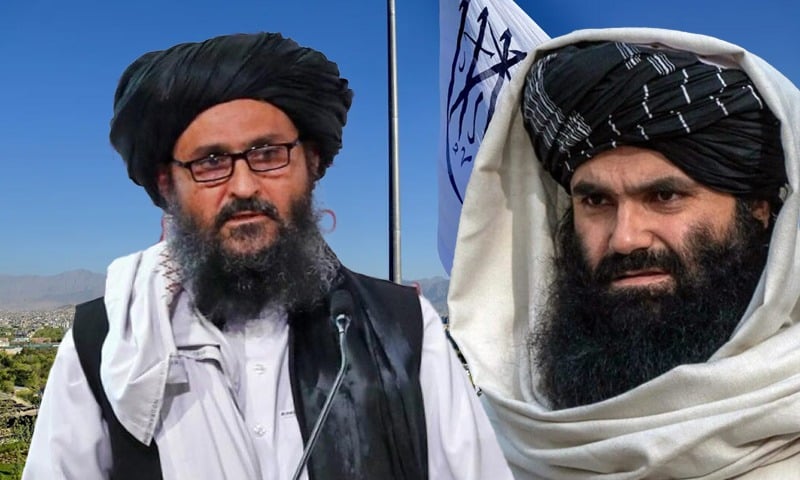
No honest analysis of this situation can ignore the regional dimension. Russia has recently issued a report expressing alarm at the access international terrorist organizations are gaining to advanced technology inside Afghanistan. This is not a peripheral concern. Afghanistan under the Islamic Emirate has become a vast, ungoverned sanctuary where multiple militant organizations TTP, Daesh, the East Turkistan Islamic Movement, Uzbekistan Islamic Movement operate with varying degrees of Taliban tolerance or active support.
Russia’s concerns center on Daesh in particular, which Moscow believes enjoys covert American sponsorship and which threatens to project violence northward into the Central Asian republics and ultimately toward Russian territory. China’s anxieties focus on the ETIM and its potential to inflame the Xinjiang situation. Both powers have expressed reservations. Both powers paradoxically are simultaneously deepening their economic and diplomatic engagement with Kabul. China is investing in Afghanistan, has helped construct the Wakhan Corridor, and is pressing Pakistan hard to stabilize its border and resume trade. Russia has removed certain Taliban figures from its sanctions lists.
This is realpolitik in its rawest form: condemn with one hand, engage with the other. The world is reorganizing itself into competing poles — a Western bloc anchored by America and NATO, an Eastern bloc anchored by China and Russia and the geography of Pakistan and Afghanistan sits at the precise fault line between them. This is simultaneously our greatest strategic curse and, if managed wisely, our most significant potential asset.
But that potential cannot be realized as long as our own house is on fire.
Pakistan, China, and Russia must collectively create the conditions for peace and economic progress in this region. I believe sincerely that prosperity is the most powerful long-term antidote to militancy. When communities have livelihoods, when young men have futures, when families have security, the appeal of the gun diminishes. CPEC and its expansion represent a genuine opportunity but only if Pakistan can demonstrate that it can maintain order on its own territory.
In the short term, the provincial government of Khyber Pakhtunkhwa must end its abdication. It must choose a path negotiation, confrontation, or some combination and pursue it with institutional commitment and public accountability. It must rebuild civilian governance in areas that have been ceded to militant influence. It must invest in the police and local administration, not merely as instruments of order but as representatives of a state that people have reason to trust.
The military will keep fighting. That is not in question. But a war fought only by soldiers, without political strategy, without civilian consolidation, without community ownership, is a war without an exit.
I have been covering this story for twenty-five years. I have seen operations succeed and their gains evaporate. I have seen peace deals signed and broken. I have seen commanders killed and replaced within weeks by men equally dangerous. The one constant in all of this has been the failure of civilian governance to match the sacrifice of the men and women in uniform.
The storm is gathering over Peshawar. The question is not whether the government can see it coming. The question is whether, this time, they will finally choose to act.