
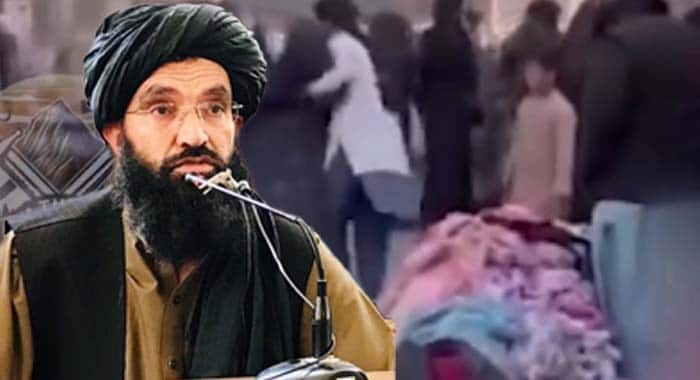
The Taliban’s morality authorities in Herat have dismissed reports that women were detained for allegedly violating the group’s dress code, even as eyewitness accounts, protester testimonies, and international concerns continue to paint a sharply different picture.
Azizur Rahman Muhajir, head of the Taliban’s Ministry for the Promotion of Virtue and Prevention of Vice in Herat, claimed that no woman had been arrested over hijab-related issues and insisted that women in the province were fully complying with the Taliban’s dress requirements.
In an audio statement circulated on Tuesday, he described reports of arrests as propaganda, saying that no woman had been detained and that concerns regarding enforcement of the Taliban’s dress code were unfounded.
His remarks come amid growing reports that Taliban morality police have detained several women across Herat in recent days, accusing them of failing to comply with the group’s interpretation of Islamic dress requirements.
The conflicting narratives raise a question increasingly heard both inside and outside Afghanistan: if Taliban officials are correct, does that mean every other source is wrong?
Are local residents lying? Are eyewitnesses fabricating events? Are protesters inventing grievances? Are international rights monitors mistaken? Are the United Nations, the United States, the European Union, Russia, China, Pakistan, and numerous regional and global actors all misunderstanding the situation, while the Taliban alone possess the complete and unvarnished truth?
The question has gained renewed attention following reports of public demonstrations in Herat. Residents reportedly took to the streets to protest what they described as increasing restrictions on women, enforcement of the all-encompassing burqa, and the detention of women accused of violating Taliban dress regulations.
Witnesses reported that Taliban forces moved to disperse the demonstrations and arrested dozens of participants. Some accounts claim approximately 30 people were detained during the protests.
Eyewitnesses further alleged that force was used against demonstrators and that Taliban gunfire resulted in casualties, with reports indicating that at least one person was killed and several others injured. Independent verification of all claims remains difficult due to restrictions on media access and the operating environment inside Afghanistan.
The controversy comes as international scrutiny of the Taliban’s treatment of women continues to intensify. Since returning to power in 2021, the Taliban have repeatedly rejected criticism of their policies toward women and girls, arguing that their measures are consistent with Islamic principles and Afghan cultural values.
Critics, however, maintain that restrictions on education, employment, movement, and public participation have severely curtailed the rights of Afghan women and girls.
Against this backdrop, the latest denial from Herat is unlikely to end the debate. Instead, it adds to a growing list of disputed claims in which Taliban officials reject allegations that are simultaneously being reported by residents, witnesses, activists, and international organisations.
Whether the Taliban’s version of events or the accounts of local residents prove more accurate, the widening gap between official statements and reports emerging from the ground continues to fuel questions about transparency, accountability, and the realities facing Afghan women under Taliban rule.



