
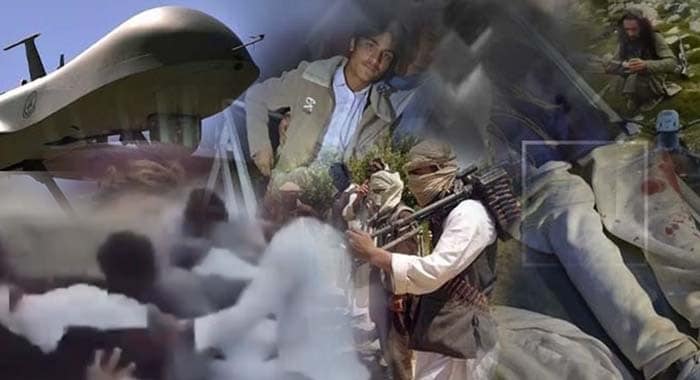
The attack, by the terrorists of Fitna al-Khwarij, on a volleyball tournament in Tank’s Nandor village was not merely another incident of violence in a troubled district. It was a direct assault on the idea of normal life itself, where communities gather, young people participate in sports, and families spend time together without fear.
According to police officials, armed terrorists opened indiscriminate fire during a volleyball tournament, triggering panic among participants and spectators. Four civilians were injured, while reports also emerged about additional casualties, though final details were still being verified. The attack forced young players, elders, and spectators to run for their lives as bullets shattered a peaceful public gathering.
The choice of target reveals a disturbing pattern. Terrorist groups operating in Pakistan have repeatedly demonstrated that their objective is not limited to attacking security personnel or state institutions. They seek to intimidate ordinary citizens, disrupt social activities, and create an atmosphere where people hesitate to leave their homes even for routine gatherings.
A volleyball tournament in a village represents exactly the kind of community activity that terrorists want to destroy. Such events bring people together, strengthen social bonds, and reflect resilience in areas that have suffered from years of terrorism. By attacking these gatherings, terrorists attempt to spread fear beyond the immediate victims and send a message that no place, no occasion, and no segment of society is beyond their reach.
This incident comes at a time when southern districts of Khyber Pakhtunkhwa have once again witnessed increased terrorist activity. Areas including Tank, Bannu, Lakki Marwat, Dera Ismail Khan, North and South Waziristan have repeatedly remained under pressure from terrorist networks attempting to exploit geographical challenges, cross-border sanctuaries, and local vulnerabilities.
The recent failed suicide attack on a joint police check post in Tank further highlights the intensity of the threat. Terrorists attempted to breach security by using an explosive-laden vehicle, but their plan was foiled by the timely response of security personnel. The subsequent operation in the area resulted in the elimination of attackers involved in the assault.
Similarly, Bannu has also witnessed sustained counterterrorism activity in recent weeks, with security forces and law enforcement agencies conducting operations against terrorist networks. These developments indicate that the challenge is not confined to isolated incidents but represents a broader campaign by terrorist groups seeking to regain influence in parts of the province.
The repeated targeting of civilians also raises important questions about the changing tactics of terrorist organizations. When security installations become harder to penetrate because of improved intelligence and operational capabilities, terrorists often shift focus toward softer targets. Markets, schools, public gatherings, religious places, and community events become attractive targets because attacks against civilians create greater psychological impact.
However, the response cannot rely only on security operations after attacks have taken place. Intelligence-based operations remain essential, but long-term stability requires stronger civilian institutions, improved governance, effective policing, and greater engagement with local communities.
District administrations and law enforcement agencies need to ensure that areas cleared through security operations do not become vulnerable again. The experience of various parts of Khyber Pakhtunkhwa shows that military operations can eliminate immediate threats, but maintaining peace requires capable local institutions that can prevent terrorists from returning.
The people of Tank and other affected districts have repeatedly demonstrated courage and resilience despite facing years of violence. Their continued participation in social and community activities reflects a refusal to surrender public spaces to terrorists. Protecting this resilience is itself a crucial part of counterterrorism efforts.
The attack on a volleyball tournament was therefore not just an attack on a group of civilians. It was an attempt to attack confidence, community life, and the hope of stability. The challenge for the state is to ensure that terrorists fail in their broader objective of turning ordinary life into a permanent atmosphere of fear.



