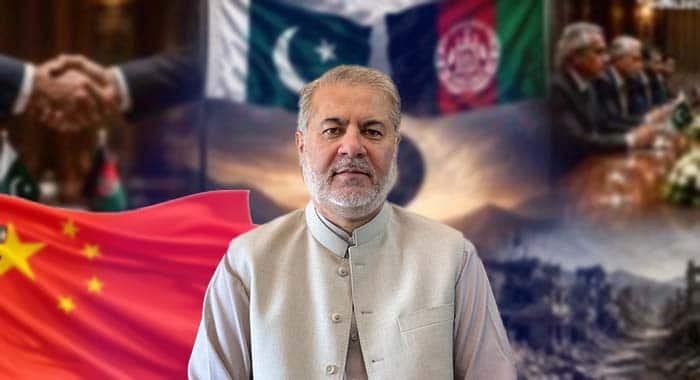
(Mushtaq Yusufzai)
For much of the past three years, relations between Pakistan and Afghanistan have been defined by mutual suspicion, escalating security concerns, and a growing sense that both countries were moving toward a dangerous confrontation. Every major terrorist attack inside Pakistan reignited accusations against Kabul, while every Pakistani military response deepened resentment across the border. The relationship appeared trapped in a cycle from which neither side could escape. Yet today, away from television cameras and political rhetoric, a different story is unfolding one that could significantly alter the future of the region.
Recent reports suggesting that Taliban supreme leader Hibatullah Akhundzada has directed Pakistani Taliban militants to halt major attacks inside Pakistan have attracted considerable attention. While official confirmation remains absent and much of the information comes through informal channels, conversations with sources familiar with recent diplomatic engagements suggest that important developments have indeed taken place behind the scenes. The significance of these developments lies not in whether a particular directive was issued, but in the broader reality that the Afghan Taliban appear to be taking Pakistan’s security concerns more seriously than at any point since their return to power in August 2021.
This shift did not occur in isolation. It emerged after months of mounting pressure on both Kabul and Islamabad. Relations had deteriorated to such an extent that military confrontation seemed increasingly possible. Pakistan repeatedly accused the Tehreek-e-Taliban Pakistan (TTP) of using Afghan territory to organize attacks, recruit fighters, and maintain logistical networks. Afghan officials rejected many of these allegations, but the security situation continued to worsen. Major attacks in Khyber Pakhtunkhwa and other parts of Pakistan intensified public pressure on Islamabad to take decisive action.
At several points, many observers believed Pakistan would resort once again to airstrikes against militant targets inside Afghanistan. Such actions had occurred in the past and were widely discussed whenever violence surged. Yet despite several deadly incidents in Bannu, Lakki Marwat, Dera Ismail Khan and other districts, Pakistan refrained from the type of military response many expected. This restraint was not accidental. It reflected the existence of an ongoing diplomatic process that has largely remained hidden from public view.
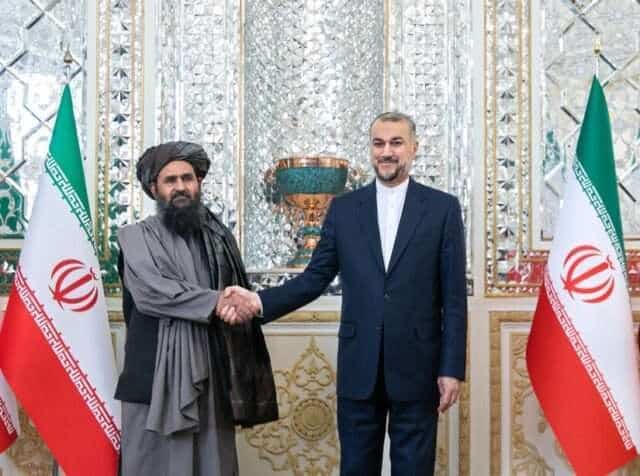
China has emerged as a key facilitator in this process. Beijing’s growing involvement reflects its strategic interest in regional stability, economic connectivity, and the prevention of extremist spillover into neighboring regions. Recent trilateral engagements involving Pakistan, Afghanistan and China appear to have created an environment in which difficult security issues could be discussed candidly. According to information available from multiple sources, these discussions produced a degree of progress that neither Islamabad nor Kabul was prepared to publicize. All parties understood that premature disclosure could undermine sensitive negotiations and create political complications.
The central issue in these discussions has been the presence of Pakistani Taliban fighters and their families inside Afghanistan. For years, Pakistan maintained that militant infrastructure located near the border enabled cross-border attacks. Despite extensive fencing efforts by Pakistan, the rugged geography of the frontier continues to present significant challenges. Smuggling routes that have existed for generations cut through mountains and valleys, providing opportunities not only for traders but also for militant groups seeking to move personnel and resources across the border.
What appears to have changed is Kabul’s willingness to address this issue in practical terms. Sources indicate that Afghan authorities have encouraged or facilitated the relocation of certain TTP-associated families and networks away from sensitive border regions. Areas stretching from Nuristan and Kunar to Nangarhar, Paktia and Paktika have long been viewed by Pakistani security officials as critical operational zones for militant activity. Relocating these networks deeper into Afghan territory does not eliminate the threat, but it complicates militant logistics and reduces the ease with which fighters can move across the border.
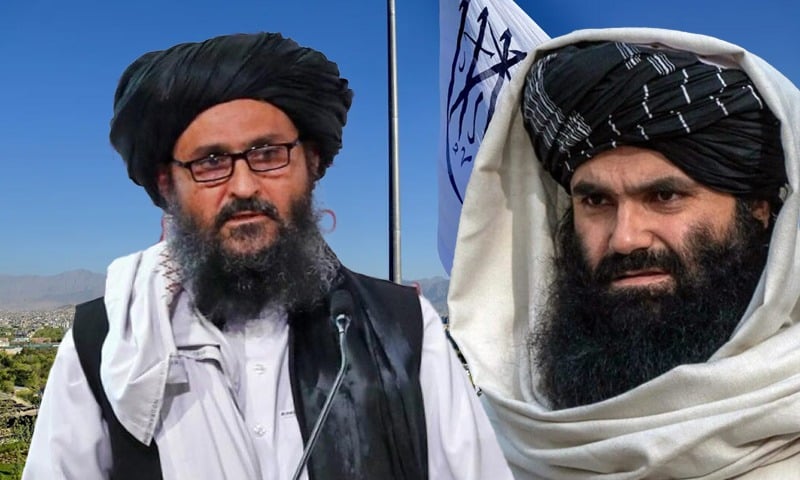
Such measures should not be viewed as a complete solution. Militant organizations are adaptive and resilient. However, they represent an acknowledgment by Kabul that unchecked militant activity threatens not only Pakistan’s security but also Afghanistan’s own strategic interests. The Taliban leadership increasingly understands that the future of Afghanistan depends on regional stability rather than perpetual confrontation.
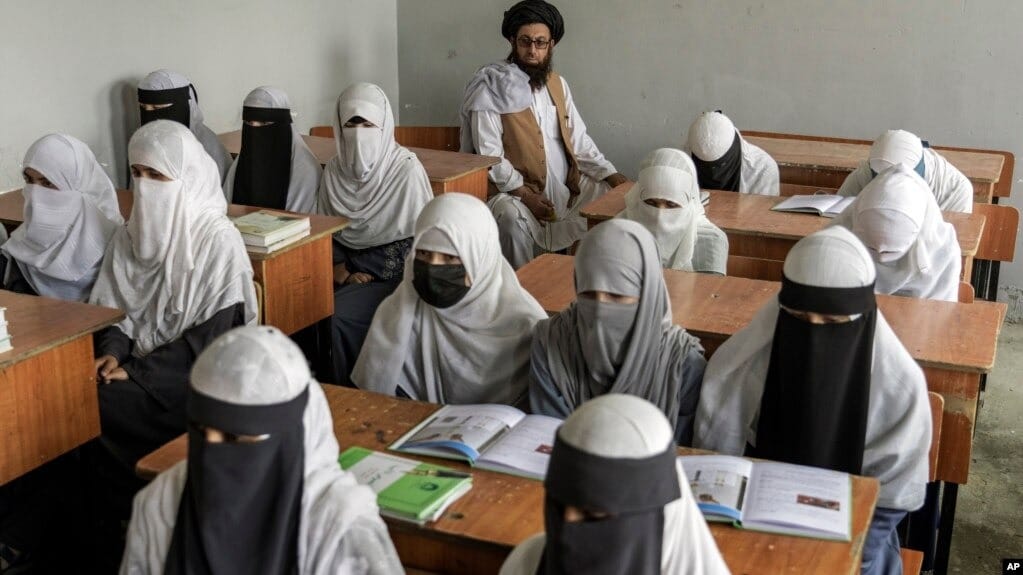
This realization is closely linked to Afghanistan’s economic realities. Nearly four years after the withdrawal of foreign forces, Afghanistan remains trapped in a severe economic crisis. Millions of Afghans continue to face poverty, unemployment and uncertainty. International aid has declined dramatically. Foreign investment remains limited. Diplomatic recognition remains elusive. Under such conditions, Afghanistan’s leadership faces immense pressure to create opportunities for economic recovery.
The country possesses substantial untapped mineral wealth, including deposits of lithium, copper, rare earth elements, iron ore and natural gas. Various international assessments have estimated that these resources could be worth hundreds of billions, if not trillions, of dollars. Yet mineral wealth beneath the ground means little without the stability necessary to attract investment. No international company will commit significant capital to extraction projects if security conditions remain uncertain and regional tensions continue to escalate.
For Afghanistan’s rulers, therefore, improving relations with neighboring countries is no longer merely a diplomatic objective; it is an economic necessity. Pakistan occupies a particularly important place in this equation. Geography has made the two countries interdependent. Afghanistan depends heavily on trade routes that pass through Pakistan, while Pakistan requires a stable western border to focus on its broader economic and security priorities. Neither country can afford endless hostility.
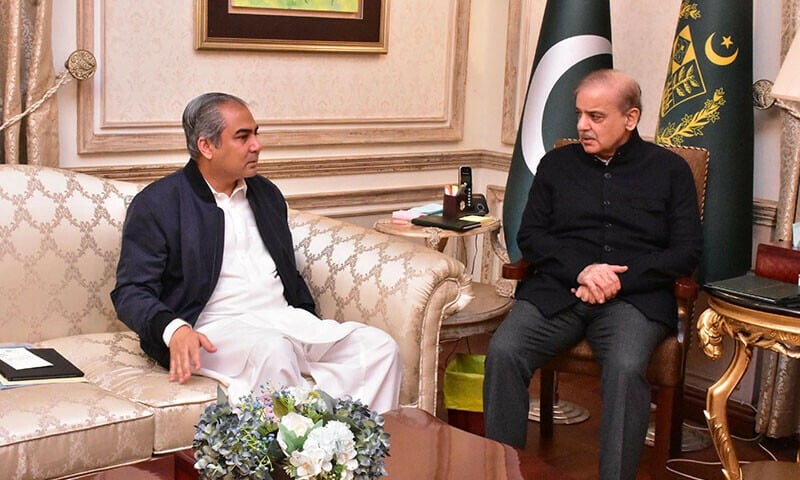
This is why the current period deserves close attention. The absence of Pakistani military retaliation following recent attacks suggests that Islamabad believes progress is being made through diplomatic channels. Pakistani officials appear willing to give Kabul time to demonstrate that commitments made during discussions will translate into measurable security improvements. Whether this patience continues will depend largely on developments on the ground.
At the same time, it would be a mistake to assume that the TTP issue represents the only obstacle in Pakistan-Afghanistan relations. Decades of mistrust cannot be erased through a single agreement or security arrangement. Disputes over border management, refugee policies, trade restrictions, and political perceptions remain significant challenges. Both governments continue to view certain issues through fundamentally different lenses. Even if progress is achieved on militancy, broader diplomatic engagement will remain essential.
Another development shaping regional calculations is the growing relationship between Afghanistan and Russia. Some observers in Pakistan have expressed concern about expanding ties between Moscow and Kabul, particularly in the security sphere. However, such concerns may be overstated. Russia’s primary interest appears to be preventing instability from spreading into Central Asia and containing extremist threats that could affect its own strategic environment. Russian officials have repeatedly expressed concerns about militant organizations operating in Afghanistan and have warned about the dangers posed by transnational extremist networks.
Moreover, Afghanistan’s most urgent needs are economic rather than military. The country requires investment, infrastructure development, energy cooperation and access to regional markets. Russia can potentially contribute in some of these areas, but it is unlikely to become a transformative patron capable of resolving Afghanistan’s fundamental challenges. The Taliban leadership understands that long-term stability will require diversified international engagement rather than dependence on any single external partner.
There is also a broader geopolitical dimension that deserves consideration. Regional rivalries have historically influenced developments inside Afghanistan. Various external actors have often sought to advance their interests through local proxies and political networks. The possibility that some countries may seek to exploit tensions between Pakistan and Afghanistan cannot be ignored. Such efforts rarely serve the interests of ordinary Afghans or Pakistanis. Instead, they prolong instability and deepen divisions that already impose enormous costs on both societies.
For this reason, policymakers in Kabul and Islamabad must remain vigilant against attempts to derail ongoing diplomatic efforts. Militancy should not become a tool through which external actors pursue their own strategic agendas. History has demonstrated repeatedly that those who encourage conflict from afar seldom bear its consequences.
What makes the present moment particularly significant is the emergence of a rare convergence of interests. Pakistan seeks security. Afghanistan seeks economic stability. China seeks regional connectivity. Russia seeks containment of extremist threats. Although these objectives are not identical, they all point toward a common conclusion: stability serves everyone better than conflict.
This does not mean that success is guaranteed. The challenges remain formidable. Trust between Pakistan and Afghanistan remains fragile. Militant groups continue to possess operational capabilities. Political pressures within both countries can easily complicate diplomacy. A single major incident could quickly reverse recent progress.
Yet there are reasons for cautious optimism. The willingness of all parties to engage in sustained dialogue, the apparent steps taken regarding militant networks, and the absence of immediate military escalation suggest that a more pragmatic approach is emerging. For the first time in several years, diplomacy appears to be producing concrete results rather than merely managing crises.
The coming months will reveal whether this process can be sustained. If violence declines and cooperation expands, historians may eventually view this period as the beginning of a significant shift in Pakistan-Afghanistan relations. If the effort fails, the region risks returning to a familiar cycle of accusations, retaliation and instability.
For now, however, the most important developments are occurring far from public view. They are taking place in quiet meetings, confidential discussions and carefully managed diplomatic exchanges. The future of Pakistan and Afghanistan may ultimately depend not on what is said publicly, but on what is agreed behind closed doors. And for the first time in a long while, those conversations appear to be moving in a constructive direction.