
(Ishaq khan)
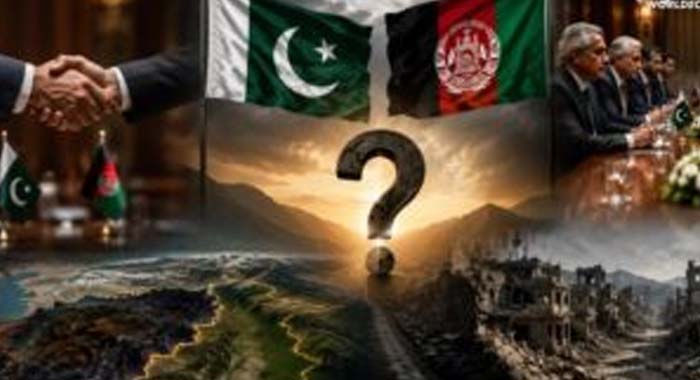
Afghanistan’s involvement in terrorism directed against Pakistan is not a new grievance it is the defining fault line of one of the world’s most complex bilateral relationships. But on 21 February 2026, Pakistan crossed a threshold that transformed a chronic tension into an acute crisis: Pakistani airstrikes were launched inside Afghan territory, marking one of the most significant military escalations between the two countries in recent history.
The strikes set off a series of intense, recurring clashes along the border in the weeks that followed. Then, on 16 March, Kabul issued a striking counter-allegation claiming that Pakistani strikes had targeted a rehabilitation centre for drug addicts. The accusation was serious in its humanitarian framing, but the Taliban government was unable to produce credible supporting evidence, and the claim was received sceptically by independent observers.
What is not in dispute is the scale of cross-border violence. Pakistani security assessments document more than 600 terrorist attacks and cross-border incidents launched from Afghan territory during 2025 alone a figure that frames Islamabad’s military posture not as aggression, but as a response to sustained provocation. Pakistan has been unequivocal in its position: it is a victim of terrorism and reserves the right to take necessary measures to protect its citizens in accordance with international law.
In the language of geopolitics, bilateral crises are measured in diplomatic notes and military incidents. But in the border regions of Pakistan and Afghanistan, the crisis is measured in closed crossings, lost livelihoods and empty markets. Since October 2025, the border between Pakistan and Afghanistan has been effectively shut trade suspended, movement restricted, and hundreds of thousands of people severed from economic lifelines that sustained them for generations.
The consequences for Afghan civilians have been severe. Afghanistan was already among the world’s most economically fragile states, with over 85 per cent of the population living at or below the poverty line and widespread unemployment. The closure of the Pakistani border has compounded a pre-existing humanitarian emergency, disrupting supply chains, raising prices for essential goods and eliminating commercial activity in border communities that had no alternative.
The crisis has also accelerated the displacement of communities along the frontier. Thousands of families in border areas have been forced to relocate following the military confrontations of February and March 2026. At the same time, the repatriation of millions of Afghan refugees from Pakistan itself a politically charged process has added a further layer of pressure on a Taliban government already struggling to provide basic services. The absorption of returnees represents one of the most acute governance challenges facing Kabul.
Confronted with closed Pakistani crossings, the Taliban government sought to redirect Afghan trade through Iranian ports principally Chabahar and Bandar Abbas in a strategic pivot designed to reduce dependence on Pakistan and Karachi. For a period, this alternative corridor offered a workable, if costly, substitute.
Then came the Iran–United States war and the resulting uncertainty in and around the Strait of Hormuz. The conflict shattered the reliability of the Iranian transit route, exposing Afghanistan’s vulnerability to external shocks. Afghan traders faced cascading disruptions: severe delays in cargo delivery, a sharp rise in transportation costs, and the collapse of supply chain predictability. The combined effect Pakistani border closed, Iranian route destabilised left Afghanistan’s already fragile economy in a position of extraordinary precarity. The economic dimension of this crisis is inseparable from the security and diplomatic dimensions; each reinforces the others.
Against this backdrop of military confrontation and economic stress, China emerged as the principal mediator. From 1 to 7 April 2026, Beijing hosted formal trilateral negotiations between Pakistan and Afghanistan in the city of Urumqi the second such round, following an earlier session in August 2025 and preceding the severe military confrontations of October 2025 and the renewed hostilities of February and March 2026.
The Urumqi talks did not produce a formal peace agreement. No comprehensive settlement on border security, trade resumption or counterterrorism cooperation emerged from the table. However, both sides agreed to three important principles: to refrain from further escalatory actions, to maintain open diplomatic channels, and to sustain a negotiating process for the resolution of disputes — including terrorism. In a relationship as strained as Pakistan–Afghanistan, these commitments, however modest, represented meaningful progress.
The Urumqi process achieved one significant outcome: it brought both governments back to the negotiating table following one of the most dangerous periods in their bilateral relationship. Yet its most critical limitation was equally apparent. The fundamental disputes Pakistani demands for verifiable Taliban action against the TTP, and Afghan insistence on sovereignty over its own territory remain entirely unresolved.
Pakistan’s position entering the next phase of talks is clear. At Urumqi, Islamabad presented a specific condition: the Taliban government must take verifiable, credible action against the Tehrik-i-Taliban Pakistan (TTP) and other anti-Pakistan militant groups operating from Afghan soil. Until that condition is met, Islamabad has indicated, trust cannot be restored and the pathway to a comprehensive normalisation cannot be opened.
Sources familiar with Afghan affairs suggest that the Pakistani government is now in a deliberate holding pattern waiting to assess what, if any, concrete steps Kabul takes against the TTP before announcing the next formal round of talks. The diplomatic clock is ticking, but it is ticking slowly.
Running alongside the formal Urumqi process is a quieter, more flexible channel of engagement. A round of Track II or informal dialogue recently took place in Istanbul, bringing together non-governmental diplomatic experts from Pakistan and, according to sources, their Afghan counterparts. A second round is expected in the coming week.
Track II processes serve a specific function in diplomatic paralysis: they allow both governments to test positions, explore compromises and signal flexibility without the institutional constraints or the domestic political costs of formal negotiation. The Istanbul channel suggests that despite the public stalemate, back-channel exploration of a path forward continues. Its existence is itself a signal that neither side has yet abandoned the prospect of a negotiated resolution.
On 4 June 2026, Pakistan’s Foreign Office spokesperson Tahir Andrabi delivered a statement that encapsulated Islamabad’s position with unusual directness. Pakistan, he affirmed, is a committed advocate of dialogue and diplomacy with Afghanistan. There is, however, a single non-negotiable condition: Afghan soil must not be used as a platform for terrorism against Pakistan.
Andrabi’s statement wove together two threads that define Pakistan’s approach to Afghanistan deep historical, religious, ethnic and linguistic kinship, and an equally deep conviction that Pakistani citizens and security personnel cannot continue to be killed with impunity. The deaths of Pakistani soldiers and civilians in attacks originating from Afghan territory, he made clear, cannot be set aside as a diplomatic inconvenience. Accountability is not a precondition imposed for tactical leverage; it is a threshold below which no sustainable relationship can be built.
Pakistan’s framing of the crisis is thus fundamentally different from Kabul’s. Where Islamabad sees itself as a state defending its citizens against externally sponsored terrorism, Kabul sees itself as a sovereign government whose territorial integrity has been violated by foreign military action. These are not merely different perspectives on the same events they are incompatible narratives that any diplomatic resolution must somehow reconcile.
As of early June 2026, the Pakistan–Afghanistan relationship occupies an uncomfortable middle ground. The intense military confrontations of February 2026 have not resumed at the same scale. But the conditions that produced them remain entirely intact. Pakistan maintains reinforced troop deployments at multiple locations along the border. Both governments continue to exchange public accusations of bad faith.
Pakistan maintains that terrorist threats from Afghan territory remain active and ongoing. Kabul continues to characterise Pakistani airstrikes and border actions as violations of Afghan sovereignty that cannot be accepted by any self-respecting government. The result is a relationship that is neither at war nor at peace a condition that might be described, precisely, as armed tension with concurrent diplomacy.
Crucially, the border closures that have severed trade since October 2025 remain in effect. Every day they continue, the economic cost to Afghan civilians deepens. This humanitarian pressure creates its own form of diplomatic leverage and its own form of moral obligation for the international community.
Into this already complex landscape, a significant new development arrived on 27 May 2026. In Moscow, Russia and Afghanistan formalised a defence cooperation agreement signed by Russian Security Council Secretary Sergei Shoigu and Afghan Defence Minister Mullah Mohammad Yaqoob. The full technical details of the agreement have not been made public, but it is being assessed as a significant military cooperation framework with potential implications well beyond the bilateral relationship.
Afghan Defence Minister Yaqoob, speaking following the signing, stated that Afghanistan wishes to expand its defence relationship with Russia and that practical implementation of the agreement would follow promptly. He was careful to frame the agreement in non-threatening terms, insisting it was directed at building Afghan defensive capability and was not aimed at any third country. Whether Pakistan or the United States, or China will accept that framing remains to be seen.
Afghan Foreign Minister Amir Khan Muttaqi has positioned the growing relationship with Russia as part of a broader Afghan strategy to end international isolation. By deepening cooperation with Russia, China and other regional powers, Kabul aims to reintegrate Afghanistan into the international system as a stable and sovereign state. For a government that remains unrecognised by virtually every country in the world, the Moscow agreement represents a tangible diplomatic achievement regardless of its military implications.
Russia, for its part, sees the agreement as an element of a broader regional strategy. Moscow is acutely aware that ISIS-Khorasan and other extremist organisations operating from Afghan territory pose a direct threat to Central Asia and by extension to Russia’s own security perimeter. Engaging the Taliban as a security partner, in Moscow’s calculus, is preferable to leaving a power vacuum that hostile groups could exploit. This logic is internally consistent. Whether it is wise given Russia’s own intelligence assessments that Afghanistan remains home to over 20,000 militants from more than twenty terrorist organisations is the central strategic question of the Russia–Taliban relationship.
On 1 June 2026, European Union High Representative Kaja Kallas visited Islamabad and used the occasion to publicly encourage dialogue between Pakistan and Afghanistan. Her message was direct: political dialogue, she said, is a better path than airstrikes, and the humanitarian consequences of the recent military confrontations are a serious cause for concern.
Pakistan’s response was equally direct. Islamabad acknowledged the EU’s interest in regional stability while making clear that Pakistan is itself a victim of terrorism and retains the right under international law to take necessary protective measures. Dialogue, Pakistan’s position implies, is not an alternative to accountability; it must be accompanied by accountability.
The EU’s engagement reflects a broader international interest in the Pakistan–Afghanistan crisis that extends beyond humanitarian concern. Instability in this corridor affects narcotics flows into Europe, extremist recruitment pipelines, refugee movements, and the strategic calculations of major powers including China, Russia, the United States and the Gulf states. The crisis is regional in its causes but global in its consequences.



