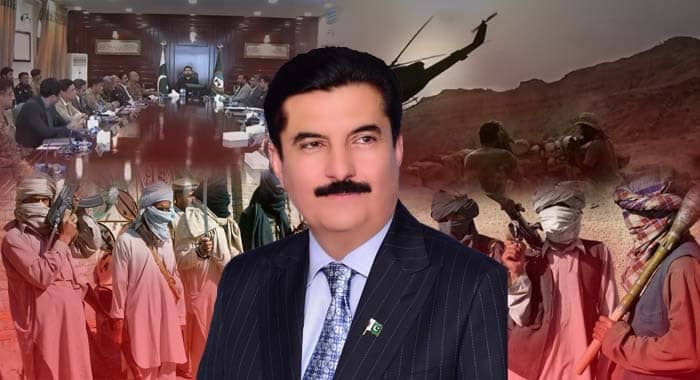
(Faisal Karim Kundi, Governor Khyber Pakhtunkhwa)
Khyber Pakhtunkhwa today stands at a defining moment in its history, where the line between hope and uncertainty is increasingly thin. The province, which has remained at the frontline of Pakistan’s long and painful struggle against terrorism, continues to face serious and evolving security threats alongside deep governance challenges. These challenges are not isolated or temporary; rather, they are structural, persistent, and demand a response that is equally serious, coordinated, and sustained. While the courage and sacrifices of our armed forces, police, Frontier Corps, and intelligence institutions remain beyond question, the absence of equally strong political and administrative alignment weakens the overall national response.
The security situation in Khyber Pakhtunkhwa has unfortunately not improved in recent times. In fact, in several districts, conditions have deteriorated. Areas such as Bannu, Lakki Marwat, Dera Ismail Khan, Tank, Kohat, Karak, Bajaur, and Mohmand continue to experience incidents of terrorism and militant violence that disrupt daily life and instill fear among ordinary citizens. These are not just administrative regions on a map; they are populated by families, workers, students, and communities who deserve peace, stability, and dignity. Yet, they continue to live under the shadow of uncertainty created by repeated attacks and targeted violence.
Our security forces are engaged in continuous operations under extremely difficult circumstances. The Pakistan Army, police, and Frontier Corps are carrying out intelligence-based operations with professionalism and dedication, often at great personal risk. Every day, we witness the sacrifice of soldiers and police personnel who embrace martyrdom in the line of duty. These sacrifices are not symbolic; they are real, painful, and represent the ultimate commitment to the safety of Pakistan. However, it is equally important to acknowledge that such sacrifices demand a corresponding level of seriousness from political leadership and governance structures, which has often been lacking in visible and meaningful ways.
The fight against terrorism cannot be won by security institutions alone. It requires a complete ecosystem of governance where provincial administration, law enforcement agencies, intelligence coordination, and political leadership work in harmony. When any one of these components weakens, the entire structure is affected. In Khyber Pakhtunkhwa, while security forces continue their operations effectively, governance responsiveness and political ownership of the crisis have not always reflected the same urgency. This imbalance creates gaps that are exploited by those who seek to destabilize peace.
One of the most painful realities in this context is the absence of consistent political visibility during moments of tragedy. When members of the armed forces, police, or Frontier Corps are martyred, there is a public expectation that leadership will stand visibly with their families, attend funerals, and demonstrate solidarity not only in words but through presence. Such gestures are not ceremonial; they are essential for maintaining morale and reinforcing national unity. Unfortunately, this level of visible engagement has not always been observed, and that absence is deeply felt by the families of martyrs and by society at large.
At the core of the security challenge lies a more complex ideological and operational reality. Terrorist organizations operating in the region do not function as conventional forces; they deliberately embed themselves within civilian populations, using homes, neighborhoods, schools, and hospitals as shields to avoid detection and accountability. This tactic creates extremely difficult conditions for security forces, who are then forced to operate in environments where distinguishing between combatants and civilians becomes challenging. Intelligence-based operations, including drone strikes, are conducted only when credible intelligence confirms the presence of high-value targets. However, in such complex environments, collateral damage, though deeply regrettable, sometimes becomes unavoidable. The responsibility for this tragedy lies not with the intent of the operations but with the tactics of those who deliberately use civilians as cover.
It is also important to emphasize that terrorism cannot be justified under any ideological or religious pretext. No interpretation of faith permits the killing of innocent civilians, attacks on mosques, Imam Bargahs, schools, hospitals, or state institutions. Those who engage in such violence distort religious teachings and undermine the very moral foundations they claim to defend. Their actions are not acts of faith but acts of destruction, and they must be recognized as such without ambiguity. Pakistan’s struggle is therefore not only a military or security struggle but also an ideological one, aimed at preserving the integrity of religion, state, and society.
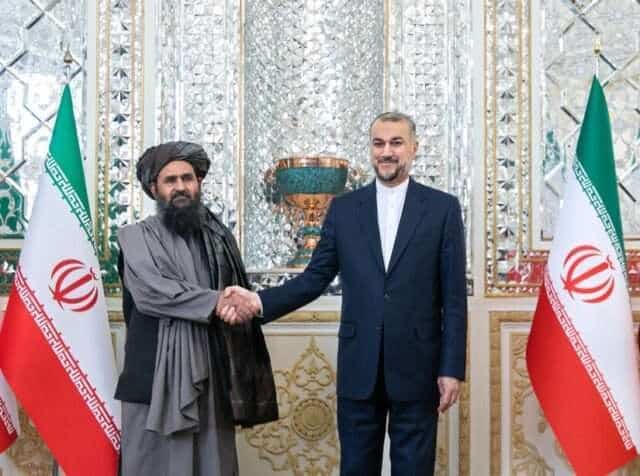
The broader security challenge is also influenced by regional dynamics. Pakistan shares a long and sensitive border with Afghanistan, and instability across the border has historically had direct implications for peace within Khyber Pakhtunkhwa. Cross-border militancy, unregulated movement, and external influences have all contributed to the security burden faced by the province. It is a reality that cannot be ignored in any serious discussion about peace and stability. At the same time, Pakistan has consistently advocated for regional peace and constructive engagement. Through diplomatic efforts, participation in international forums, and engagement with global partners, Pakistan has maintained a position of seeking stability rather than confrontation. However, external diplomacy must always be supported by internal strength, because a country cannot effectively project peace abroad while struggling with instability at home.
Within this complex security environment lies another critical challenge, which is governance. The people of Khyber Pakhtunkhwa require not only protection from violence but also effective administrative systems that deliver services, ensure development, and strengthen institutional trust. Unfortunately, governance inefficiencies continue to create obstacles in the path of progress. Bureaucratic delays, lack of coordination, and inconsistent implementation of policies weaken the state’s ability to respond effectively to both security and development challenges. Governance is not defined by announcements or political statements; it is defined by outcomes on the ground, by the efficiency of institutions, and by the trust of citizens.
There is also a growing concern regarding the way security issues are perceived and discussed in public discourse. In some cases, attacks on security forces and civilians do not receive the level of consistent attention and urgency that such tragedies demand. Meanwhile, other administrative or political issues may receive disproportionate focus. This imbalance in narrative weakens national unity and creates confusion in public understanding of priorities. Terrorism is not a political issue; it is a national emergency that requires unified and consistent response regardless of political affiliations or regional differences.
In addition to security and governance challenges, the province also faces economic consequences of instability. Investment, whether domestic or foreign, is highly sensitive to security conditions and administrative efficiency. Khyber Pakhtunkhwa, despite its immense natural resources and strategic potential, continues to struggle with attracting sustained investment due to concerns about law and order and procedural inefficiencies. Investors often express frustration over bureaucratic hurdles, delays in approvals, and lack of facilitation. In many cases, potential investment is diverted to other regions or countries simply because the environment is perceived as more predictable and investor-friendly. This represents a significant loss of opportunity for the province and the country as a whole.
Yet, despite these challenges, Khyber Pakhtunkhwa remains a province of immense promise. It is rich in water resources, mineral deposits, hydropower potential, tourism destinations, and a vibrant young population. Its geographical position makes it a gateway to regional trade and connectivity. The natural and human capital of the province is extraordinary, and if properly harnessed, it can become a driver of national prosperity. However, this potential can only be realized in an environment of sustained peace and strong governance. Without stability, even the richest resources remain underutilized.
The future of Khyber Pakhtunkhwa therefore depends on a collective national effort. Security institutions alone cannot bring lasting peace, just as provincial governments alone cannot overcome terrorism without federal coordination and institutional support. Meetings, including APEX committee discussions and consultations between provincial and federal leadership, are steps in the right direction, but they must translate into meaningful action on the ground. Coordination must move beyond formal discussions and become a practical reality in operational effectiveness and administrative reform.
At the same time, there is a need for greater emphasis on competence and institutional strength within governance structures. Effective governance requires capable individuals who understand the complexity of public administration and are committed to delivering results. Political considerations must never override the need for merit and efficiency, especially in a province facing such serious challenges. Institutions function best when they are guided by professionalism, accountability, and clarity of purpose.
Despite all difficulties, there remains a strong belief that Khyber Pakhtunkhwa has a bright future. Pakistan has, in its history, overcome significant challenges through unity, resilience, and decisive action. The same spirit is required today. The province is not defined by its problems but by its potential and the courage of its people. The path forward requires honesty in acknowledging the severity of the challenges, courage in addressing them, and unity in overcoming them.
Ultimately, peace in Khyber Pakhtunkhwa is not merely a provincial requirement; it is a national necessity. It is essential for economic growth, social stability, and the overall security of Pakistan. The responsibility to achieve this peace does not rest on one institution or one government alone; it rests on all stakeholders who have a role in shaping the future of the country. Only through shared responsibility, coordinated action, and unwavering commitment can Khyber Pakhtunkhwa move from a state of persistent challenge to a future defined by stability, prosperity, and hope.