
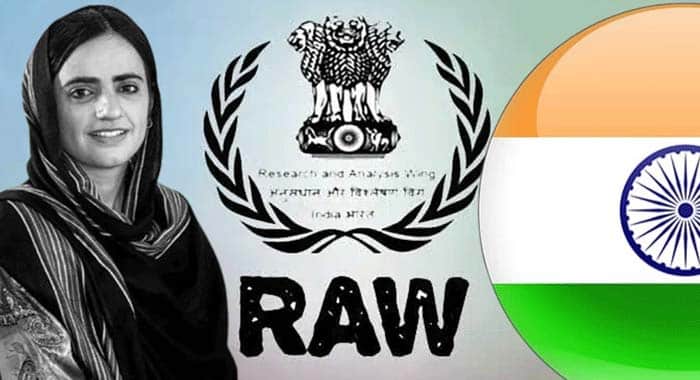
The ongoing debate surrounding human rights conditions and missing persons in Balochistan has intensified, with renewed controversy over alleged external influence, the credibility of certain reports, and the methodology used in compiling and presenting sensitive data.
According to claims raised by some stakeholders, concerns have once again emerged regarding alleged foreign funding and influence behind certain media-linked and human rights-focused networks operating in relation to Balochistan. These assertions include references to past developments such as reports circulated around 2020, including narratives associated with so-called “Indian Chronicles” which some observers claim point to the involvement of foreign-backed entities engaged in narrative shaping efforts related to Pakistan and particularly Balochistan.
However, it is important to note that these allegations remain disputed, with differing opinions and interpretations existing among analysts, civil society voices, and other stakeholders, and no universally accepted conclusion has been established regarding these claims.
Attention has also been drawn to a recently circulated report, attributed by some circles to an organization referred to as HRCB, which includes data and case listings related to missing persons in Balochistan.
The report’s credibility has come under question from certain quarters, which argue that some of its contents may be derived from unverified or partially verified social media sources and pre-existing online claims. According to these critics, such information is at times incorporated into formal reporting frameworks without sufficient independent verification or field validation.
They further argue that in some cases, digital narratives originating on social media platforms are amplified through coordinated online activity and later find their way into structured reports, which are subsequently referenced at national and international levels. Critics describe this as a self-reinforcing “information ecosystem” or “echo chamber,” where repetition of claims may substitute for comprehensive verification.
Those raising concerns also point to what they describe as a pattern in reporting methodologies, where allegations of enforced disappearance may initially emerge through social media discourse and advocacy campaigns, followed by broader circulation and eventual inclusion in formal documentation.
They argue that in some instances, later emerging clarifications, discrepancies, or alternate accounts in specific cases raise questions about the consistency and verification standards of such reporting.
According to this perspective, reliance on unverified digital inputs or incomplete datasets may affect perceptions of neutrality and accuracy, particularly when such reports are used in broader political or policy discussions.
At the same time, these claims and critiques remain part of an ongoing and contested debate, with various stakeholders maintaining differing positions on the validity and interpretation of available information. On the other hand, multiple voices emphasize that any credible human rights framework must ensure comprehensive inclusion of all categories of victims and affected populations.
This includes not only cases of missing persons, but also civilians affected by terrorism-related violence and security incidents across the province. Reference is made to incidents in areas such as Chaman, Mach, and other parts of Balochistan, where passengers, teachers, laborers, and ordinary civilians have been impacted by attacks.
Observers holding this view argue that excluding or underrepresenting victims of such incidents may raise concerns regarding completeness, balance, and overall impartiality in human rights reporting.
As a result, the discourse surrounding human rights reporting in Balochistan, missing persons data, and alleged external influence has evolved into a highly complex and deeply contested narrative space.
Multiple stakeholders continue to present divergent interpretations based on differing sources, methodologies, and political perspectives. Meanwhile, no broad consensus has yet emerged on the overall assessment of claims, data accuracy, or attribution of influence.
Analysts note that the situation reflects broader global challenges in verifying conflict-related information, particularly in environments where traditional reporting, digital media ecosystems, and political narratives increasingly intersect and overlap.
Amid these complexities, calls continue for greater transparency in data collection, stronger verification mechanisms, and balanced reporting standards to ensure credibility, accountability, and trust in human rights documentation related to the region.



