
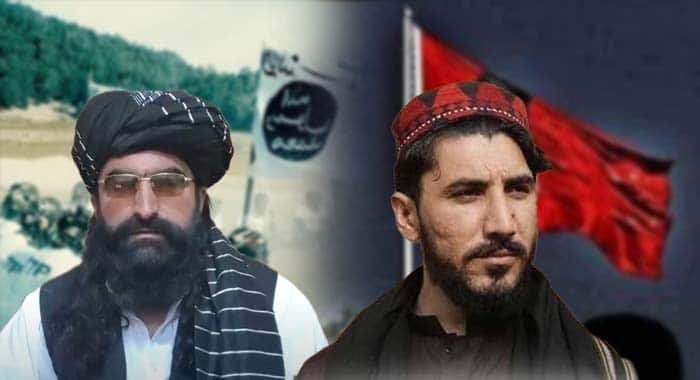
Information emerging from the Baka Khel area of Bannu following a recent security operation has once again highlighted what security sources describe as the nexus between militant elements of Fitna al-Khawarij and individuals associated with the Pashtun Tahafuz Movement (PTM).
According to security sources, a militant identified as Shahid alias “Commando”, who was killed during a security forces operation against Khawarij elements in Baka Khel on June 2, 2026, was allegedly an active supporter of PTM and was reportedly involved in managing social media accounts linked to the movement.
Sources further claim that the deceased militant maintained close contacts with senior PTM figure Abdul Samad, raising serious questions regarding the relationship between certain PTM-linked individuals and proscribed militant networks operating in the region.
Some security analysts argue that the challenge posed by the Pashtun Tahafuz Movement (PTM) and Khawarij-linked militant groups operates on different but potentially interconnected fronts. According to this perspective, Khawarij organizations pursue their objectives through violence, terrorism, and armed insurgency, while PTM advances political narratives that criticize state policies and security institutions. Critics contend that such narratives can contribute to an environment of mistrust toward the state, which militant groups may seek to exploit for recruitment, propaganda, or the expansion of their influence in vulnerable areas.
From this viewpoint, PTM does not engage in armed militancy, but its opponents argue that certain political messages may inadvertently create conditions that benefit extremist actors by amplifying grievances and weakening public confidence in state institutions
Security observers state that the development reinforces long-standing concerns regarding the alleged convergence of extremist elements and political propaganda platforms. According to these sources, while militant groups pursue their objectives through violence, terrorism, and armed attacks, their facilitators seek to advance similar narratives through political activism, information campaigns, and social media influence operations.
The incident is being cited by security circles as further evidence of what they describe as a broader ecosystem in which certain individuals associated with militant organizations and sympathetic networks allegedly operate in parallel, providing ideological, logistical, and informational support to anti-state elements.
Officials maintain that security forces remain committed to dismantling terrorist infrastructure and eliminating threats posed by Khawarij groups across the country. They emphasize that intelligence-based operations will continue until all militant networks and their facilitators are brought to justice.
The resilient people of Khyber Pakhtunkhwa, security sources assert, remain fully aware of the threats posed by terrorism and extremist propaganda and will continue to stand united against all forces seeking to undermine peace, stability, and national cohesion.
Security forces have reaffirmed their resolve to continue counterterrorism operations across affected areas, vowing to pursue militant elements and their alleged support networks wherever they may be found.



