(Mushtaq Yusufzai)
The recent developments emerging from Pakistan’s coastal Balochistan province and the evolving diplomatic engagement between Russia and Afghanistan represent more than isolated events. They are, in fact, reflections of a broader and increasingly complex security environment that stretches from the Arabian Sea to Central Asia. The attempted attack on a university in Gwadar and the reported technical understanding between Moscow and Kabul may appear unrelated at first glance, but both are deeply connected to shifting geopolitical fault lines, contested narratives, and the struggle over influence in a volatile region.
To understand the direction in which this region is moving, one must examine both developments not as separate incidents but as pieces of a larger strategic puzzle. The recent attempted attack on an educational institution in Gwadar has once again raised serious concerns about the security situation in Balochistan. Fortunately, the attack was successfully foiled by security forces, and more importantly, no students or teachers were present at the time. Only a limited number of staff and security personnel were on site, which prevented what could have been a major tragedy.
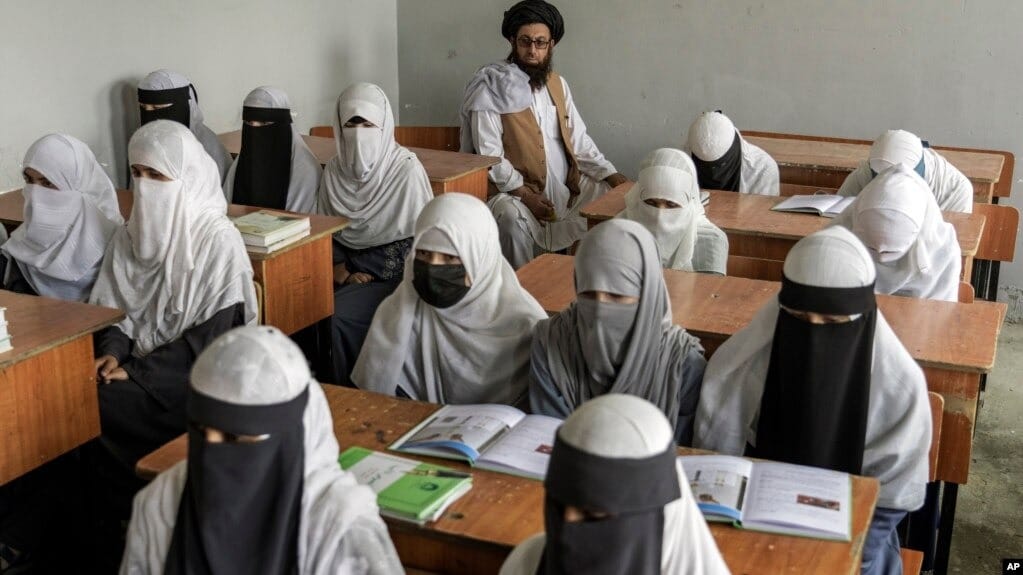
The question that naturally arises is: why are educational institutions increasingly becoming targets? Having followed the conflict dynamics in Balochistan for over two decades, I have seen this pattern repeat itself. Militant groups often justify such attacks by claiming that these institutions are being used for security purposes or as operational bases. However, this justification collapses under scrutiny. Educational institutions are, by their very nature, civilian spaces. They are meant for learning, not warfare.
The logic presented by militant actors that security forces use schools or universities as cover is not only difficult to verify in most cases but also fails to justify targeting civilians. Even in high-profile global tragedies such as the Army Public School attack in Peshawar, the victims were overwhelmingly children with no connection to military operations. That incident alone should have closed the debate on whether educational institutions can ever be considered legitimate targets. The reality is simple: no ideological, political, or strategic argument can justify violence against students or teachers.
One important dimension of such attacks is not just physical destruction but psychological impact. In modern asymmetric conflicts, perception is often as important as battlefield success. Militant groups understand that attacks on educational institutions generate disproportionate media attention. Unlike attacks on remote security checkpoints or isolated convoys, incidents involving schools or universities trigger immediate emotional responses nationally and internationally. They trend on social media, dominate television coverage, and become symbols of instability.
This is where information warfare enters the picture. Social media platforms are now central tools for shaping narratives. In many cases, the objective is not territorial control but psychological disruption sending a message that investment, education, and development projects are unsafe. Even when an attack is foiled or causes no casualties, the mere circulation of the incident online can influence perceptions of stability. Investors, both domestic and foreign, may reconsider long-term commitments. This is precisely why such attacks, even when operationally unsuccessful, carry strategic value for those behind them.
The importance of Gwadar cannot be overstated. It is not just another coastal city; it is a strategic gateway linked to Pakistan’s long-term economic ambitions and regional connectivity plans. Situated in Balochistan, Gwadar represents the maritime future of Pakistan and a key node in regional trade routes. However, as development has progressed, so too have security challenges. It is widely observed that militancy in Balochistan has intensified alongside major infrastructure projects. Whether this is coincidental or causally linked is debated among analysts, but the timing is difficult to ignore.
Some argue that Gwadar’s rising importance has made it a target for groups and interests that feel excluded from or threatened by its development. Others believe that internal grievances, political alienation, and socio-economic disparities are the primary drivers of unrest. In reality, the situation is likely a combination of both internal and external factors.
What is clear, however, is that instability in Gwadar directly undermines Pakistan’s economic ambitions. Any perception of insecurity in this region has a disproportionate impact on investor confidence. The successful prevention of the recent attack is a positive development and demonstrates improved operational readiness. However, it also highlights an ongoing challenge: securing soft targets in geographically vast and difficult terrain. Balochistan is not an easy region to secure. Its terrain, combined with scattered population centers, makes intelligence gathering and rapid response difficult. This is why preventive intelligence is as important as kinetic operations.
The state must also address the narrative dimension of the conflict. If militant groups succeed in framing development projects as exploitative or externally imposed, then security measures alone will not be sufficient. The battle is therefore not only on the ground but also in the realm of perception. While Pakistan deals with internal security challenges, a parallel development is unfolding in the region involving Afghanistan and Russia. Reports suggest a technical-level understanding or cooperation framework between Kabul and Moscow, particularly in areas related to defense and technical support.
This development has generated significant speculation. Some observers interpret it as the beginning of deeper military alignment, possibly even in areas such as air defense. However, such assumptions may be premature. At present, Afghanistan lacks a fully developed air defense system. Any cooperation with Russia is more likely to be technical in nature rather than a comprehensive military alliance. Russia’s historical engagement in Afghanistan has always been cautious, shaped by past experiences and current geopolitical constraints.
It is also important to recognize that Russia’s primary security concern in the region is not Afghanistan itself, but the threat posed by extremist organizations such as Islamic State Khorasan Province (ISIS-K), which also poses risks to Central Asian stability. From Moscow’s perspective, limited cooperation with Kabul may be driven more by counterterrorism considerations than by any strategic alliance against third countries.
The evolving situation cannot be viewed in isolation. Regional actors such as China and Iran are also engaged in parallel security and economic calculations. A trilateral or multilateral understanding among Russia, China, and Iran on regional stability is increasingly visible, particularly in relation to counterterrorism and economic integration. However, this does not necessarily translate into unified strategic positions on all issues.
For Pakistan, the concern is whether any shift in Afghanistan’s external partnerships could alter the delicate balance of influence in the region. Afghanistan has historically maintained relations with multiple regional actors, and it continues to exercise its sovereign right to engage diplomatically with different states. However, given the geographic proximity and historical ties, stability between Pakistan and Afghanistan remains a critical priority for regional peace.
Another layer of complexity is added by the evolving relationship between Afghanistan and India. India has historically engaged with Afghanistan through development assistance and diplomatic outreach. However, the geopolitical context remains sensitive. There are perceptions in Pakistan that Afghanistan could, at times, be influenced by competing regional interests. Conversely, Afghanistan maintains that it seeks balanced relations with all neighboring countries without becoming part of any bloc.
The reality likely lies somewhere in between. Afghanistan, like any sovereign state, seeks strategic autonomy. However, its limited economic capacity and security vulnerabilities inevitably make it susceptible to external influence.
The attempted attack in Gwadar and the emerging Russia–Afghanistan engagement are both symptoms of a broader regional transition. The old frameworks of influence are weakening, while new alignments are still taking shape. For Pakistan, the immediate priority remains clear: strengthening internal security, protecting strategic infrastructure such as Gwadar, and countering narratives that seek to undermine economic development. At the same time, diplomatic engagement with regional actors must continue to ensure that Afghanistan does not become a space of competing proxy influences.
The region is entering a phase where information warfare, economic competition, and security challenges are increasingly interconnected. In such an environment, no single approach military, diplomatic, or economic can succeed in isolation.
What is required is a comprehensive strategy that recognizes the complexity of modern hybrid conflict, where a failed attack on a university and a diplomatic meeting in Moscow may, in fact, be part of the same evolving geopolitical story.