
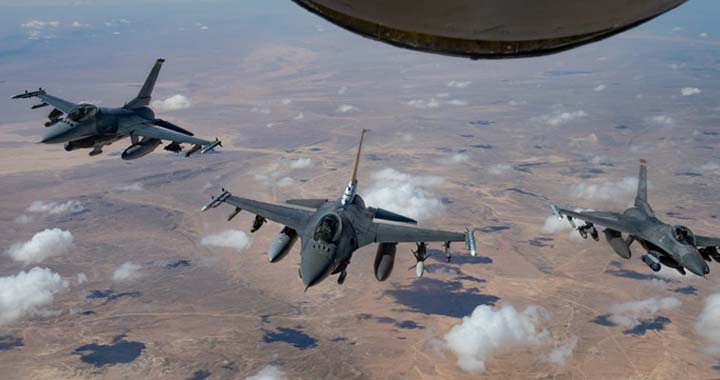
The United States military confirmed carrying out strikes on targets in southern Iran, escalating tensions in the region despite an existing ceasefire and ongoing diplomatic efforts aimed at securing a broader peace agreement between Washington and Tehran.
According to the United States Central Command (CENTCOM), the operation was conducted as a “self-defence strike” to protect American personnel and military assets from what it described as imminent threats posed by Iranian forces operating in the region.
In an official statement issued late Monday, CENTCOM spokesperson Navy Captain Tim Hawkins said the strikes targeted missile launch sites as well as Iranian boats allegedly attempting to deploy naval mines.
“US Central Command continues to defend our forces while using restraint during the ongoing ceasefire,” Hawkins stated, without disclosing further operational details regarding the scale or aftermath of the strikes.
The military action comes at a highly sensitive moment, as senior Iranian negotiators are currently in Doha for critical negotiations aimed at reaching a peace arrangement with the administration of US President Donald Trump.
Regional observers and diplomatic analysts fear the latest confrontation could complicate or potentially derail fragile negotiations intended to de-escalate the prolonged US-Iran tensions and prevent a wider regional conflict.
Iranian sources told media outlets that prior to the US strikes, the Islamic Revolutionary Guard Corps (IRGC) had targeted a vessel at sea under circumstances that remain unclear. The subsequent American strikes reportedly resulted in casualties among IRGC personnel, with several members believed to have been killed.
However, Iranian authorities have yet to release an official detailed assessment regarding the extent of the damage or the number of casualties resulting from the operation.
The developments mark one of the most serious military incidents since the ceasefire between the United States and Iran formally came into effect on April 8. While sporadic tensions and limited confrontations have continued in recent weeks, both sides had publicly maintained that the ceasefire framework remained intact.
According to Al Jazeera, reporting from Washington, Al Jazeera correspondent Alan Fisher noted that previous skirmishes following the ceasefire had not been officially classified by President Trump as violations of the truce agreement.
“There have been a number of skirmishes like this, particularly just after the start of the ceasefire,” Fisher reported. “At the time, Trump said he didn’t consider these to be a breach of the ceasefire.”
He added that information from the US side remains limited, making it difficult to determine whether the latest strikes represent an isolated tactical response or signal a broader escalation in military posture.
“The US president remains keen to secure a diplomatic deal with Iran,” Fisher said, emphasizing that Washington continues to balance military deterrence with ongoing diplomatic engagement.
The renewed hostilities have triggered growing international concern over the stability of the Gulf region, which remains strategically vital for global energy markets and international trade routes. Analysts warn that any significant breakdown in ceasefire arrangements could have serious geopolitical and economic consequences extending far beyond the Middle East.
Diplomatic circles in Doha continue to monitor developments closely as negotiations proceed under heightened tension. International mediators are reportedly urging both Washington and Tehran to exercise restraint and avoid actions that could undermine the fragile peace process.
The latest military exchange further highlights the volatility of the regional security landscape, where ongoing diplomatic efforts coexist with persistent military risks and rapidly shifting strategic calculations.
As negotiations continue in Qatar, global attention remains fixed on whether diplomacy can withstand the mounting pressure of renewed military confrontation between the United States and Iran.



