
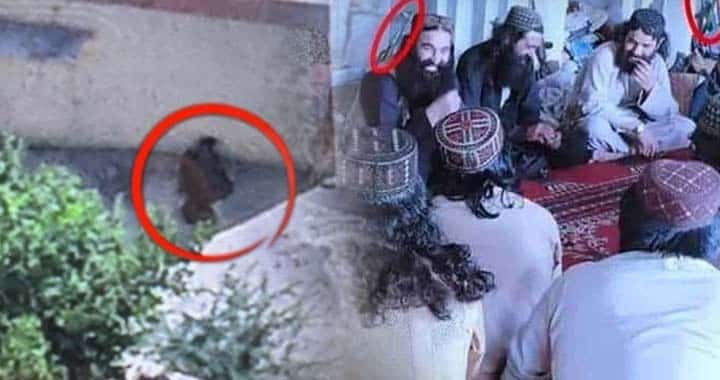
The latest counterterrorism operation in North Waziristan has once again pushed a deeply sensitive but increasingly unavoidable issue into public focus: the use of mosques and civilian religious spaces by the banned Tehreek-e-Taliban Pakistan (TTP), declared by the state as Fitna al-Khwarij (FAK) terrorist networks as operational cover.
According to operational details emerging from the Bobali area, security forces dismantled what officials described as a mosque-based terrorist command structure during a large-scale clearance operation that left dozens of terrorists eliminated or wounded. Security personnel also recovered improvised explosive devices, destroyed underground bunkers, and carried out sanitization efforts across the village after intense engagements with entrenched terrorist elements.
The incident is not isolated.
Over recent months, multiple security developments across Khyber Pakhtunkhwa have pointed toward a broader operational pattern in which terrorist groups increasingly embed themselves within civilian and religious spaces to complicate counterterrorism operations and shield their activities from direct targeting.
In Bajaur, a controversial audio clip previously exposed alleged attempts by terrorist elements to use mosques for propaganda coordination and local influence operations. In North Waziristan, officials now say terrorist infrastructure was again discovered operating from within or around a mosque compound alongside fortified underground positions.
At the same time, security officials involved in recent operations have repeatedly accused terrorist groups of using local populations as human shields during clashes, particularly in remote areas where militants attempt to exploit the presence of civilians to slow military advances and generate propaganda opportunities.
Taken together, these developments reveal a dangerous tactical evolution.
The Objective Is Not Worship, It Is Operational Immunity
Security analysts argue that terrorist organizations exploit mosques and religious spaces not because of faith itself, but because such locations provide strategic advantages difficult to replicate elsewhere.
Mosques occupy central positions within communities.
They attract regular civilian presence.
They carry emotional and religious sensitivity.
And they create operational hesitation during security actions.
For terrorist networks, this combination offers a form of tactical shielding.
By embedding themselves within religious or civilian environments, extremist groups attempt to:
reduce the likelihood of immediate direct strikes,
complicate intelligence operations,
blur distinctions between combatants and civilians,
and portray counterterrorism responses as attacks on religion rather than actions against terrorism.
Analysts note that this tactic mirrors patterns previously observed in several regional conflict zones where extremist organizations used schools, hospitals, religious compounds, and densely populated neighborhoods to conceal movement, weapons storage, communications activity, and command operations.
In Pakistan’s tribal districts, however, the implications are particularly sensitive because mosques historically function not only as places of worship, but also as social and communal centers deeply connected to local identity.
This is precisely why the issue carries such strategic importance.
The abuse of religious spaces by terrorist organizations threatens both national security and the sanctity of the institutions themselves.
A War Moving Deeper into Civilian Space
The broader pattern emerging across Khyber Pakhtunkhwa suggests that terrorist groups are increasingly shifting away from conventional hit-and-run attacks alone and toward a model of embedded insurgency.
The signs are visible across multiple districts.
In Lakki Marwat, schools have repeatedly been bombed.
In Bannu, terrorists targeted roads, checkpoints, and surrounding civilian areas.
In Punjab, a police station was attacked through a quadcopter/drone carrying explosives.
In several operations, underground bunkers and hidden militant infrastructure have been discovered near populated zones.
The battlefield is no longer geographically separate from ordinary life.
It is increasingly woven into it.
Security experts warn that this transformation creates a far more complicated counterterrorism environment because operations now involve not only eliminating armed attackers but also protecting civilians, preserving infrastructure, managing public perception, and preventing extremist propaganda exploitation simultaneously.
The challenge becomes even greater when terrorist groups deliberately attempt to collapse the distinction between civilian and operational space.
This is where mosques become strategically important for extremist organizations.
Not as religious institutions,
but as protected terrain.
Terrorism’s Struggle For Religious Legitimacy
Religious scholars and mainstream Islamic institutions across Pakistan have repeatedly rejected terrorism and condemned the killing of civilians and security personnel in the name of religion.
Security analysts emphasize that terrorist groups understand they cannot sustain long-term influence through violence alone. They also seek symbolic legitimacy.
The exploitation of mosques, sermons, religious language, and community influence structures forms part of a wider effort to create ideological cover for militant activity.
This is why the battle against terrorism is not only military.
It is also intellectual, social, and religious.
Counterterrorism experts argue that defeating extremist narratives requires strong coordination between security institutions, religious scholars, local communities, educators, and media platforms to ensure that terrorist groups cannot successfully weaponize faith for operational or propaganda purposes.
Pakistan’s security landscape has already demonstrated that terrorist organizations adapt continuously.
When pressured militarily, they evolve tactically.
When denied territorial control, they embed socially.
When isolated operationally, they seek symbolic protection.
The misuse of mosques represents part of that adaptation.
And unless confronted carefully but decisively, the consequences extend beyond immediate security threats into something even more dangerous:
the contamination of sacred community spaces by violent extremist agendas.
Because once terrorism successfully hides behind religion, every operation becomes more complicated, every civilian space becomes more vulnerable, and every conflict becomes harder to contain.



