
Pakistan’s relationship with the Afghan Taliban is entering an increasingly difficult phase, shaped not by diplomatic statements alone but by the widening gap between public assurances and operational realities on the ground.
For years, Islamabad has maintained that peace in Afghanistan remains essential for regional stability. Yet mounting security incidents inside Pakistan continue reinforcing concerns that anti-Pakistan terrorist networks are operating with growing freedom from Afghan territory.
Recent operations in North Waziristan once again brought those concerns into sharp focus.
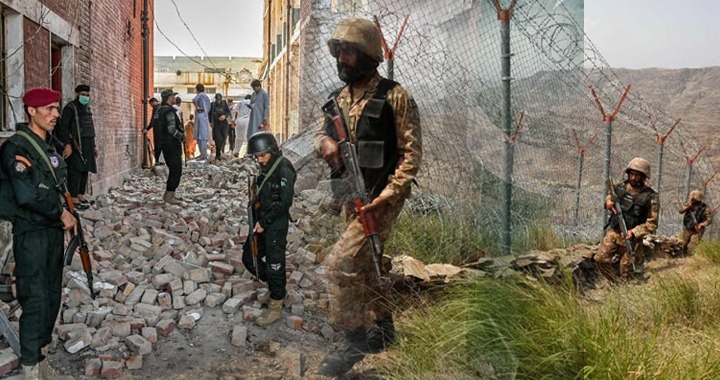
Security forces eliminated 22 terrorists during a major clearance operation in the Shewa area, where officials stated that Afghan Taliban-supported TTP elements were operating. According to security details, the terrorists reportedly used local civilians as human shields and attempted to secure safe passage while holding residents as hostages.
The incident reflected a recurring pattern increasingly highlighted by Pakistani security officials:
cross-border facilitation,
safe havens,
logistical protection,
and ideological overlap between extremist factions operating across the region.
At the same time, broader developments continue raising concerns about Afghanistan’s evolving security landscape.
The United Nations recently warned about the risk of nuclear or radiological terrorism linked to extremist networks operating in and around Afghanistan, including fears that stolen radioactive materials could potentially fall into the hands of Al-Qaeda-linked elements.
Meanwhile, armed resistance movements against the Taliban themselves are intensifying operations across Afghanistan, exposing growing instability inside the country despite Taliban claims of consolidated control.
The Problem Is No Longer Infiltration, It Is Infrastructure
Pakistan’s core concern increasingly appears to be that terrorism linked to Afghan territory is no longer episodic or loosely organized.
It is becoming systemic.
The issue is no longer limited to individual infiltrators crossing mountainous borders. Security analysts argue that extremist ecosystems now operate through broader support structures involving recruitment, training, financing, communications, ideological coordination, and sanctuary networks.
Even criminal activity inside Pakistan is beginning to reveal overlap with extremist infrastructures.
In Peshawar, authorities recently arrested suspects linked to bank robberies who reportedly had connections involving travel to Afghanistan and alleged exposure to extremist training networks. Such cases reinforce fears that terrorism and organized criminality are increasingly intersecting.
Similarly, controversial audio leaks circulating in KP referencing extremist commanders allegedly operating from Afghanistan have fueled further public debate over cross-border militant influence, regardless of whether specific recordings are ultimately verified.
Pakistan’s frustration stems from what many analysts describe as a contradiction between Taliban diplomacy and Taliban-era realities.
Publicly, Taliban officials reject accusations regarding terrorist sanctuaries.
Operationally, however, Pakistan continues facing attacks linked to groups allegedly operating from Afghan soil.
This contradiction has deepened Islamabad’s trust deficit.
The challenge for the Afghan Taliban is becoming increasingly difficult to ignore:
any tolerance, inability, or ambiguity regarding anti-Pakistan terrorist networks risks not only destabilizing Pakistan, but undermining Afghanistan’s own long-term stability and international legitimacy.
Because extremist sanctuaries rarely remain confined to one frontier.
Eventually, they consume the entire region around them.



