
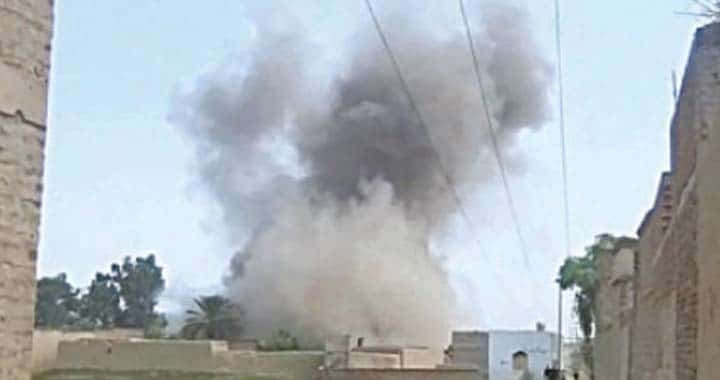
In Khyber Pakhtunkhwa, terrorist quadcopter attacks on civilians continue as another strike targeted Shad Khel in Jani Khel area of Bannu, leaving multiple people injured, including women and children.
According to sources, the injured were immediately shifted to a nearby hospital for medical treatment following the attack.
In a related development, rescue sources said at least eight civilians, including three women and a young girl, were injured on May 9 when terrorists carried out a quadcopter attack on a residential area in the Kangar Jan Bahadur locality of Bannu district. Explosives dropped from the aerial device struck near populated homes, triggering panic among residents.
Officials confirmed that all injured individuals were provided emergency medical assistance and shifted to the District Headquarters Hospital.
The latest incidents come amid growing concerns over the increasing use of quadcopters and other improvised aerial devices by terrorists across Khyber Pakhtunkhwa.
Earlier on May 8, a separate quadcopter strike carried out by terrorists targeted a mosque in Satar Mundan village in Central Kurram, damaging parts of the religious structure, nearby homes, and a madrassa building. The attack was among several recent incidents involving civilian and religious sites.
Security observers say the repeated use of quadcopters reflects an evolving pattern in terrorist tactics, allowing attacks on civilian populations, police checkpoints, and sensitive installations from a distance while avoiding direct confrontation.
Recent months have seen similar incidents reported in Bajaur, Hangu, North Waziristan, Lakki Marwat, and Bannu, including strikes that injured children, damaged civilian homes, and disrupted public spaces.
Analysts warn that the growing use of commercially adaptable aerial devices by terrorists presents an emerging security challenge, expanding the threat landscape beyond conventional attacks and increasing psychological pressure on communities living in conflict-affected regions.
Local residents, meanwhile, expressed deep concern and anger over the latest attack, criticizing the provincial administration and urging federal authorities and security institutions to take urgent action to dismantle terrorist networks and ensure civilian protection.



