
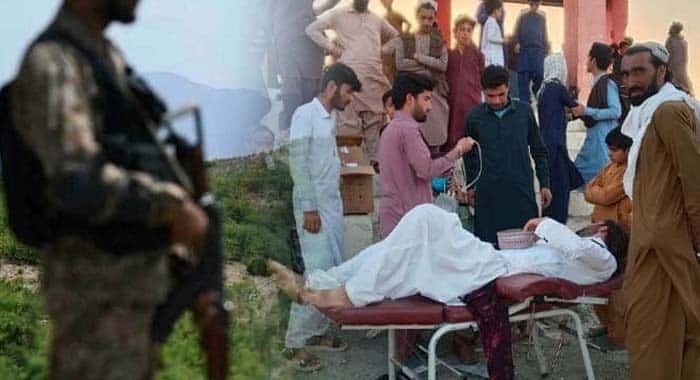
Recent incidents across South Waziristan, Hangu, and Chaman highlight a persistent pattern: attempted terrorist attacks, swift interception by security forces, and a recurring civilian cost.
In South Waziristan’s Azam Warsak, a vehicle-borne suicide attack targeting an Army post was foiled, though the resulting explosion left civilians injured. In Hangu, an attempted strike on an FC installation was repelled after terrorists opened fire on surveillance infrastructure.
In Chaman, a checkpoint interception escalated into an exchange of fire, with one terrorist eliminated.
Despite tactical successes, a critical pattern persists, civilians continue to absorb the shockwaves. Even when attacks are foiled before reaching intended targets, as seen in Azam Warsak, the blast radius does not distinguish between military objectives and nearby populations. This underscores a core asymmetry: terrorists initiate attacks, but local communities bear the immediate human cost.
At the same time, public response in districts such as Bannu, Bajaur, and North Waziristan suggests a shifting dynamic. Civilian resistance, through protests, mobilization, and in some cases direct confrontation, reflects growing rejection of terrorist presence.
The current security environment reveals three key dynamics:
1. Tactical Containment, Strategic Persistence
Security forces are consistently preventing high-impact attacks, but the frequency of attempts indicates sustained operational capability among terrorist networks.
2. Civilian Exposure as a Structural Risk
Even failed attacks generate civilian casualties, highlighting the challenge of securing populated areas adjacent to military installations.
3. Public Sentiment as a Force Multiplier
Increasing civilian pushback against terrorists may evolve into a critical stabilizing factor, reducing local support networks that such groups rely on.
Pakistan’s counterterror strategy is not a single campaign but a layered response to a fluid threat environment. While operational successes are evident, the continued targeting of populated regions ensures that the conflict remains deeply intertwined with civilian life, where every foiled attack still carries a human cost.



