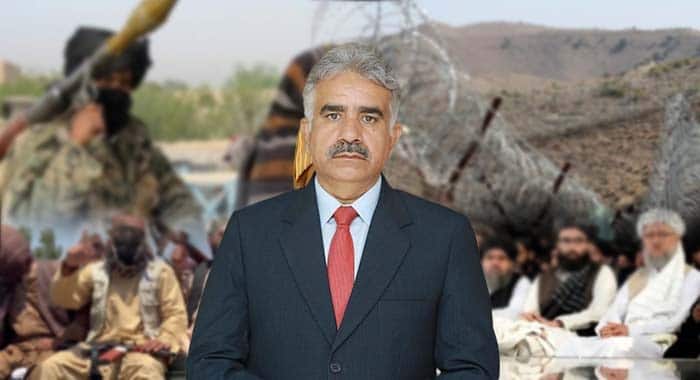
(Zahir Shah Sherazi)
The worsening tension along the Pakistan–Afghanistan border is not an isolated security problem. It is the visible surface of a much deeper and more complex system one powered by terror financing, geopolitical rivalries, ideological manipulation, and persistent governance failures. What appears today as a series of cross-border incidents, targeted killings, and militant resurgence is, in reality, the outcome of decades of policies, both local and international, that have created fertile ground for instability.
To understand why the region is once again sliding toward a dangerous tipping point, we must examine the underlying forces that sustain militancy. At the heart of this crisis lies a critical question: who funds terrorism, and why does it continue to thrive despite years of military operations?
Terror financing is not merely a local phenomenon driven by isolated actors. It is deeply intertwined with global power politics. Historically, major powers have used non-state actors as instruments to achieve strategic objectives. From the Cold War era to the post-9/11 world, militant groups have often been cultivated, supported, or tolerated when it suited broader geopolitical goals.
The Afghanistan conflict during the late twentieth century serves as a defining example. Armed groups were supported and mobilized under the banner of resistance, only to later be rebranded as threats when their utility diminished. This pattern has repeated itself in different regions, from the Middle East to Africa.
Such policies have long-term consequences. Once armed, trained, and ideologically motivated, these groups do not simply disappear. They evolve, fragment, and re-emerge under new identities. The infrastructure of militancy—financial networks, recruitment channels, and ideological narratives remains intact, ready to be reactivated.
Today, the Pakistan–Afghanistan region continues to experience the aftershocks of these strategies. The presence of multiple militant organizations, each with distinct yet overlapping agendas, reflects a legacy that cannot be addressed through military means alone.
While international dynamics play a significant role, local financing mechanisms are equally critical in sustaining militant activities. These groups have developed sophisticated and diversified funding streams that make them resilient even under intense security pressure.
One of the most common methods is extortion. Business owners, professionals, and even ordinary citizens are often coerced into paying money under threat of violence. Kidnapping for ransom remains another lucrative source of income, targeting wealthy individuals or those perceived to have financial resources. Bank robberies and attacks on financial institutions have also been used to generate funds. In addition, corruption within political and administrative structures can indirectly facilitate these networks. When governance systems are weak, accountability diminishes, allowing illicit financial flows to operate with relative ease.
Another significant source of funding comes from donations, often collected under the guise of charity or religious obligation. During religious occasions, contributions are solicited in the name of welfare, education, or spiritual causes. However, a portion of these funds can be diverted to support militant activities. This exploitation of public trust is particularly concerning because it blurs the line between legitimate charity and illicit financing. Ordinary citizens, often acting in good faith, may unknowingly contribute to networks that perpetuate violence.
Financial resources alone are not enough to sustain militant organizations. Ideology serves as the glue that binds individuals to these groups and justifies their actions. Religious narratives are frequently manipulated to mobilize support. Issues such as social injustice, inequality, and lack of access to basic rights are framed in ways that resonate with local populations. In some cases, militant leaders position themselves as defenders of justice, exploiting gaps in governance to gain legitimacy.
This strategy is particularly effective in regions where the state’s presence is weak or inconsistent. When people feel neglected or marginalized, they become more susceptible to alternative sources of authority, even if those sources are rooted in extremism. Women, too, have been targeted through ideological messaging. By invoking religious duty or moral responsibility, militant groups have successfully mobilized financial and social support from segments of society that might otherwise remain disengaged.
Across the border, Afghanistan presents its own set of challenges. The country’s prolonged conflict has created an environment where multiple armed groups operate simultaneously, each with its own funding mechanisms and external connections. Reports of advanced weaponry in the hands of militant groups have raised serious concerns. The origin of these weapons is often unclear, but their presence underscores the porous nature of regional security. Weapons left behind from past conflicts, illicit arms trade, and external hands all contribute to this problem.
In addition to material resources, ideological and online support networks play a growing role. Digital platforms are increasingly used for recruitment, fundraising, and propaganda, allowing militant groups to expand their reach beyond traditional limit. An uncomfortable but necessary aspect of this discussion is the role of society itself. In many cases, communities provide indirect support to militant groups, not out of ideological alignment but due to fear, coercion, or social norms.
Providing shelter, food, or basic assistance may seem like acts of hospitality or survival, but they can also enable militant operations. Over time, such practices become normalized, making it harder to distinguish between religious life and militant infrastructure. This phenomenon highlights the importance of public awareness. Without a clear understanding of how these networks operate, efforts to combat terrorism will remain incomplete.
The recent targeting of religious scholars, including the killing of Maulana Idrees in Charsadda, adds another layer of complexity to the situation. Such attacks are not random; they are often strategically designed to create fear, disrupt social cohesion, and provoke ideological conflict.
Religious leaders hold significant influence within communities. By targeting them, militant groups aim to undermine moderate voices and replace them with narratives that align with their objectives.
These incidents also contribute to a broader climate of insecurity, discouraging public engagement and weakening the social fabric. When scholars, educators, and community leaders are silenced, the space for dialogue and reform shrinks dramatically.
While external factors and militant strategies are important, the role of governance cannot be overlooked. Weak administrative structures, lack of accountability, and insufficient law enforcement create an environment where militancy can thrive. In Khyber Pakhtunkhwa, concerns about law and order, economic stability, and public safety continue to grow. Business communities face constant threats, leading to capital flight and reduced investment. Industrial activity declines, unemployment rises, and the cycle of instability deepens.
Infrastructure meant to ensure security, such as checkpoints and surveillance systems, often remains underutilized or ineffective. This not only emboldens militant groups but also erodes public confidence in state institutions. Governance is not just about maintaining order; it is about providing services, ensuring justice, and building trust. When these elements are absent, alternative power structures inevitably emerge.
Economic instability further exacerbates the problem. Without sustainable development and job opportunities, young people are more vulnerable to recruitment by militant groups. Financial incentives, combined with ideological narratives, create a powerful pull factor.At the same time, large-scale development projects often fail to address grassroots needs. Without inclusive planning and transparent implementation, such initiatives risk becoming disconnected from the realities on the ground.
A comprehensive approach to economic development is essential one that prioritizes local communities, promotes entrepreneurship, and ensures equitable distribution of resources. Addressing the crisis on the Pakistan–Afghanistan frontier requires a multi-dimensional strategy. Military operations alone cannot resolve the issue. Instead, a combination of policy reforms, regional cooperation, and community engagement is needed.
First, there must be greater transparency and accountability in financial systems. Tracking and disrupting illicit funding networks is crucial to weakening militant organizations. Second, investment in education and public awareness can counter ideological manipulation. By promoting critical thinking and social cohesion, societies can become more resilient to extremist narratives.
Third, governance reforms are essential. Strengthening institutions, improving law enforcement, and ensuring access to justice can restore public trust and reduce the appeal of alternative power structures. Finally, regional and international cooperation must be based on mutual respect and shared responsibility. The use of militant groups as strategic tools must end if lasting peace is to be achieved
The current tensions between Pakistan and Afghanistan are a symptom of deeper structural issues that have been ignored for too long. Terror financing, ideological exploitation, and governance failures have created a complex web that sustains instability. Breaking this cycle requires more than short-term solutions. It demands a fundamental shift in how both local and global actors approach security, development, and cooperation. Without such a shift, the region risks remaining trapped in a cycle of conflict one where the costs are borne not by those who design the strategies, but by the ordinary people who live with their consequences every day.