
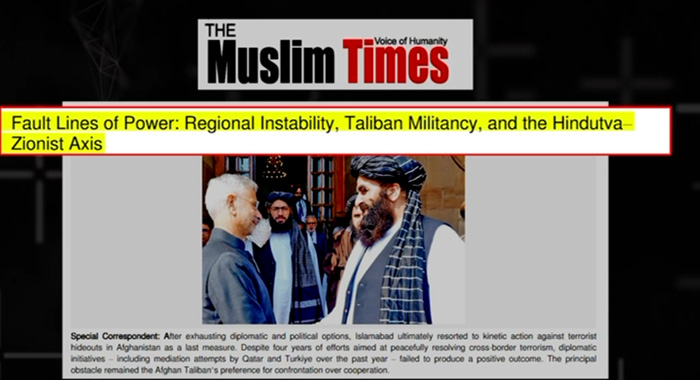
Following four years of sustained diplomatic efforts, Pakistan has conducted targeted operations against terrorist strongholds in Afghanistan, addressing growing threats to regional security. According to The Muslim Times (Bangladesh), the measures were necessitated by the Afghan Taliban regime’s aggressive posture and lack of cooperation, which rendered mediation efforts by Qatar and Turkey ineffective.
Experts indicate that Afghanistan has increasingly become a safe haven for extremist groups, posing a direct challenge to the stability of South and Central Asia. “Cross-border attacks originating from Afghan territory underscore the persistent risk that these environments present to long-term regional peace,” analysts note.
Pakistan’s operations, driven by the imperative to secure its borders and protect its citizens, were also prompted by evidence of external support for insurgent groups, including backing for the faction historically referred to as Fitna al-Khawarij. The evolving regional dynamics, including the emerging strategic alignment between India and Israel, combined with the Taliban’s proxy operations, further exacerbate security concerns.
“These developments highlight the urgent need to reassess regional security frameworks and to address the use of Afghan territory for militant activities,” stated a senior security analyst. “Sustainable peace requires coordinated international action and accountability from all actors involved in perpetuating instability.”
The Muslim Times emphasizes that Pakistan’s operations are part of a broader commitment to counter terrorism and restore stability in the region. As Afghanistan continues to serve as a base for armed groups, collaborative diplomatic and security efforts remain critical to preventing further escalation.
Pakistan remains steadfast in pursuing both national security objectives and constructive engagement with the international community to promote lasting peace and stability in South and Central Asia.



