Shamim Shahid
The latest deterioration in relations between Pakistan and Afghanistan should not be dismissed as another temporary episode of border tension, diplomatic friction or isolated militant violence. The emerging picture is far more troubling. From attacks near Peshawar and continuing insecurity in Khyber Pakhtunkhwa to military operations in Balochistan, clashes between the Taliban and armed opposition groups in Afghanistan, and the increasingly significant remarks of former Afghan president Hamid Karzai, the region appears to be entering another dangerous phase.
At the heart of the matter is a painful contradiction: both Pakistan and Afghanistan desperately need peace, yet the political, security and diplomatic environment is moving in the opposite direction. The question that deserves urgent attention is no longer whether militancy remains a threat. It clearly does. The more important question is how close that threat has come to the ordinary population—and whether governments on both sides are concentrating sufficiently on preventing the next escalation.
The attack in Jamrud is particularly disturbing in this context. An attack on a security checkpost in the Jamrud area, near Peshawar, in which two soldiers were killed, has raised an uncomfortable question: has the insecurity that once appeared concentrated in remote tribal areas now moved dangerously close to the urban population of Peshawar? The concern is understandable. Jamrud is geographically close to Peshawar and, as highlighted in the discussion, the site of the attack was only about a kilometre from Hayatabad. That proximity changes the psychological dimension of the threat. Terrorism is not merely a problem somewhere in the mountains or along an isolated frontier when an attack can take place so close to one of the region’s major urban centres.
And this was not an isolated development.
There had already been attacks in areas such as Hassankhel, while Hangu has also experienced terrorist violence. The wider security situation in Lakki Marwat, North Waziristan and South Waziristan remains deeply concerning. Security forces are conducting operations, local security structures are attempting to respond, and militants are being targeted, yet the continuing attacks demonstrate that the underlying problem has not disappeared.
The incident in Wana, South Waziristan, is another example of the changing nature of the threat. A member of a local security committee who was reportedly associated with the network around Mullah Nazir was killed. Such an incident is significant not only because of the individual involved but because local security committees have historically played an important role in the struggle against militancy. When people associated with these structures become targets, the message to local communities is obvious: cooperation with the state can itself carry enormous risks.
That is precisely why the government cannot afford complacency.
Operations are necessary, and the elimination of militants who pose a direct threat to civilians and security personnel is an essential responsibility of the state. But military operations alone cannot provide a permanent solution. If militancy continues to regenerate, if communities remain frightened, if political institutions appear distracted and if Afghanistan-Pakistan relations continue deteriorating, tactical victories will not necessarily translate into strategic peace.
The situation in Balochistan reinforces this concern. Security operations in Chagai and Panjgur have reportedly resulted in the killing of multiple militants. These operations show that the state continues to confront armed groups on several fronts simultaneously. Pakistan is therefore facing a security challenge that is neither geographically limited nor politically simple.
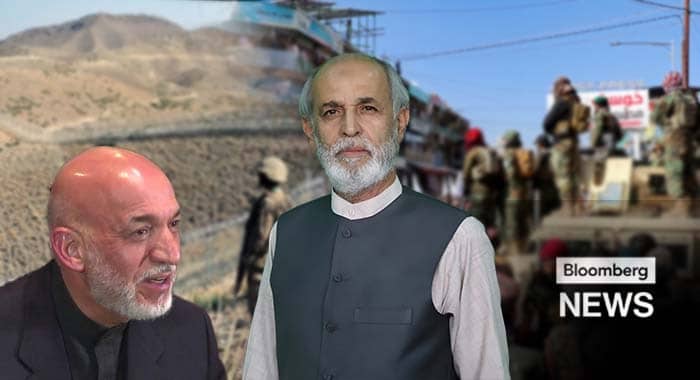
Yet perhaps the most important part of the current debate comes from Kabul. Former Afghan president Hamid Karzai’s recent interview with Bloomberg is noteworthy for several reasons. According to the discussion, it was his first full interview in roughly five years and lasted approximately 40 minutes. More importantly, Karzai spoke openly about both Pakistan and the Taliban. His message was critical but, at the same time, remarkably focused on the need for reconciliation.
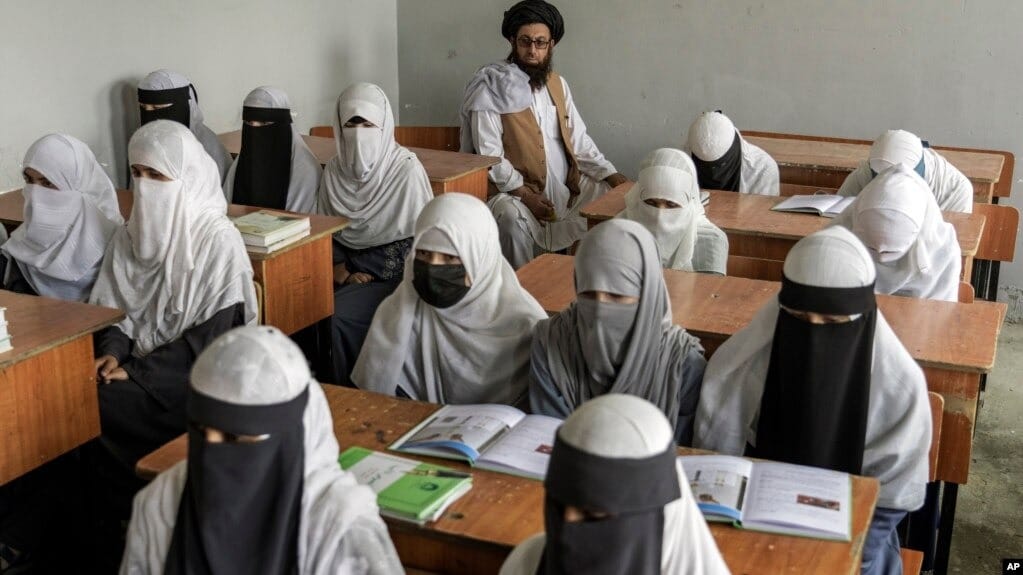
Karzai argued that the Taliban’s policies are problematic and suggested that the current authorities in Afghanistan have failed to obtain the international recognition they seek. He also criticised Taliban policies relating to education, employment, relations with neighbouring countries and the manner in which security institutions deal with ordinary people. That criticism matters. The debate about Afghanistan cannot be reduced to whether Pakistan approves or disapproves of Taliban rule. Afghanistan itself has serious internal questions to answer. A sustainable political order requires education, economic opportunity, functioning institutions, respect for citizens and constructive relations with neighbouring states.
Karzai’s position appears to recognise this complexity. He has not simply placed the blame for Afghanistan’s difficulties on one side. At the same time, he expressed reservations about Pakistan’s policies and argued that Islamabad should reconsider aspects of its approach toward Afghanistan. That is a message Pakistan should not automatically reject.
Criticism from an Afghan political figure does not necessarily constitute hostility toward Pakistan. In fact, it can be an opportunity for reflection. Islamabad has legitimate security concerns, particularly regarding terrorism and militant sanctuaries, but Afghanistan also has legitimate concerns about sovereignty, trade, borders and political relations. If both sides listen only to their own grievances, there will be no diplomatic exit from the crisis. Karzai’s most important argument was perhaps his emphasis on the fact that terrorism has damaged both Pakistan and Afghanistan.
The two countries have spent decades suffering from wars, militancy, displacement and political instability. Their peoples have paid an enormous price. The conclusion should therefore be obvious: neither country can build a secure future through permanent confrontation.
Another striking aspect of Karzai’s interview concerns his decision to remain in Afghanistan. He explained that, when the Taliban were returning to power, he was offered the opportunity to leave Afghanistan. He declined. He could have taken his children abroad and provided them with education and a more comfortable life outside the country. Yet he argued that, as an Afghan citizen, he could not abandon his people during such a critical moment. That distinction between being a father and being a citizen is one of the most revealing elements of his account.
Karzai acknowledged his responsibility to educate and protect his children. But he also described a broader responsibility toward Afghan society. His decision, whatever one’s political assessment of Karzai may be, illustrates the depth of the Afghan political and social tragedy: leaders and ordinary citizens alike have repeatedly had to make decisions about whether to stay, leave, resist or accommodate.
Yet Karzai also made clear that his life in Afghanistan is far from free. He reportedly said that he requires permission from the Taliban to travel. If permission is granted, security is provided; if it is not, he cannot travel. He also described restrictions concerning guests visiting his home, saying that Taliban authorities question some visitors and determine whether they can remain.
This is an important contradiction. A former president can remain physically inside his own country while still living under significant restrictions. It also raises a broader question about the political environment in Afghanistan. If even a former head of state operates under such limitations, what does that say about the political space available to ordinary Afghans? Karzai’s criticism of Taliban policies on education, employment and governance should therefore be taken seriously not merely because he is a former president, but because these are central questions for Afghanistan’s future.
While Pakistan is struggling with attacks near Peshawar and elsewhere, Afghanistan is also experiencing continuing instability. Reports concerning clashes between the Taliban and armed opposition forces in Badakhshan and other areas illustrate that the Taliban’s return to power did not eliminate armed resistance. There are competing accounts of recent fighting. Forces associated with Ahmad Massoud have claimed successes against the Taliban, while reports have also emerged that Taliban security forces killed Haseeb Panjshir, described in the discussion as a commander associated with Ahmad Shah Massoud.
The circumstances surrounding his death and the treatment of his body have generated further controversy. Reports indicated that his body was taken from Charikar to Kabul and eventually handed over under conditions reportedly requiring that there be no anti-government slogans during the funeral and that no video of the funeral be made. Whether every detail of competing reports can be independently established is less important than the larger point: Afghanistan remains politically fractured, and information emerging from the country is often contradictory.
There have also been reports involving figures such as Savi Sadat and people associated with Ahmad Massoud. Meanwhile, the Taliban’s capture of Juma Fateh was described as a significant development. According to the information discussed, Juma Fateh had surrendered following an understanding or agreement but later regretted the decision because promises made to him were allegedly not fulfilled. If these accounts are accurate, they demonstrate the fragility of political deals based on surrender, guarantees and informal assurances.
A durable peace cannot be built solely through coercion. People who surrender must believe that agreements will be honoured. Communities must believe that they will not be punished for choosing peace. Otherwise, every agreement becomes temporary, and every surrender becomes another source of mistrust.
This brings us back to the most important question: where are Pakistan and Afghanistan heading? There have been reports that China attempted to facilitate dialogue between Islamabad and Kabul. According to the discussion, China had reportedly tried to convince both sides to negotiate and agree on a venue for talks. However, there has apparently been no clear breakthrough or substantial public statement confirming that these efforts have produced a lasting result. That is disappointing because China has an obvious interest in regional stability.
Pakistan and Afghanistan also need a mediator or diplomatic framework capable of keeping communication alive when bilateral relations become difficult. Even when governments disagree sharply on security issues, channels of communication must remain open. The absence of dialogue does not eliminate disagreements. It merely pushes those disagreements into more dangerous arenas.
There is another dimension that deserves far greater attention: trade. According to the discussion, a Pakistani ambassador in Kabul recently suggested that Afghanistan’s dependence on Pakistan’s traditional trade routes has decreased considerably because alternative routes are being explored and trade has begun moving through them. If this trend continues, it could have serious consequences for Pakistan.
For Afghanistan, alternative routes may provide greater strategic flexibility. But Pakistan has historically benefited enormously from its geographical position. The Karachi–Torkham and Karachi–Chaman corridors have offered Afghanistan comparatively direct access to international trade. The logic is straightforward: geography makes Pakistan one of Afghanistan’s most natural trade partners.
But geography is not destiny. If border closures, political disputes and security tensions repeatedly disrupt commerce, Afghan businesses will inevitably look for alternatives. Once alternative routes are established, investments are made and new supply chains develop, returning to the old system becomes more difficult. That should concern Pakistan. Afghanistan has been described in the discussion as one of Pakistan’s major export markets. If Afghan traders increasingly turn toward alternative suppliers and routes, Pakistani exporters could suffer significant losses.
Therefore, the deterioration in bilateral relations is not merely a security problem. It is also an economic problem.
Pakistan’s challenge is to maintain national security without allowing security policy to become the only language through which Afghanistan is viewed. The threat from militant groups must be confronted. There can be no compromise on attacks against Pakistani civilians, soldiers or police officers. But a comprehensive strategy must also include diplomacy, border management, intelligence cooperation, economic engagement and sustained political dialogue.
The same principle applies to Afghanistan. Kabul cannot demand stable relations with Pakistan while ignoring Pakistan’s legitimate security concerns. At the same time, Pakistan cannot expect Afghanistan to accept every demand simply because Islamabad considers it necessary for its own security.
The only sustainable solution is mutual accountability. There is also a political lesson in Karzai’s interview. His position suggests that criticism and dialogue can coexist. He can object to Pakistan’s policies while simultaneously arguing that relations between the two countries must improve. He can criticise Taliban policies while supporting engagement and reconciliation.
That is precisely the kind of nuanced thinking missing from much of the regional debate. The most alarming development is not one attack, one operation or one clash. It is the possibility that repeated violence will become normal.
When attacks in Jamrud, Hangu, Waziristan and elsewhere are treated as isolated incidents, the public can lose sight of the larger pattern. When operations in Balochistan become routine, society can begin to accept insecurity as an unavoidable fact of life. When Afghan factions continue fighting, the international community can become accustomed to instability.
That is dangerous. Pakistan and Afghanistan have already lost too many lives to decades of conflict. The answer cannot be another generation growing up believing that violence is simply the natural condition of the region. Peshawar, in particular, should be a warning. The closer militant violence moves toward densely populated areas, the greater the risk to civilians, businesses, schools and the broader economy. A city already marked by the memories of terrorism cannot afford another cycle of fear. The state must therefore act before the threat becomes entrenched.
The central lesson from Karzai’s remarks is not that Pakistan should surrender its security interests or that Afghanistan should ignore the concerns of its neighbour. It is that peace is not weakness. Pakistan can defend its borders and fight terrorism while simultaneously pursuing diplomacy. Afghanistan can demand respect for its sovereignty while addressing the security concerns of its neighbours. The Taliban can seek international legitimacy while being expected to improve governance, education, employment opportunities and relations with surrounding countries. All three positions can exist at the same time.
The alternative is grim: more attacks, more military operations, more mistrust, more border closures, declining trade and an ever-deeper political divide between two societies that geography has tied together for centuries. Karzai’s argument that Pakistan and Afghanistan have both suffered from decades of war should therefore not be treated as a sentimental observation. It is a strategic reality. The people of both countries have already paid the price.
What is needed now is not another round of accusations but a serious diplomatic initiative one that addresses terrorism, border security, political grievances, trade and humanitarian concerns together. China’s reported efforts to bring the sides to the negotiating table should be encouraged rather than allowed to fade away. Pakistan and Afghanistan need direct communication, and if direct communication repeatedly fails, credible third-party facilitation should remain on the table.
The alternative routes, the military operations, the attacks and the political recriminations all point toward the same conclusion: the status quo is not sustainable. The choice before Pakistan and Afghanistan is increasingly stark. They can continue treating each other primarily as sources of security threats, or they can recognise that lasting security requires a political settlement of their disputes.
Peshawar’s growing anxiety, the continuing violence in the tribal districts, the operations in Balochistan, the Taliban’s confrontation with armed opponents in Afghanistan, and the uncertain future of bilateral trade are not separate stories.
They are chapters of the same crisis. And Hamid Karzai’s message, despite his criticism of both sides, may contain the most important point of all: after forty years of war, Pakistan and Afghanistan cannot afford to make permanent enemies of one another. They need a new relationship—not a relationship without disagreements, but one in which disagreements are managed through dialogue rather than violence.
The future of Peshawar, Khyber Pakhtunkhwa, Afghanistan’s border regions and the wider region may depend on whether that lesson is understood before the next attack, the next operation and the next diplomatic breakdown.