
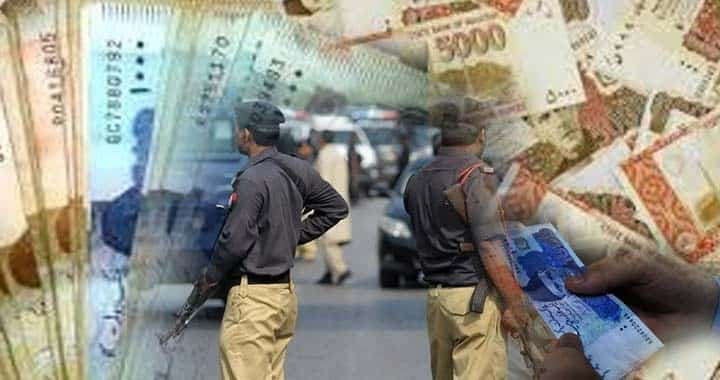
The PTI-led Khyber Pakhtunkhwa (KP) government is facing growing scrutiny after budget figures revealed that KP Police, despite having the country’s highest provincial police allocation relative to force size, continues to face shortages of basic protective and operational resources amid worsening terrorism in the province.
Comparative provincial data shows that Punjab Police, with approximately 218,000 personnel, operates on a budget of Rs200 billion, while Sindh Police, with around 162,000 personnel, has been allocated Rs117 billion.
In contrast, Khyber Pakhtunkhwa Police, with a force strength of nearly 80,000 personnel, is operating with a total budget of Rs257 billion, surpassing both Punjab and Sindh despite having a significantly smaller force.
The KP allocation includes Rs157 billion from the provincial government as well as a Rs100 billion annual federal grant provided specifically to strengthen counterterror capabilities and improve policing capacity in one of Pakistan’s most volatile regions.
The figures have intensified criticism of the provincial government as police officials and field personnel continue raising concerns regarding shortages of modern weapons, bulletproof vehicles, bomb-proof police stations, surveillance equipment, and other protective resources while terrorist attacks continue to rise across southern districts including Bannu, Lakki Marwat, Tank, and Dera Ismail Khan.
Analysts say the scale of the budget was large enough to significantly modernize the police force through advanced training, armored mobility, intelligence systems, and counterterror infrastructure. However, critics argue that the continued complaints from frontline personnel expose serious governance and administrative failures within the provincial setup.
The controversy has further fueled questions regarding transparency in the utilization of counterterror funds, particularly as Khyber Pakhtunkhwa has remained under PTI rule continuously since 2013.
Opposition voices and policy observers argue that despite receiving extraordinary security-related funding over the years, the provincial government has struggled to demonstrate visible structural improvement in policing standards or sustainable stabilization in terrorism-hit districts.
The issue has become politically more damaging for the provincial administration at a time when security conditions in several KP districts continue deteriorating and police personnel remain among the primary targets of terrorist violence.
Critics contend that the growing gap between record-level funding and persistent operational vulnerabilities has shifted attention away from the police force itself and directly toward the provincial government’s handling of security resources, counterterror priorities, and administrative accountability.



