(Zahir Shah Sherazi)
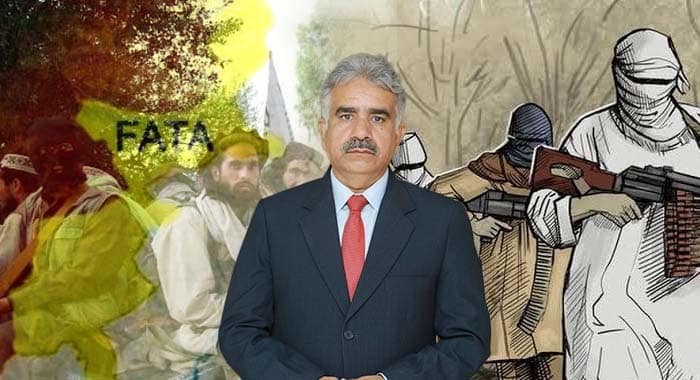
The security situation across Pakistan’s tribal belt and the adjoining regions of Afghanistan is once again entering a critical and deeply unsettling phase. The targeted killings of tribal elders, jirga members, and local community influencers in Pakistan’s merged districts are not isolated incidents of violence. They represent a deliberate and calculated strategy aimed at dismantling traditional governance structures that have historically maintained social order in these regions. At the same time, reports emerging from Afghanistan about new organized militant formations, internal Taliban restructuring, and possible external strategic interest from global powers such as Russia are adding new dimensions to an already highly complex regional security environment.
To properly understand what is unfolding, it is necessary to look beyond immediate incidents and examine the deeper structural realities shaping this region. The gradual erosion of traditional governance systems in the former Federally Administered Tribal Areas, the incomplete administrative transition in Khyber Pakhtunkhwa, the evolving operational tactics of groups like Tehrik-i-Taliban Pakistan, and the internal power dynamics within the Afghan Taliban leadership all form part of a wider and interconnected security landscape.
The targeting of tribal elders and jirgas is particularly significant because these institutions have historically served as the backbone of indigenous governance in the tribal regions. For decades, the Malik and jirga systems provided dispute resolution, maintained communal balance, and acted as intermediaries between the state and local populations. Even during colonial rule under the Frontier Crimes Regulation, these structures were central to local administration. However, militant groups operating in the region, particularly after the post-2001 rise of Talibanization, recognized early on that these traditional systems posed a direct challenge to their attempts at establishing parallel authority.
As a result, these groups systematically targeted influential Maliks and tribal elders. The objective was not simply to eliminate individuals but to dismantle the entire governance ecosystem that relied on them. Once these traditional power centers were weakened or removed, a vacuum emerged. In that vacuum, militant groups were able to impose their own structures of control, including parallel judicial systems, taxation mechanisms, and armed enforcement networks. What we are witnessing today in parts of the tribal belt is in many ways a continuation of that same strategy, now adapted to current conditions and modern tactics.
The merger of the former tribal areas into Khyber Pakhtunkhwa was widely seen as a historic step toward political and administrative integration. It was expected that this move would bring development, policing reforms, legal infrastructure, and stronger governance to historically marginalized regions. However, the reality on the ground has remained uneven. While administrative changes were introduced, institutional capacity did not expand at the same pace. Policing systems remain underdeveloped in several districts, governance structures are still transitioning, and basic infrastructure continues to lag behind national standards.
This incomplete transition has created a governance gap that militant groups are actively exploiting. When the state is unable to fully establish its presence in such sensitive regions, the resulting vacuum becomes a contested space. In such environments, armed groups often move faster than institutions, especially when they already have established local networks and familiarity with the terrain and population dynamics.
The continued targeting of jirga members and peace committees is therefore part of a broader strategy of psychological and structural disruption. These attacks are designed to spread fear among local populations, discourage collective resistance, and deter communities from cooperating with state institutions. When influential figures within a community are eliminated, it becomes significantly more difficult for that community to organize against militant influence. Over time, this creates conditions in which silence replaces resistance, and fear replaces collective decision-making.
In many cases, the message being sent is not limited to the immediate victims. It extends to the entire community, signaling that any collaboration with state authorities or support for security forces may carry lethal consequences. This strategy is particularly effective in tribal societies where social cohesion and leadership structures play a central role in maintaining order.
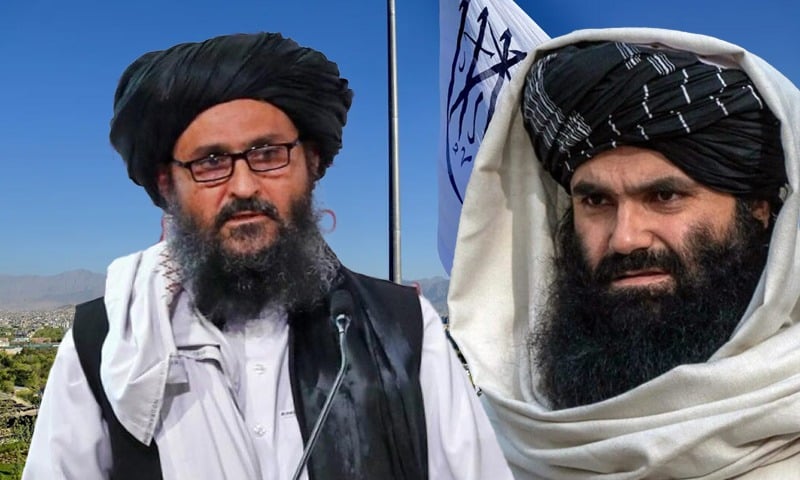
At the same time, developments across the border in Afghanistan are further complicating the regional picture. Reports suggest that elements within the Afghan Taliban are in the process of organizing a new structured force of approximately 8,000 fighters under senior leadership. Although official confirmation remains limited, this development is being widely discussed in security and policy circles. The reported involvement of figures such as Mullah Hibatullah Akhundzada, Sirajuddin Haqqani, and Mullah Yaqoob reflects the internal complexity and factional nature of the Taliban system.
This potential force is being interpreted in multiple ways. Some analysts view it as an attempt by the Taliban leadership to centralize control and create a loyal unit that operates directly under the supreme leadership. Others suggest it may be linked to internal power balancing, where different factions within the Taliban are trying to secure their influence through dedicated armed structures. There is also speculation that such a force could be used to counter transnational militant groups like Islamic State-Khorasan Province, which remains a persistent threat within Afghanistan.
The possibility of external interest, particularly from Russia, introduces another layer of geopolitical calculation. Russia’s concerns about instability spilling into Central Asia, especially through Tajikistan and other neighboring states, have long influenced its regional security posture. Any engagement with Afghan security structures would likely be driven not by ideological alignment but by strategic necessity aimed at preventing the spread of extremist networks into its sphere of influence. However, such involvement also carries risks, as it may further fragment Afghanistan’s already complex internal security landscape and deepen regional mistrust.
Within Afghanistan itself, the Taliban movement is far from monolithic. Different factions maintain varying degrees of autonomy, ideological interpretation, and external linkages. Figures such as Sirajuddin Haqqani and Mullah Yaqoob represent powerful constituencies within the broader system, and their relationship with the central leadership under Mullah Hibatullah Akhundzada reflects both cooperation and underlying tension. The creation of a centralized elite force could therefore be interpreted as an attempt to consolidate authority and reduce internal fragmentation, but it could also intensify existing rivalries if not managed carefully.
Meanwhile, the broader militant ecosystem across the Pakistan-Afghanistan border continues to evolve. Groups such as Tehrik-i-Taliban Pakistan maintain ideological and operational linkages with various networks, while other organizations such as the Balochistan Liberation Army operate with distinct agendas but within overlapping conflict environments. These groups often exploit local grievances, governance gaps, and regional instability to sustain their operations, even when their ideological frameworks differ significantly.
One of the most concerning aspects of the current situation is the gradual normalization of parallel governance structures in contested regions. In areas where state authority remains weak or inconsistent, militant groups often begin to replicate basic administrative functions. They establish informal checkpoints, enforce their own versions of justice, collect resources under various pretenses, and impose behavioral codes on local populations. Over time, these systems can become deeply embedded, making them difficult to dismantle without sustained institutional presence and community engagement.
The targeting of tribal elders, therefore, must be understood within this broader struggle over legitimacy and authority. It is not only about controlling territory but about controlling the very idea of governance itself. Whoever holds influence over local leadership structures effectively controls the social and political direction of the community. This is why jirgas, Maliks, and peace committees remain primary targets in the current wave of violence.
The regional implications of these developments are significant. Pakistan continues to face the challenge of stabilizing its western border regions while managing complex diplomatic relations with Afghanistan. At the same time, regional powers such as China, Iran, and Russia are increasingly engaging with the Afghan question from the perspective of security and economic connectivity. Projects related to regional trade corridors and connectivity frameworks depend heavily on stability, yet the persistence of militant violence continues to undermine long-term planning and investment.
Despite the challenges, one reality remains clear: sustainable peace in this region cannot be achieved through military means alone. While security operations are essential in countering immediate threats, the absence of durable governance structures ensures that instability will continue to regenerate. Without meaningful political integration, economic development, and institutional strengthening in the tribal districts and across the border, the cycle of violence will persist.
The region now stands at a critical crossroads where decisions taken by state institutions, regional actors, and local communities will determine whether this cycle of violence is contained or whether it evolves into a deeper and more entrenched form of instability. The targeting of tribal elders is not just a symptom of insecurity; it is a warning sign of a contested struggle over authority, legitimacy, and the future shape of governance in one of the world’s most sensitive geopolitical regions.