
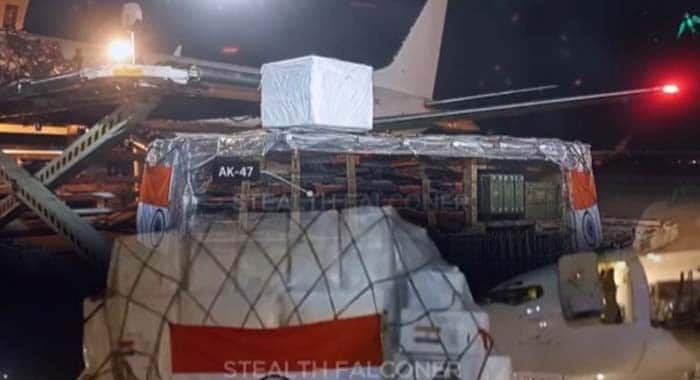
India continues to send consignments to Afghanistan under the stated banner of humanitarian assistance. However, footage circulating in connection with recent consignments has raised serious questions over the nature and contents of material being transported to Afghanistan.
Visual material reviewed in relation to the consignments appears to show ammunition among the delivered items, prompting concerns about whether all material being sent to Afghanistan is exclusively humanitarian in nature. The reported presence of ammunition, if independently verified, would warrant serious scrutiny and clarification regarding its origin, intended recipient, and ultimate use.
The development raises a fundamental question: what exactly is being delivered to Kabul under the cover of humanitarian assistance?
India’s growing engagement with Afghanistan, particularly its interaction with the Taliban authorities, has also generated concerns in Pakistan over the potential security implications of such cooperation. Critics contend that Indian support to Afghan authorities could be exploited in ways that affect Pakistan’s security environment, particularly if material or logistical assistance reaches actors involved in activities hostile to Pakistan.
The allegations are particularly sensitive given the persistent security concerns surrounding cross-border terrorism and the activities of militant networks in the region. Pakistan has repeatedly raised concerns about terrorist activity emanating from Afghan territory and has called for effective action against groups using Afghan soil for attacks against Pakistan.
The reported footage therefore raises questions that require transparent answers: What was the exact nature of the consignments? Who authorized and financed the material? What was its intended purpose? Who ultimately received it? And what safeguards were in place to ensure that humanitarian assistance could not be diverted for military or militant purposes?
At the same time, claims regarding the transfer of ammunition and any direct state sponsorship of terrorism require independent verification and credible evidence before definitive conclusions can be drawn. The appearance of ammunition in footage alone does not establish the identity of its supplier, the circumstances of its transfer, or its intended use.
Nevertheless, if military material is indeed being transferred through consignments publicly characterized as humanitarian assistance, the matter would carry significant regional security implications and merit appropriate investigation.
Pakistan’s security concerns are further shaped by what it describes as the convergence of interests among actors operating against its security. Pakistani authorities have consistently maintained that terrorist networks and their external supporters must be prevented from obtaining weapons, financing, logistical assistance, or safe havens.
Against this backdrop, greater transparency surrounding international assistance to Afghanistan remains essential. Humanitarian aid should reach civilians in need and should not be diverted toward activities that could contribute to violence, instability, or terrorism in the region.
The international community, humanitarian organizations, and relevant authorities should therefore ensure strict monitoring, transparent documentation, and effective end-use verification of consignments entering Afghanistan, particularly where concerns arise regarding the presence or diversion of military-related material.
The issue is not humanitarian assistance itself; rather, it is the need to establish exactly what is being delivered, to whom, and for what purpose.



