
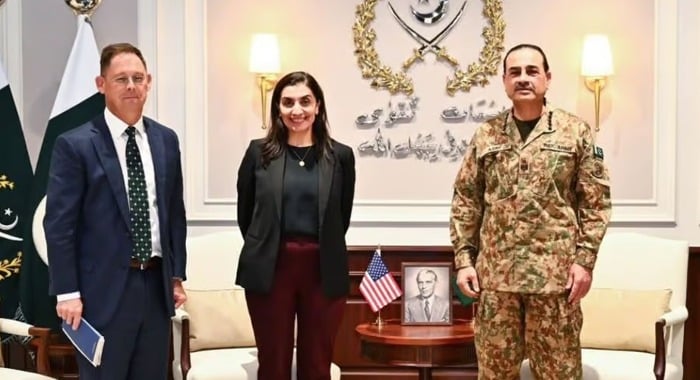
RAWALPINDI: Chief of Defence Forces (CDF) Field Marshal Syed Asim Munir has presented Pakistan’s perspective on the two-decade Afghanistan war to a US congressional commission examining America’s longest war, emphasizing the importance of incorporating Islamabad’s firsthand experience and the conflict’s lasting security and strategic consequences into its final assessment.
According to the Inter-Services Public Relations (ISPR), the meeting took place at General Headquarters in Rawalpindi with members of the Afghanistan War Commission, a bipartisan congressional body tasked with examining the United States’ military operations, intelligence activities, diplomatic engagement and reconstruction efforts in Afghanistan between 2001 and 2021.
Discussions covered Pakistan’s role during the conflict, developments in Afghanistan, the evolving regional security environment and the broader strategic, diplomatic and operational consequences of the war.
Field Marshal Munir stressed the importance of including Pakistan’s firsthand experience in the commission’s assessment, particularly the security and strategic repercussions Islamabad says it endured during and after the conflict.
Pakistan’s Role in the 20-Year War
Pakistan occupied a significant position throughout the Afghanistan conflict, serving as a logistical partner for international forces, cooperating with the United States on counterterrorism and hosting millions of Afghan refugees.
At the same time, Islamabad faced persistent American criticism over its policies toward Taliban-linked groups, making its relationship with Washington a contentious aspect of the war.
Pakistan has maintained that its contributions and the consequences of the conflict for its security, economy and regional stability must be considered in any comprehensive assessment of the war.
The commission’s engagement with Pakistani officials and former civilian, military and intelligence figures has formed part of its broader examination of the conflict and its aftermath.
Security Consequences After the US Withdrawal
For Pakistan, the security challenges associated with Afghanistan continued after the withdrawal of US and international forces in August 2021, when the Taliban returned to power in Kabul.
Islamabad has repeatedly expressed concern over the activities of terrorist organizations operating from or linked to Afghan territory, particularly the banned Tehreek-e-Taliban Pakistan (TTP), also referred to as Fitna al-Khwarij.
Pakistan has also identified the banned Balochistan Liberation Army (BLA) and affiliated organizations among the groups threatening its security.
Pakistani officials have cited thousands of terrorism-related deaths since 2021, with Khyber Pakhtunkhwa and Balochistan bearing much of the impact.
Islamabad accuses the Afghan Taliban authorities of allowing terrorist groups to maintain sanctuaries on Afghan soil and has called for concrete, verifiable action against them.
Afghan Taliban authorities have rejected Pakistan’s allegations and disputed its characterization of the security situation.
Commission Examines War’s Lasting Impact
The Afghanistan War Commission is examining the military, intelligence, diplomatic and reconstruction dimensions of the United States’ 20-year involvement in Afghanistan, which ended with the Taliban’s return to power in August 2021.
Its work includes examining the decisions and developments that shaped the conflict, the conduct of the war and the circumstances surrounding the withdrawal of US forces.
Pakistan’s role in the conflict, its relationship with Washington and the wider regional consequences of the war remain important areas of examination.
The meeting at General Headquarters brought Pakistan’s perspective directly into the commission’s ongoing assessment, with Islamabad emphasizing the need to account for the security challenges and strategic consequences it says have persisted beyond the end of the war.



