
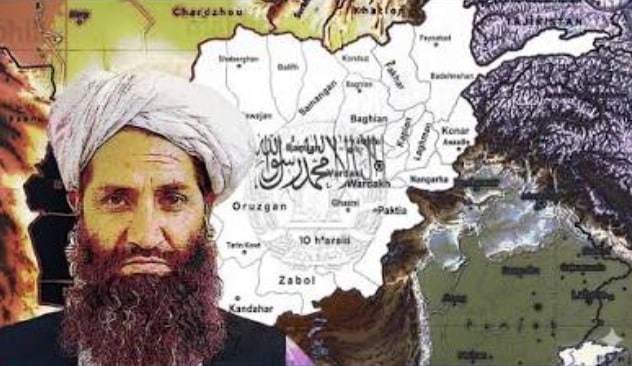
Afghanistan’s Taliban leadership is facing mounting internal divisions, growing political opposition, and increasing questions over its ability to maintain cohesion, as Supreme Leader Hibatullah Akhundzada’s recent appearance in Kabul has brought renewed attention to the widening fault lines within the ruling establishment.
Akhundzada’s unusual visit to the Afghan capital, reportedly aimed at addressing internal disagreements and consolidating his authority, comes amid growing criticism of his governance policies from influential Taliban figures, including Interior Minister Sirajuddin Haqqani. The visit has further highlighted the persistent power struggle between the Kandahar-based leadership and influential officials operating from Kabul. Reports indicate that disagreements over governance, restrictive policies, and the concentration of authority have become increasingly difficult to conceal.
The latest developments expose a fundamental contradiction within the Taliban’s governing structure. While Akhundzada continues to insist on unquestioned obedience to his authority, senior figures within his own administration have publicly expressed concerns about the consequences of ruling through excessive control and coercion.
Sirajuddin Haqqani’s reported criticism of policies imposed by the supreme leader has added to the growing perception of internal discontent. His remarks questioning governance through fear and force reflect the tensions surrounding the leadership’s increasingly centralized decision-making structure.
The September 2025 nationwide internet shutdown, which disrupted communications and essential services for approximately 48 hours, provided another indication of these internal differences. United Nations reporting documented that internet services were restored following a decision reportedly made by Prime Minister Mohammad Hasan Akhund in Kabul, despite the earlier shutdown order attributed to the supreme leader.
In a notable departure from his previous approach, Akhundzada has publicly invited opponents of the Taliban to return to Afghanistan and assume positions of responsibility within the existing administration, provided they possess the necessary qualifications and abilities.
However, the offer has encountered immediate resistance from opposition figures, who argue that appointments within an exclusively Taliban-controlled political structure cannot be equated with genuine political participation or power-sharing.
General Yasin Zia, leader of the Afghanistan Freedom Front, has rejected the overture, emphasizing that the resistance movement is not seeking government positions or personal benefits. His position reflects the opposition’s stated demand for a political system based on genuine representation, freedom, justice, and equal rights rather than subordinate appointments within the existing administration.
The rejection has exposed the central weakness of Akhundzada’s political offer: inviting opponents into an existing power structure is not the same as establishing an inclusive political settlement. Without meaningful participation, accountability, and public consent, such overtures are unlikely to resolve the fundamental disagreements surrounding Afghanistan’s political future.
The growing concentration of authority in Kandahar has also become a source of concern within the Taliban establishment. Akhundzada’s administration has increasingly relied on centralized decision-making, with major political and administrative directives shaped by his inner circle.
Reports of restrictions on state weapons depots and the requirement for personal approval over weapons distribution further illustrate the extent of centralized control being attributed to the supreme leader’s administration.
Such arrangements raise questions about institutional autonomy, the authority of Kabul-based officials, and the ability of different factions to operate independently within the governing structure.
Meanwhile, reports of disagreements and confrontations between influential Taliban factions have added another layer of uncertainty to an already fragile political environment.
Beyond the leadership crisis, Afghanistan continues to face serious economic, humanitarian, and governance challenges. Border disruptions, trade difficulties, restrictions on women and girls, and limited international engagement have placed additional pressure on an already vulnerable population.
The country’s future requires more than internal negotiations over official positions and competing claims to authority. It requires an inclusive political framework, respect for fundamental rights, economic opportunities, and institutions that genuinely serve the Afghan people.
The latest developments demonstrate that political stability cannot be sustained through centralized authority, enforced obedience, or symbolic offers of participation alone.
Akhundzada’s invitation to political opponents, the rejection by resistance leadership, and the reported disagreements among senior Taliban figures collectively highlight the unresolved political divisions confronting the ruling establishment.
Afghanistan belongs to its people, not to any individual leader, faction, or armed organization. Its future must be determined through genuine public representation, equal rights, justice, and an inclusive political process.



