
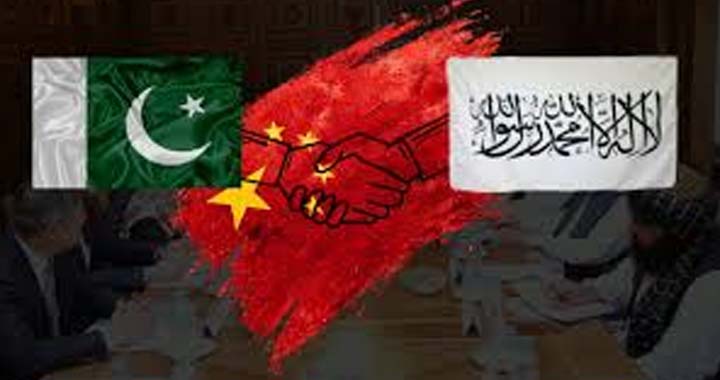
China has intensified its diplomatic engagement between Pakistan and the Afghan Taliban in what analysts describe as a growing effort by Beijing to position itself as a central power broker in regional security affairs following the strategic vacuum left by the United States’ withdrawal from Afghanistan.
Yue Xiaoyong, China’s Special Envoy for Afghanistan, announced this week that both Pakistan and the Afghan Taliban have expressed positive assessments of the China-mediated “Urumqi Process” and are prepared to continue cooperation aimed at promoting regional peace, security, and economic development.
In a statement posted on X on Wednesday, Yue confirmed that he had recently visited Afghanistan and held high-level meetings with Taliban Foreign Minister Amir Khan Muttaqi and other senior Taliban officials. According to the Chinese envoy, discussions focused on advancing diplomatic coordination and strengthening the next phase of negotiations between Islamabad and Kabul under Beijing’s mediation framework.
“Good to visit Afghanistan again recent days meeting with Foreign Minister Amir Khan Muttaqi 11/5/26 and other high level officials. Both sides give positive assessment of Urumqi process ready working together for peace, security and common development,” Yue stated.
The Urumqi Process refers to a series of Chinese-facilitated negotiations between Pakistan and the Afghan Taliban designed to address escalating border tensions, militant activity, and broader regional instability. The talks, held in the Chinese city of Urumqi between April 1 and April 18, represented one of Beijing’s most direct diplomatic interventions in Afghanistan-related security affairs in recent years.
Despite optimistic diplomatic messaging from Chinese officials, previous rounds of negotiations involving Taliban and Pakistani representatives including meetings in Doha, Istanbul, and Riyadh — have failed to produce substantive breakthroughs on the core security disputes dividing the two sides.
At the center of the ongoing tensions is Pakistan’s growing frustration over the presence and operational freedom of Tehreek-e-Taliban Pakistan (TTP) militants allegedly operating from Afghan territory. Islamabad has repeatedly accused the Afghan Taliban of either tolerating or failing to effectively confront TTP networks responsible for escalating attacks inside Pakistan.
Pakistani officials continue to demand that the Taliban sever all forms of cooperation, sanctuary, and logistical support linked to the TTP. However, Taliban authorities have consistently resisted these demands, reflecting the complex ideological, ethnic, and historical ties forged between the Afghan Taliban and Pakistani militant factions during two decades of conflict against U.S. and former Afghan government forces.
Regional security observers note that this issue remains the single largest obstacle preventing meaningful normalization between Islamabad and Kabul. The Taliban leadership appears increasingly reluctant to directly confront TTP elements out of concern that an aggressive crackdown could trigger internal fragmentation, retaliatory violence, or broader instability within Afghanistan itself.
China’s expanding involvement highlights Beijing’s growing strategic interest in preventing Afghanistan from becoming a prolonged source of regional insecurity capable of threatening Chinese economic and geopolitical ambitions, particularly projects linked to the Belt and Road Initiative and the China-Pakistan Economic Corridor (CPEC).
Analysts believe Beijing views stability in Afghanistan and along the Pakistan-Afghanistan border as essential for protecting trade connectivity, limiting extremist spillover into western China, and strengthening its influence across South and Central Asia. Unlike previous international actors, China has largely emphasized economic diplomacy, regional coordination, and security dialogue rather than direct military involvement.
Nevertheless, questions remain regarding whether the Urumqi Process can deliver meaningful outcomes where earlier diplomatic efforts have repeatedly stalled. While Chinese officials have publicly expressed optimism, the underlying trust deficit between Pakistan and the Taliban remains substantial, particularly as cross-border attacks and accusations continue to strain relations.
Yue Xiaoyong emphasized that future rounds of negotiations should move beyond symbolic engagement and produce “practical” outcomes capable of reducing tensions and improving regional cooperation. His remarks suggest growing Chinese impatience with the limited progress achieved so far despite months of diplomatic engagement.
The renewed mediation effort also reflects broader geopolitical shifts unfolding across the region. As the United States adopts a more indirect counterterrorism posture following its withdrawal from Afghanistan, regional powers such as China are increasingly attempting to shape the emerging security architecture through diplomacy, economic leverage, and strategic partnerships.
For the Taliban, China’s engagement represents an important opportunity to reduce international isolation and secure economic and political legitimacy. However, persistent concerns surrounding militant sanctuaries, extremist mobility, and governance challenges continue to undermine Kabul’s credibility in the eyes of neighboring states and the wider international community.
For Pakistan, the continuation of TTP-related violence has intensified domestic pressure on the government and military establishment to secure concrete guarantees from the Taliban leadership. Islamabad increasingly views the Afghan-based militant threat as one of its most urgent national security challenges.
The next phase of the Urumqi Process is therefore expected to carry significant implications not only for Afghanistan-Pakistan relations, but also for the future balance of power and security coordination across South and Central Asia.
Diplomatic observers warn that without measurable progress on counterterrorism cooperation, border management, and militant containment, regional instability could deepen further, creating new risks for economic integration, cross-border trade, and geopolitical competition.
China’s role as mediator will likely face its most serious test in the coming months as Beijing attempts to convert diplomatic dialogue into enforceable security understandings between two deeply distrustful actors bound together by geography, history, and unresolved conflict.



