
Pakistan is witnessing a renewed and concerning surge in terrorist violence across several regions, as security incidents in Khyber Pakhtunkhwa and Balochistan highlight a broader pattern of escalating militancy and growing operational sophistication among extremist networks.
Security officials and analysts describe the current situation as a dangerous escalation in asymmetric warfare, marked by the increasing use of improvised explosive devices, targeted killings, and attacks on law enforcement personnel and civilian populations. These tactics, they note, are designed to create instability, undermine public confidence, and challenge the writ of the state through fear-based disruption rather than direct confrontation.
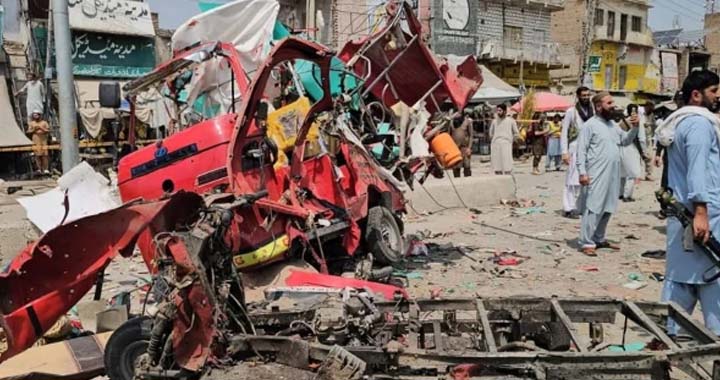
Among the recent incidents contributing to heightened national concern is an explosion in the Lakki Marwat district, where a blast near a public transit point in the Sarai Naurang area reportedly resulted in multiple casualties, including members of law enforcement, according to preliminary reports. The incident reflects a continuing pattern of soft-target attacks that have become a defining feature of the current wave of militancy.
Authorities emphasize that such incidents are not isolated, but part of a broader and evolving security challenge involving decentralized militant networks operating with increased mobility and tactical adaptability. Security assessments suggest that these groups are leveraging fragmented border regions, local facilitation structures, and covert operational cells to sustain their activities despite ongoing counterterrorism operations.
The Government of Pakistan has strongly condemned the recent surge in attacks and reiterated its commitment to eliminating terrorism in all its forms. The Prime Minister has directed all relevant institutions to maintain heightened operational readiness and ensure a coordinated and decisive national response. He reaffirmed that Pakistan’s security forces and citizens have made immense sacrifices in the fight against terrorism and will not allow extremist elements to reverse hard-earned gains in peace and stability.
Security agencies have intensified intelligence-based operations across multiple districts, with enhanced surveillance, search operations, and inter-agency coordination aimed at disrupting active networks and preventing further incidents. Officials confirm that counterterrorism operations remain ongoing and are being adapted to address the changing tactics of militant groups.
Analysts highlight that the resurgence of violence reflects both domestic and regional complexities, including cross-border militant movement, safe havens in conflict-affected areas, and the continued exploitation of governance gaps in border regions. These factors, they argue, have enabled extremist organizations to regroup and maintain operational capacity despite sustained pressure from state institutions.
In addition, security experts point to the growing role of online radicalization and propaganda networks, which are increasingly used to recruit, influence, and mobilize individuals. These digital platforms, officials warn, have become a key tool in sustaining extremist narratives and expanding militant reach beyond traditional geographic boundaries.
The government has stressed that counterterrorism efforts require a comprehensive, whole-of-nation approach. While security forces continue to lead operational responses, officials emphasize that political unity, institutional coordination, religious guidance, educational engagement, and media responsibility are equally essential in countering extremist ideology and preventing radicalization.
Despite the current escalation, authorities maintain confidence in Pakistan’s security institutions, citing extensive experience and past operational successes in dismantling large-scale militant networks and restoring relative stability in previously affected regions.
Officials have assured that counterterrorism measures are being further strengthened, including enhanced border management, improved intelligence-sharing mechanisms, and expanded rapid-response capabilities. These steps, they say, are aimed at containing the current wave of violence and preventing its further spread.
While the situation remains serious, government representatives and security analysts express cautious optimism that sustained operational pressure, national cohesion, and strategic coordination will eventually neutralize the evolving threat posed by militant groups.



