
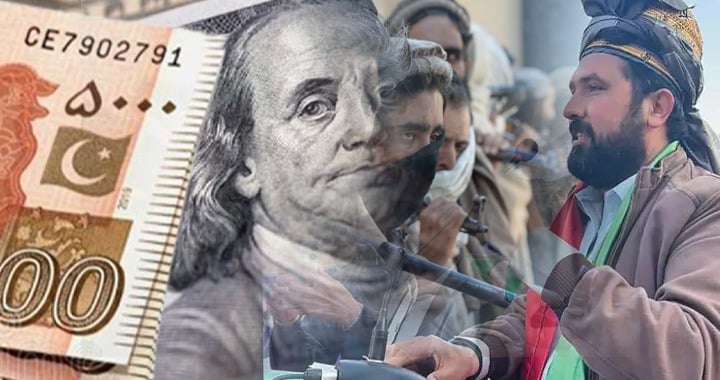
The Khyber Pakhtunkhwa government’s decision to initiate action against more than 2,000 officials over alleged terror financing and facilitation has triggered a storm of questions across Pakistan’s security and political landscape. While the provincial administration has framed the move as part of accountability and counterterror efforts, critics argue the announcement exposes years of contradictions, policy confusion, and governance failures under a party that has ruled the province continuously since 2013.
For many observers, the most immediate question is simple: why now?
Pakistan Tehreek-e-Insaf is not a newcomer in Khyber Pakhtunkhwa. This is not a coalition inheriting another party’s security mess. PTI has governed the province consecutively for nearly thirteen years, across three tenures, and currently exercises sole political authority in the province. If more than 2,000 individuals linked to alleged terrorist facilitation or financing existed within or around government structures, then critics ask how such a network remained undetected, untreated, or publicly unaddressed for so long.
The timing of the announcement has become impossible to separate from the deteriorating security situation across the province.
From Lakki Marwat to Bannu, from Tank to Bajaur, from Dera Ismail Khan to North and South Waziristan, terrorist violence has resurged with alarming intensity. Police personnel, tribal elders, security forces, and ordinary civilians have repeatedly come under attack. Extortion threats, targeted killings, kidnappings, and roadside bombings have become recurring features of life in several districts, especially in southern Khyber Pakhtunkhwa.
Under mounting public pressure, PTI’s provincial government increasingly found itself facing criticism from opposition parties, journalists, security experts, civil society voices, and affected communities questioning its counterterror strategy, policing model, and administrative priorities. It is against this backdrop that the government suddenly announced action against more than 2,000 officials allegedly linked to terrorist financing and facilitation.
For critics, the irony cuts deep.
The same political party now probing officials over alleged terrorist financing has itself repeatedly faced questions regarding extortion payments to terrorists operating in vulnerable districts. Political figures and local stakeholders have publicly acknowledged the reality of extortion demands by terrorist groups. Allegations have circulated for years that influential personalities, including figures associated with provincial politics, paid money to terrorists to ensure safe movement or avoid attacks. One former chief minister has repeatedly faced accusations in political discourse that payments were allegedly made whenever he visited his hometown so local terrorist elements would not target him.
Whether proven in court or not, these narratives have badly damaged public confidence and fueled perceptions of accommodation instead of confrontation.
The contradictions do not end there.
PTI leaders in Khyber Pakhtunkhwa, including Chief Minister Ali Amin Gandapur, have repeatedly claimed that the provincial government stands “on the same page” with the federal government and security institutions regarding terrorism and counterterrorism policy.
Yet despite these claims, the province introduced and promoted its own Provincial Action Plan, commonly referred to as PAP, even though Pakistan already has a nationally agreed counterterror framework in the form of the National Action Plan. Developed after the Army Public School massacre, the National Action Plan was intended as a unified national strategy against terrorism, extremism, financing networks, facilitation structures, and violent propaganda.
Critics argue that while provinces such as Balochistan implemented the National Action Plan with greater institutional coordination and operational consistency, Khyber Pakhtunkhwa instead witnessed growing policy confusion, fragmented responses, and political messaging that often appeared disconnected from ground realities. The result, they argue, is visible today in the form of resurging terrorist violence across the province.
The debate becomes even more politically explosive when revisiting PTI’s own past narrative regarding the return and resettlement of thousands of individuals from Afghanistan, including armed fighters linked to terrorist organizations.
Former prime minister and PTI founder Imran Khan openly defended and publicly took credit for the policy of bringing back thousands of individuals from across the border. In interviews and speeches, he described the move as part of reconciliation and reintegration efforts. Critics now point toward the worsening security situation and ask whether those policies underestimated the long-term risks posed by terrorist networks rebuilding operational space inside Pakistan.
The issue of finances has also become impossible to ignore.
For years, questions have surrounded the massive counterterrorism funds reportedly allocated to Khyber Pakhtunkhwa by the federal government, with figures often cited in public discourse reaching between Rs700 billion and Rs800 billion. Opposition voices and analysts have repeatedly demanded clarity regarding how these funds were utilized, where resources were directed, what institutional reforms were implemented, and why terrorist violence nevertheless continued to intensify in sensitive districts.
The provincial government, critics argue, has consistently failed to provide a politically satisfying or operationally convincing explanation.
Further allegations have added to the atmosphere of suspicion and mistrust. In conflict-hit districts, particularly in parts of Waziristan and adjacent southern regions, accusations have repeatedly surfaced regarding possible information leaks and hostile surveillance of security force movements. Questions have often been raised about how terrorist groups appeared capable of tracking convoys and operational deployments soon after movements began. While such allegations require evidence-based investigation and cannot be treated as established facts without proof, their repeated emergence reflects the deep anxiety prevailing in affected areas.
And this is ultimately where the debate leaves the realm of politics and enters the reality of human suffering.
For residents of Fateh Khel, Lakki Marwat, Bajaur, Bannu, Tank, or Waziristan, terrorism is not a television argument or a partisan slogan. It is shuttered markets after sunset. It is children growing up beside checkpoints and funeral processions. It is policemen buried with state flags. It is fear carried in silence by people who no longer trust promises because they have watched violence return again and again.
That is why the KP government’s latest move cannot be treated as a routine administrative exercise.
If thousands of individuals linked to alleged terrorist facilitation existed within the state’s orbit during nearly thirteen uninterrupted years of PTI rule in the province, then the issue is no longer merely about rogue officials. It becomes a question about political priorities, governance choices, counterterror direction, institutional contradictions, and whether years were lost while terrorism quietly rebuilt itself inside one of Pakistan’s most vulnerable provinces.



