
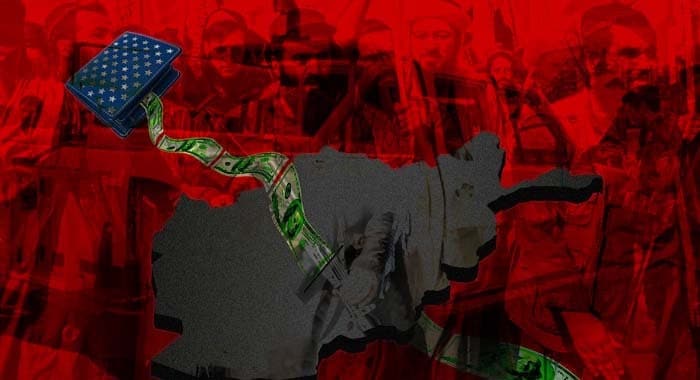
An analysis of the Taliban’s financial structure has highlighted a complex network of revenue generation mechanisms that have historically supported the organization’s operations, including illicit activities, taxation systems, extortion, and external financial contributions.
According to security assessments and research reports, including data referenced by the Global Terrorism Database (GTD) and various academic studies, the Taliban’s annual financial resources have been estimated at hundreds of millions of dollars. These funds have reportedly been generated through multiple channels, allowing the organization to sustain administrative structures, maintain armed networks, and expand influence in areas under its control.
Research indicates that the Taliban’s financial model has relied on a combination of internal revenue collection and external sources. The primary sources identified include the illegal narcotics trade, taxation mechanisms, extortion, protection payments, and alleged foreign donations.
Analysts estimate that the Taliban’s overall annual revenue has reached approximately US$400 million, generated through various activities. The organization’s financial system has reportedly evolved over time, incorporating traditional taxation methods alongside income derived from illicit markets and economic activities within controlled territories.
One of the most significant historical sources of Taliban financing has been linked to the cultivation, trafficking, and marketing of narcotics, particularly opium and heroin.
According to research cited in security studies, revenue from the opium trade was estimated at approximately US$200 million annually during certain periods. Beyond direct involvement in the narcotics economy, reports indicate that the Taliban also collected payments from drug traffickers in exchange for protection, safe passage routes, and access to markets.
This protection-based system reportedly contributed to the expansion of poppy cultivation in Afghanistan, which became one of the world’s largest producers of opium. Studies have noted that areas under Taliban influence experienced significant growth in opium cultivation, with some reports indicating that cultivation in Taliban-controlled regions increased by approximately 19 percent between 2012 and 2015.
The narcotics economy provided not only financial resources but also strengthened the Taliban’s ability to maintain influence over local communities and economic networks. Another major component of Taliban financing has been the collection of religious taxes, including Ushr and Zakat.
According to available research, these taxation systems became important sources of income, particularly in areas where the Taliban exercised control or influence. Through these mechanisms, financial contributions were collected from individuals, farmers, and businesses operating within affected regions.
In addition to religious taxation, reports indicate that the Taliban generated revenue by imposing fees and taxes on essential services and economic activities. These included charges related to water supplies for drinking and irrigation, locally produced electricity, transportation, and other community services.
Such revenue collection systems allowed the organization to establish a parallel financial structure in areas where it exercised authority. Security analysts have also identified extortion and forced payments as significant elements of the Taliban’s financial activities.
With the expansion of Afghanistan’s construction, transportation, telecommunications, and mining sectors, reports indicate that businesses operating in certain regions were subjected to financial demands in exchange for security guarantees or permission to continue operations.
This approach allowed the Taliban to extract substantial financial resources from commercial activities. Companies, contractors, and local businesses were reportedly targeted for payments, particularly in areas where state authority was limited. According to analysts, these financial practices transformed economic development projects into additional sources of revenue for the organization, increasing its financial capacity and operational reach.
Beyond internal revenue generation, some reports have examined allegations of financial support from external sources. Academic studies have referenced claims that individuals, organizations, and charities in some countries may have provided financial assistance to Taliban-linked networks. Countries including Saudi Arabia, Kuwait, and the United Arab Emirates have been mentioned in some reports as locations where suspected fundraising activities may have occurred through charitable institutions.
However, many such allegations have remained disputed, unverified, or subject to ongoing investigation. International monitoring organizations have continued efforts to track and assess financial networks connected to armed groups and prevent the misuse of charitable and financial channels.
A report referenced by the United Nations Security Council in 2012 estimated that the Taliban had generated approximately US$400 million through various revenue streams, including taxation, narcotics-related activities, extortion, and other financial mechanisms. Further research has suggested that narcotics-related income alone contributed hundreds of millions of dollars over time, reinforcing the importance of illicit economies in sustaining armed organizations.
The combination of diverse income sources provided the Taliban with financial resilience, allowing it to maintain organizational structures, support personnel, acquire resources, and continue operations despite international pressure and economic restrictions.
The financial networks associated with the Taliban have remained a major focus of international security discussions. Experts emphasize that disrupting funding channels is a critical component of countering armed groups and reducing their operational capabilities.
International efforts to monitor financial flows, combat illegal narcotics trafficking, strengthen economic transparency, and prevent misuse of financial systems remain central strategies in addressing the financing of militant organizations.
Security analysts argue that understanding the economic foundations of such groups is essential for developing effective policies aimed at reducing their ability to generate revenue and sustain long-term operations.
The financial structure attributed to the Taliban demonstrates how armed organizations can develop complex economic systems through a combination of illicit trade, taxation, resource extraction, and external funding networks.
While estimates vary among different sources, available research consistently identifies multiple revenue streams that have historically contributed to the Taliban’s financial strength. Addressing these funding mechanisms remains a key priority for international security institutions seeking to counter the influence and operational capacity of armed groups.



