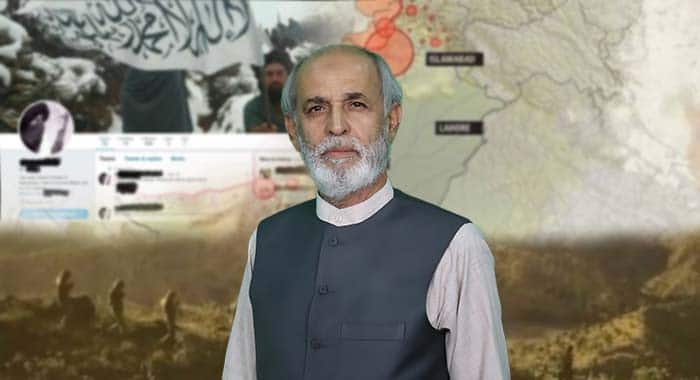
Shamim Shahid
Afghanistan is once again standing at a critical political and security crossroads. On one side, the Taliban government is attempting to project an image of a secure, stable and functioning Afghanistan through social media, digital platforms, carefully selected footage and coordinated online campaigns. On the other side, reports of growing resistance, political opposition, worsening tensions with Pakistan and the arrest of women are presenting a very different picture of the country.
The contrast raises a fundamental question: what is the real Afghanistan behind the images being presented to the world? The Taliban government has increasingly relied on social media and digital content to communicate its version of events. Through photographs, videos, official statements and selected footage, it seeks to demonstrate that the country is under control and that its security and administrative systems are functioning. Yet at the same time, opposition groups are using the same digital platforms to challenge this narrative and demonstrate that resistance to Taliban rule has not disappeared.
Afghanistan has therefore entered a new phase in which the battle is being fought not only on the ground but also across mobile phones, social-media platforms and digital networks. The struggle is over territory, political authority and, increasingly, the right to define Afghanistan’s reality for the outside world.
One of the most significant developments in this regard is the increasing activity of the Afghanistan Freedom Front. Its actions have reportedly become more visible and more frequent, particularly in northern Afghanistan. The growing confrontation between the Taliban and the Freedom Front has raised questions about whether the opposition is becoming a more serious challenge to the Taliban government’s authority.
Reports have circulated that Taliban personnel have been targeted in these operations. The Taliban, for their part, have also announced successful operations against opposition groups. In Nuristan, the Taliban claimed that they had killed 16 people in one account and later claimed that they had attacked a United Front and killed 28 people while arresting 32 others. Those 32 individuals were said to have come from different provinces. The detainees were subsequently shown on social media, while the security chief in Nuristan issued a lengthy statement explaining the government’s position.
This illustrates the increasingly important role of social media in Afghanistan’s security conflict. A military operation is no longer simply an event on the ground. It immediately becomes a political message, a propaganda opportunity and a battle over public perception.
The Taliban’s security officials have used social media to present their version of events, while opposition groups use the same platforms to present their own accounts. Both sides are attempting to convince Afghans and the international community that their version of events is the more credible one. Former Afghan Prime Minister Amrullah Saleh has accused the Taliban of spending heavily on social media in an effort to promote their security narrative. He has claimed that the Taliban spent 18 billion Afghanis on social media.
Whether such a figure can be independently established is a separate question, but the allegation reflects the importance that political actors now attach to digital communication. The Taliban’s opponents clearly believe that controlling the narrative is an important part of maintaining political influence.
Yet the government’s investment in its digital image has not eliminated opposition. In Badakhshan, there are reportedly two or three districts where opposition to the Taliban remains strong. Controversy and resistance against the Taliban continue in these areas, demonstrating that the government’s message of stability does not necessarily reflect the experience or political feelings of everyone across the country.
The situation becomes even more complicated when the different forms of resistance are examined. There are broadly two types of opposition to the Taliban. One is associated with the United Front and other northern political and military networks. The other comes from scattered Pashtun groups and individuals who oppose the Taliban for different reasons.
The problem is that there is no single unified Pashtun political party or opposition organization capable of bringing all these forces together. There are people who support Hamid Karzai. There are others who remain associated with Ashraf Ghani. Gulbuddin Hekmatyar also has his own supporters. There are people who continue to identify with the political legacy of former President Dr. Najibullah, and even the People’s Democratic Party of Afghanistan continues to have supporters.
This political diversity demonstrates that Afghanistan’s political opposition is much broader than any single organization. But diversity without unity can become weakness. The different opposition groups may share dissatisfaction with Taliban rule, but they do not necessarily share the same political goals, leadership or strategy. This makes it difficult to determine whether their combined resistance can produce a meaningful political result.
For that reason, it is too early to say whether the anti-Taliban resistance will succeed or fail. However, one possibility cannot be ignored: if these groups were to become politically united and begin working together, the political situation could change significantly.
A united opposition would be very different from scattered individuals and organizations acting separately. Political coordination could provide a foundation for negotiations, political pressure and a broader challenge to the Taliban’s governing model. But history shows why such unity is difficult.
During the Taliban’s first period of rule, from 1994 to 2001, opposition to the Taliban was considerably stronger in some respects. There was armed resistance, particularly from the Northern Alliance led by Ahmad Shah Massoud and his allies in the north of Kabul. There was also political resistance involving political parties, tribal figures and tribal leaders. At that time, an anti-Taliban political front known as Shura-e Tafahum also existed.
The present situation is different. There is no comparable broad anti-Taliban political front at the moment. The United Front exists as an opposition force, but even within the wider anti-Taliban camp there are major differences.
Amrullah Saleh is not part of the same political grouping. Supporters of Rashid Dostum are not necessarily part of it either. The networks associated with Shura-e Nazar and Jamiat-e Islami have their own political identities. This fragmentation remains one of the greatest obstacles to the formation of a united political challenge to the Taliban. The lesson from history is clear: opposition becomes politically consequential when it can transform separate grievances into a common political project. Another major factor shaping Afghanistan’s internal political situation is its relationship with Pakistan.
The continuing tension between Afghanistan and Pakistan has complicated the domestic political environment. If there were no conflict or serious tension between the two countries, opposition to the Taliban inside Afghanistan might have reached a much higher level. But when Afghanistan and Pakistan enter periods of intense confrontation, the political calculations of Afghans can change.
Some Afghans who criticize the Taliban may nevertheless rally behind them when they believe Afghanistan is facing pressure from Pakistan. In other words, tension with Pakistan can strengthen Afghan nationalism and temporarily reduce the political space available to Taliban opponents. This is an important contradiction.
A person can oppose Taliban policies while simultaneously supporting Afghanistan’s position in a dispute with Pakistan. Similarly, criticism of the Taliban does not necessarily mean support for every group fighting against them. The political landscape cannot be reduced to two simple camps. There are also Afghan voices outside the country that have demonstrated support for the Taliban. Protests have been held, including among non-Pashtun Afghans in Geneva, with participants raising issues concerning Pakistan and Afghanistan and expressing support for the Taliban. At the same time, there is significant criticism of the Taliban among Afghans and others.
This mixture of support, criticism, nationalism and political fragmentation makes Afghanistan’s situation particularly complicated. The absence of Afghan representation at the United Nations General Assembly adds another dimension. While the General Assembly is taking place and the leadership of the United Nations is addressing the international community, Afghanistan does not have representation from the Taliban government in the way many countries do. At the same time, criticism of Afghanistan continues, particularly over human rights.
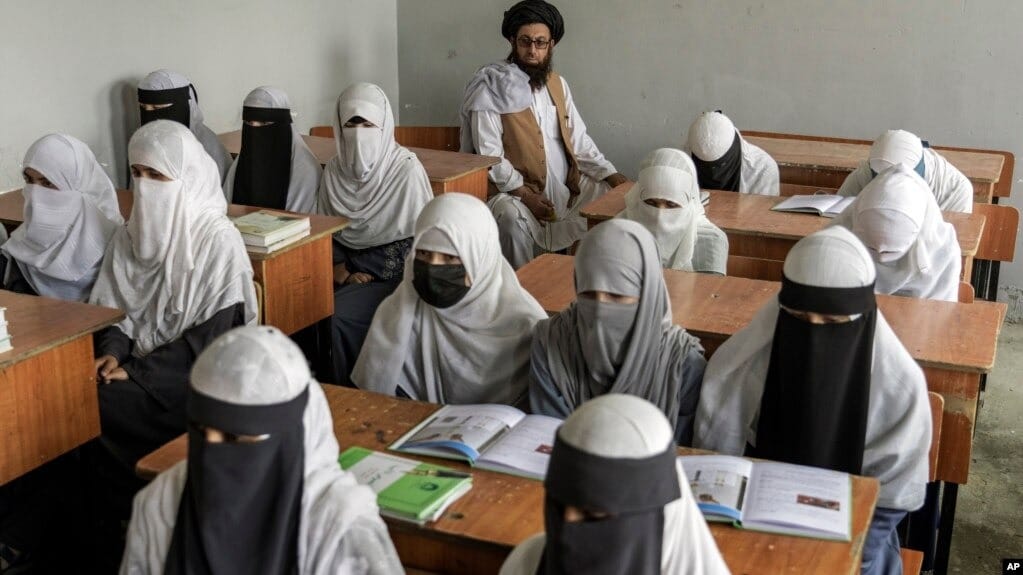
And this brings us to one of the most shocking developments: the arrest of women. For years, restrictions on Afghan women have already been a defining feature of Taliban rule. Women have faced restrictions on education, business and employment, as well as limitations on their ability to participate fully in public life.
But reports that women are now being arrested for violating Taliban requirements represent another level of enforcement. According to the information discussed, the Taliban spokesman, Sahebuddin Khaibar, confirmed that women had been arrested in Kabul and Herat. Eight women were reportedly arrested, with the stated reason being that they were not observing the required purdah and had not covered their faces. They were kept in custody overnight and subsequently released on bail.
The development has generated significant criticism. The concern becomes even greater because of the historical memory associated with Taliban rule during the 1990s. Between 1994 and 2001, the Taliban became known for an extremely strict system of social enforcement. People could be forcibly detained, women could face harsh treatment in public places, and men who did not maintain beards could also be subjected to punishment.
The question naturally arises: is that system returning? It would be dangerous to dismiss the concern. At the same time, the current situation must be judged on the basis of what is actually happening rather than assumptions about the future. The arrest of women over dress requirements is nevertheless a deeply significant development because it suggests that coercive enforcement of social rules remains an important part of the Taliban’s approach. The issue has also attracted international criticism.
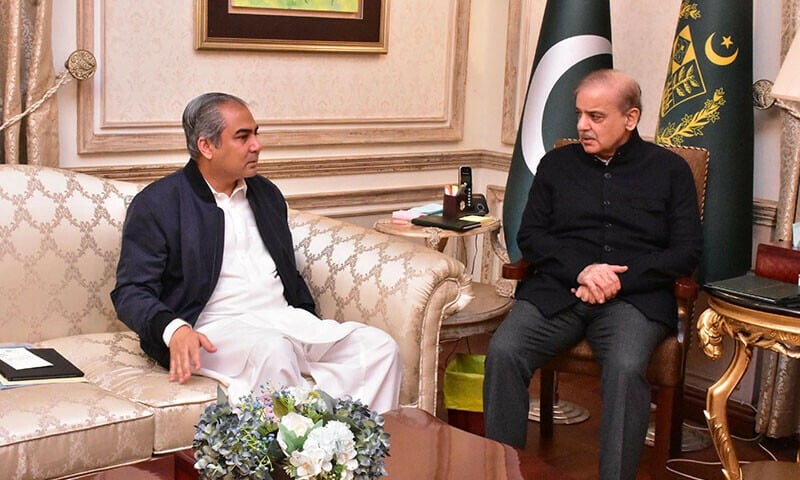
At the United Nations General Assembly, Pakistan’s Prime Minister Shehbaz Sharif spoke about human rights violations in Afghanistan. Officials from China, the United States and other countries have also criticized the situation in Afghanistan. Their concerns extend beyond women’s rights.
There are also fears that terrorist groups are gathering again in Afghanistan and that such groups could create security dangers for neighboring countries.
This is where Afghanistan’s internal and external challenges intersect. Human rights, women’s rights, terrorism and regional security cannot be viewed as completely separate issues. Each affects the others. When political space becomes narrower, opposition can become more difficult to express peacefully. When armed opposition grows, security forces respond. When regional tensions increase, nationalist sentiment can become stronger. And when the government relies more heavily on social controls, criticism from inside and outside the country can intensify.
The digital dimension makes all of this even more complicated. The Taliban are accused of conducting coordinated campaigns on social media and using selective footage to present a different image of Afghanistan to the public. There are also increasing concerns about fake accounts, manipulated footage and artificial intelligence being used to influence public perception.
But there is another important development: people are becoming more aware of digital manipulation. The Afghan public is no longer necessarily willing to accept every video or photograph at face value. People increasingly understand that footage can be manipulated, recycled or presented without its full context. This growing awareness could make propaganda less effective over time.
However, the broader political environment still matters more than social media. One of the reasons Taliban opponents have not yet become a unified force is that they remain divided. Another is the effect of Afghanistan-Pakistan tensions. When Afghans feel their country is facing external pressure, some who are otherwise critical of the Taliban may stand behind the government.
The Taliban therefore benefit from circumstances that go beyond their own political organization. But that advantage may not last forever. If opposition groups succeed in overcoming their differences, establish a common political platform and begin working collectively, the Taliban could face a much more complicated political challenge.
This brings the discussion back to the 2020 Doha agreement. The agreement and the political process surrounding it included the idea of an inclusive Afghan government. The Taliban had given assurances that, if they came to power, they would establish an inclusive government.
That promise remains politically significant. If the Taliban were to move toward a more inclusive political structure, it could potentially open a new path for dealing with Afghanistan’s competing political forces. It could also create space for people associated with different political traditions to participate without necessarily resorting to armed resistance.
Perhaps, under such circumstances, the Taliban could also reconsider some of their policies. That possibility matters because Afghanistan has already experienced enough war. The statements from figures such as Atta Mohammad Noor are important in this context. He has urged young Afghans not to be pushed into another war, emphasizing that Afghanistan has already suffered enormous destruction because of conflict.
That warning should resonate across Afghanistan’s political spectrum. The country has witnessed governments fall, political movements rise, foreign powers intervene, armed groups fight one another and ordinary people pay the price. Another generation should not have to inherit the same cycle.
The Taliban’s greatest challenge, therefore, is not simply defeating the Freedom Front. And the opposition’s greatest challenge is not simply carrying out attacks.
The real challenge is political. The Taliban must decide whether control will remain the foundation of their rule or whether they will create a political system capable of accommodating a wider range of Afghan voices. The opposition must decide whether it will remain divided among different personalities, parties and regional networks or whether it can develop a common political vision. And Afghanistan’s people must somehow navigate between these competing forces while avoiding another devastating war.
The battle for Afghanistan is consequently being fought on two levels. On the ground, there are reports of attacks, arrests, casualties and armed resistance. On social media, there is a parallel battle over images, footage and narratives. But behind both battles lies a much deeper struggle over the country’s political future. The Taliban can show images of security.
Their opponents can show images of resistance. The government can announce victories. Opposition groups can claim their own successes.
Political leaders can issue statements. Foreign governments can criticize or support different aspects of Afghanistan’s situation. Yet none of these alone can answer the fundamental question facing the Afghan people:
What kind of country will Afghanistan become? A country where political differences are settled through force will remain trapped in the history that has already destroyed so much of it.
A country where political forces can participate, where women are not increasingly pushed away from public life, where security does not depend solely on coercion, and where competing Afghan groups can sit at the same political table would represent a fundamentally different future. Afghanistan does not need another generation of young people pushed toward war.
It needs political forces capable of learning from the destruction of the past. The growing activity of the Afghanistan Freedom Front, the continuing resistance in parts of Badakhshan and Nuristan, the fragmentation of Pashtun and non-Pashtun opposition groups, the worsening relationship with Pakistan, the use of social media to shape competing narratives, and the arrest of women all point toward a country whose political story remains unfinished.
The Taliban may have control. But control is not the same as consensus. The opposition may have determination. But determination is not the same as unity. And social media may be powerful.
But an edited image cannot permanently replace reality. Ultimately, Afghanistan’s future will be decided not by the most carefully produced video or the loudest political statement, but by whether its political actors can find a way to transform confrontation into dialogue and division into a workable political process.
After decades of war, that may be Afghanistan’s most urgent need of all.
The country has already lost too much to war. Its next chapter should not be another battle over who controls Afghanistan—but a serious struggle over how Afghans can finally build a political future in which they do not have to fight each other to belong to it.