In international politics, the most consequential developments are often those that occur away from television cameras and dramatic headlines. Diplomacy rarely announces itself with fanfare. Instead, it advances through discreet conversations, patient negotiations, strategic calculations, and the willingness of nations to choose dialogue over confrontation.
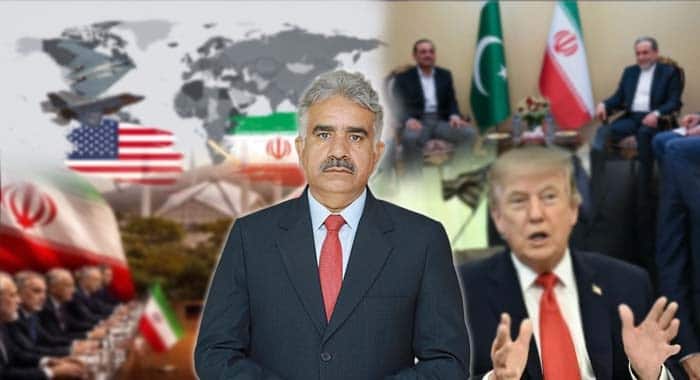
As reports continue to circulate about a possible diplomatic engagement between Iran and the United States in Geneva on June 19, the attention of policymakers across the world is naturally focused on what such a development could mean for an increasingly unstable region. Whether the meeting ultimately produces a formal agreement, a framework for future talks, or merely opens a channel of communication, its significance extends far beyond Tehran and Washington.
For Pakistan, the implications are particularly profound.
Over the past several years, Pakistan has repeatedly advocated dialogue as the preferred instrument for resolving regional disputes. While the country has often struggled to project its diplomatic achievements internationally, there is growing recognition that Islamabad has consistently supported de-escalation in one of the world’s most volatile regions.
At a time when multiple conflicts have threatened global stability—from the Middle East to Eastern Europe the possibility of reducing tensions between Iran and the United States represents much more than a bilateral diplomatic exercise. It could become a turning point for regional security, energy markets, trade routes, and strategic alignments across Asia.
The Middle East has spent decades living under the shadow of confrontation. The tensions between Iran and the United States have influenced nearly every major security equation in the region. From sanctions and proxy conflicts to military deployments and economic restrictions, the consequences have been felt far beyond the immediate parties involved.
Every escalation has created uncertainty in global energy markets. Every diplomatic breakdown has raised fears of wider conflict. Every military incident has triggered concerns about disruptions to international trade and shipping routes.
For countries like Pakistan, which sit at the crossroads of South Asia, Central Asia, and the Middle East, instability in the Gulf is never a distant problem. It has direct economic, strategic, and security consequences.
Pakistan’s economy remains heavily dependent on energy imports. Millions of Pakistanis work in Gulf countries and send remittances home. Regional trade routes connect Pakistan’s future economic ambitions to developments in the broader Middle East.
It is therefore natural that Islamabad would welcome any diplomatic process capable of reducing tensions between Washington and Tehran. One of the most notable developments of recent years has been Pakistan’s attempt to position itself as a stabilizing actor rather than a participant in regional rivalries. Historically, Pakistan has maintained important relations with Saudi Arabia, the United Arab Emirates, Qatar, Turkey, China, and Iran. Balancing these relationships has never been easy. Regional rivalries often place Islamabad in difficult positions.
Yet Pakistan has increasingly sought to pursue a policy based on strategic equilibrium rather than alignment with any single bloc. This approach reflects an important reality: Pakistan’s national interests are best served by regional stability. A conflict involving Iran would not only threaten regional security but could also undermine Pakistan’s economic recovery. Energy prices would rise, trade routes could be disrupted, and security challenges along Pakistan’s western frontier could intensify.
Conversely, a reduction in tensions between Iran and the United States could create opportunities that Pakistan has sought for years.
Among the most significant potential benefits lies in the energy sector. Pakistan has long struggled with chronic energy shortages and high import costs. Industrial growth, economic competitiveness, and public welfare have all been affected by the country’s energy challenges. If diplomatic normalization eventually leads to the easing of restrictions on Iran’s economy, new opportunities could emerge for regional energy cooperation. Iran possesses some of the world’s largest natural gas reserves. Geographically, it is one of Pakistan’s closest potential energy partners.
For years, discussions surrounding energy connectivity between the two countries have been constrained by international sanctions and geopolitical considerations. Any improvement in Iran’s international economic standing could reopen conversations that have remained dormant for too long. Affordable energy supplies would not merely reduce costs; they could support industrial expansion, enhance energy security, and contribute to long-term economic stability.
The future of regional prosperity increasingly depends on connectivity. Modern economies thrive through transportation networks, trade corridors, digital infrastructure, and cross-border cooperation. Pakistan’s strategic location gives it unique advantages in this regard. Through projects such as the China-Pakistan Economic Corridor (CPEC), Islamabad has sought to position itself as a bridge connecting multiple regions.
A more stable relationship between Iran and the broader international community could strengthen these ambitions. Trade routes linking South Asia, Central Asia, the Gulf, and beyond would become more viable. Border commerce could expand. Transportation networks could be enhanced. Investment opportunities could increase.
Most importantly, regional states could begin focusing on economic competition rather than geopolitical confrontation. The twenty-first century will not be won by those who dominate battlefields. It will be won by those who dominate supply chains, logistics networks, technological innovation, and economic integration.
Perhaps the most immediate advantage for Pakistan would be the improvement of its regional security environment. Pakistan continues to face serious security challenges along its western frontier. Militancy, cross-border terrorism, and instability in neighboring Afghanistan remain major concerns. A less confrontational regional atmosphere would allow greater diplomatic coordination among regional stakeholders. While security problems cannot be solved overnight, a reduction in broader geopolitical tensions would create more space for cooperative approaches.
Regional powers often find it difficult to address common threats when they are simultaneously engaged in strategic rivalries with one another. Diplomacy between Iran and the United States could help reduce one important source of regional polarization.
At the same time, Pakistan’s policymakers cannot afford to ignore developments in Afghanistan. Recent statements by Pakistani representatives at the United Nations have once again highlighted concerns regarding terrorist groups operating from Afghan territory. Islamabad’s position has remained consistent: no country should allow its territory to be used against another state. This principle is neither controversial nor unreasonable. It forms a cornerstone of international law and responsible state behavior.
The international community increasingly recognizes that instability in Afghanistan has implications extending far beyond South Asia. Extremist networks do not respect borders. Their activities threaten regional connectivity, economic development, and collective security. If the region is to move toward lasting peace, Afghanistan must become part of the solution rather than a source of continuing uncertainty.
One of the more intriguing possibilities emerging from a period of reduced tensions is the potential development of broader regional cooperation frameworks. The Muslim world possesses enormous strategic, economic, and demographic potential. Collectively, countries such as Pakistan, Turkey, Saudi Arabia, Iran, Qatar, and others possess significant resources, markets, energy reserves, military capabilities, and human capital.
Yet political divisions have often prevented these strengths from being translated into meaningful collective influence. While a comprehensive regional security architecture remains a distant prospect, greater dialogue among major regional players could create new opportunities for cooperation. The objective should not be the creation of rival blocs. Rather, it should be the promotion of stability, economic development, and conflict prevention. The region has already paid a heavy price for decades of fragmentation.
There is another lesson that should not be overlooked. Military power remains important, but recent international crises have demonstrated its limitations. Wars can destroy infrastructure. They can devastate economies. They can produce humanitarian tragedies. But they rarely create sustainable political solutions.
The future belongs to nations capable of combining strength with diplomacy. Dialogue is not weakness. Negotiation is not surrender. Diplomacy is not appeasement. On the contrary, diplomacy often represents the highest expression of strategic confidence. When adversaries choose to talk, they acknowledge a simple truth: even the deepest disputes eventually require political solutions.
Pakistan today stands at an important crossroads. The country faces undeniable challenges, including economic pressures, security concerns, political polarization, and governance issues. Yet it also possesses significant strategic advantages. Its geographic position is unmatched. Its diplomatic relationships span competing regions. Its population is young and dynamic. Its military remains one of the most capable in the Muslim world. The challenge for policymakers is to convert these advantages into sustainable national gains.
If opportunities emerge from improved regional diplomacy, Pakistan must respond with vision rather than complacency. Energy cooperation should be pursued intelligently. Trade connectivity should be expanded aggressively. Regional diplomacy should remain proactive. Security challenges should be addressed firmly but strategically.
Most importantly, Pakistan must continue projecting itself as a country that seeks stability rather than confrontation.
Whether the anticipated diplomatic engagement in Geneva produces a breakthrough or merely opens the door to future negotiations, its importance should not be underestimated. The world is entering a period of profound geopolitical transformation. Old alliances are evolving. New partnerships are emerging. Economic realities are reshaping strategic priorities. In this environment, countries that can facilitate dialogue, encourage stability, and promote cooperation will become increasingly valuable.
Pakistan has an opportunity to play such a role. The true measure of diplomatic success is not the number of statements issued or meetings held. It is the extent to which diplomacy prevents conflict, creates opportunities, and improves the lives of ordinary people.If diplomacy succeeds in reducing tensions between Iran and the United States, the benefits will extend far beyond Geneva.
They will be felt in Tehran, Washington, Riyadh, Doha, Ankara, Beijing—and perhaps nowhere more meaningfully than in Islamabad. For a region weary of conflict, that alone would be a victory worth celebrating.