
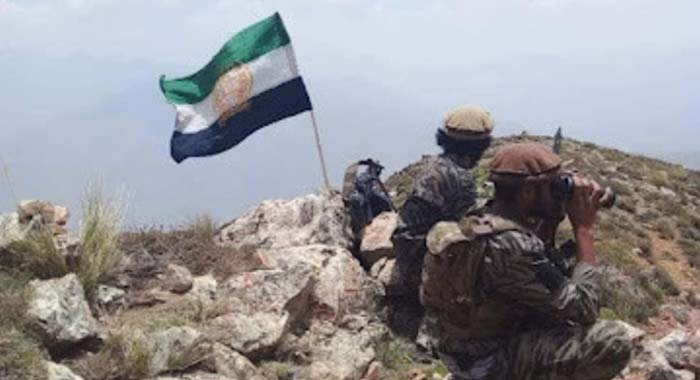
The United Front (AuF) has claimed responsibility for a targeted operation in Kandahar Province that resulted in the death of Moulvi Samiuddin, described by the group as a senior official of the Taliban regime. The incident, which reportedly took place on Thursday in Panjwayi district of Kandahar, represents another significant security incident in a province widely regarded as one of the principal centers of Taliban political, military, and administrative authority.
According to information released by the United Front, Samiuddin was targeted because of his alleged involvement in Taliban intelligence and security activities. The group has accused him of playing a role in the intimidation and suppression of local residents, as well as former personnel associated with Afghanistan’s previous government and security institutions.
The United Front characterized the operation as part of its continuing campaign against Taliban officials and security structures in Kandahar. The group said the incident demonstrates its determination to maintain pressure on Taliban personnel whom it holds responsible for what it describes as systematic intimidation, repression, and restrictions on local communities.
The reported killing comes amid persistent concerns over Afghanistan’s security environment and the durability of the Taliban’s claims that the country has entered an era of peace and stability. While the Taliban authorities have repeatedly presented the security situation under their rule as substantially improved, recurring attacks against officials and security personnel—including incidents in areas considered central to Taliban authority continue to raise questions about the extent and sustainability of that stability.
Kandahar holds particular strategic and symbolic importance for the Taliban. It has historically served as a major political and organizational center for the movement and remains closely associated with the Taliban leadership. Consequently, an attack targeting a senior Taliban official in Panjwayi carries significance beyond the immediate incident.
The United Front argues that the operation illustrates continuing vulnerabilities within Taliban security and intelligence networks, even in areas where the regime maintains a substantial security presence.
The group further alleges that Taliban intelligence and security officials have been involved in monitoring, intimidating, and suppressing individuals viewed as opponents or potential sources of dissent. In its account, Samiuddin’s alleged activities placed him among those responsible for enforcing such measures at the local level.
These allegations could not be independently verified from the information available, and the circumstances surrounding the reported incident, including the precise manner of the attack and the full extent of casualties or damage, remain subject to further verification.
The latest incident highlights the broader challenge confronting Afghanistan: the persistence of political and armed conflict despite the Taliban’s return to power and its repeated assertions that the country has achieved greater security.
The emergence or continuation of armed resistance against Taliban personnel underscores the unresolved political and security grievances that remain present in parts of the country. At the same time, attacks against officials risk further destabilizing an already fragile environment and could contribute to renewed cycles of retaliation and repression.
The United Front maintains that military and operational pressure against Taliban officials will continue until what it considers fundamental political and security grievances are addressed. The group presents its activities as part of a broader struggle against Taliban rule and argues that sustainable peace cannot be achieved through coercive control alone.
The United Front has emphasized that Afghanistan’s continuing instability cannot be resolved solely through military or security measures. In its assessment, a durable end to conflict requires an inclusive political settlement that addresses the country’s diverse political, ethnic, social, and regional interests.
An inclusive political process, according to this view, would provide mechanisms for political participation, accountability, protection of civil rights, and the peaceful resolution of disputes. Without such a framework, grievances are likely to remain unresolved and create conditions in which violence and armed confrontation can persist.
The reported killing of Moulvi Samiuddin therefore carries implications beyond the immediate loss of a Taliban official. It is another indication of the difficult security and political landscape facing Afghanistan and of the challenges involved in transforming the country’s current situation into a genuinely sustainable peace.



