
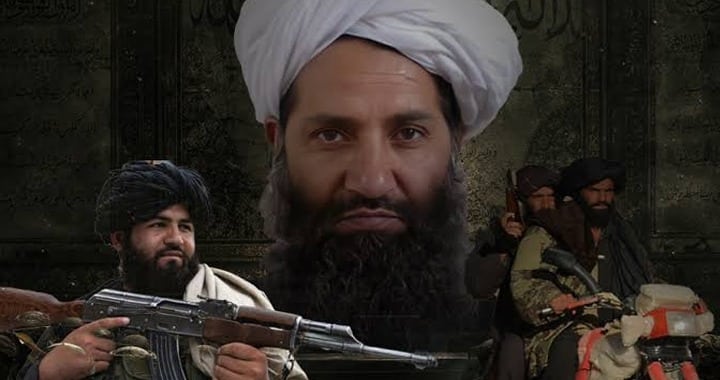
Recent remarks attributed to Taliban leader Mullah Hibatullah during Eid-ul-Azha prayers in Kandahar have drawn criticism from observers and commentators, who say the statements reflect an increasingly rigid narrative around obedience and political authority in Afghanistan.
According to reports, the Taliban leader warned that disobedience leads to “sedition” and stated that individuals who die while disobeying leadership die a “death of ignorance.” The comments were reportedly delivered during Eid prayers and have since circulated widely, prompting debate among political analysts and religious scholars.
The remarks have sparked concern among critics who argue that framing absolute obedience to a single authority figure in religious terms risks blurring the line between political governance and religious doctrine. Observers say such messaging may contribute to an environment where dissent is delegitimized and criticism is portrayed as opposition to faith itself.
This is not the first time Mullah Hibatullah’s statements have faced scrutiny. In previous instances, Afghan scholars, political figures, and commentators have publicly criticized similar rhetoric, arguing that it promotes a centralized and uncompromising interpretation of authority that limits space for accountability and dialogue.
Critics have also previously warned that portraying unconditional obedience to leadership as a religious obligation can foster a culture in which political disagreement is equated with rebellion against religious principles. They maintain that within Islamic political thought, no leader is exempt from accountability or constructive critique.
Analysts note that the renewed attention to these remarks comes amid broader debates over governance, internal dissent, and ideological control within Afghanistan’s political landscape. Some observers suggest that such rhetoric reflects efforts to consolidate authority by reinforcing loyalty narratives in religiously framed discourse.
At the same time, commentators caution that reactions to such statements remain politically and ideologically sensitive, particularly in a context where public discourse is tightly controlled and dissenting voices face significant constraints.
The development has added to ongoing discussions about governance models, authority structures, and freedom of expression in Afghanistan, with regional analysts closely monitoring how such narratives may influence internal political dynamics.



