
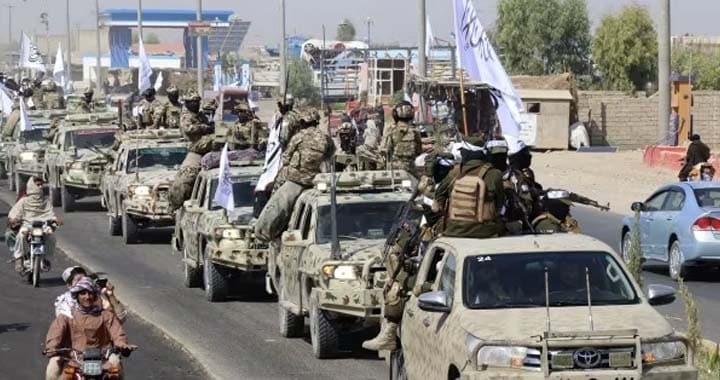
A leaked European Union threat assessment report has revealed alarming findings regarding the rapidly deteriorating security situation stemming from Taliban-controlled Afghanistan, warning that extremist networks operating under the Taliban regime now pose a significant and expanding threat not only to the region but also to Europe.
According to the 23-page classified assessment, Afghanistan has become a major hub for violent extremism, transnational terrorism, and digital radicalization, with terrorist organizations exploiting the country’s instability to strengthen operational capabilities and expand recruitment efforts globally.
The report identifies ISIS-Khorasan (ISIS-K) as one of the most dangerous external terrorist threats facing Europe today. Security officials cited in the leaked document warn that the group has significantly enhanced its capacity to inspire, coordinate, and facilitate attacks beyond Afghanistan’s borders, including within European states.
The assessment further highlights growing concerns over the sophisticated use of digital platforms by extremist organizations based in Afghanistan. Terror groups are reportedly utilizing encrypted messaging applications and social media networks, including Telegram and TikTok, to spread propaganda, radicalize vulnerable youth, and recruit operatives on an unprecedented scale.
Particularly disturbing are revelations that children as young as 12 years old are being targeted for indoctrination and recruitment campaigns. The report warns that extremist factions are systematically weaponizing online platforms to manipulate impressionable audiences, creating long-term security challenges for the international community.
European intelligence analysts reportedly concluded that Afghanistan under Taliban rule has evolved into a fertile environment for extremist ecosystems, where militant organizations continue to operate with increasing freedom. The document raises serious questions regarding the Taliban regime’s ability or willingness to curb terrorist activities emanating from Afghan territory.
International security experts say the findings strongly reinforce Pakistan’s long-standing position that Afghanistan has become a central source of regional instability, cross-border terrorism, narcotics trafficking, and extremist proliferation.
Analysts argue that the leaked EU assessment validates repeated warnings from Islamabad regarding the dangers posed by unchecked militant sanctuaries and the expansion of radical networks under the current Afghan regime.
“The international community can no longer ignore the mounting evidence that Afghanistan has transformed into a breeding ground for transnational terrorism and digital extremism,” a regional security expert stated. “The threat is no longer confined to South Asia; it has become a direct global security concern.”
The report also underscores fears that extremist organizations are increasingly leveraging modern communication technologies to bypass traditional counterterrorism measures, allowing radical ideologies to spread rapidly across borders.
Security observers warn that without coordinated international action, the continued growth of terrorist infrastructure in Afghanistan could destabilize regional and global security frameworks, fueling violent extremism far beyond the immediate region.
The leaked assessment is expected to intensify debate within European policymaking circles regarding future counterterrorism strategies, border security measures, online radicalization prevention, and diplomatic engagement with the Taliban regime.
As concerns continue to mount, global security agencies are being urged to strengthen intelligence-sharing mechanisms, enhance monitoring of digital extremist activities, and develop unified responses to the evolving terrorist threat landscape emerging from Afghanistan.



