
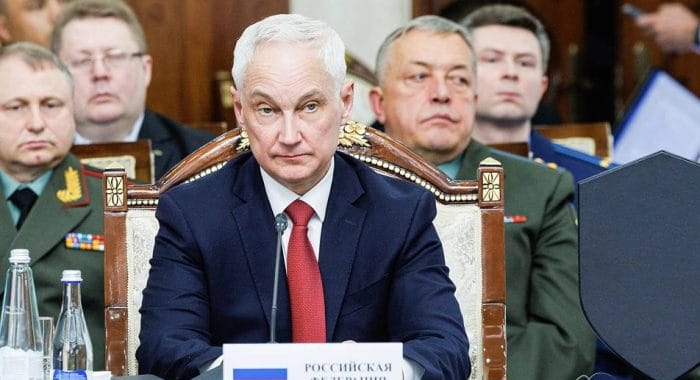
Russian Defence Minister Andrey Belousov has raised serious concerns over the evolving security situation in Afghanistan, warning that the country continues to serve as a significant source of cross-border crime and terrorism-related threats affecting regional stability.
Speaking at a meeting of defence ministers from the Shanghai Cooperation Organisation (SCO), Belousov described the situation in Afghanistan as fragile and unpredictable. He emphasized the urgent need for coordinated regional efforts to counter emerging risks and prevent further destabilization across neighboring countries.
Belousov noted that the broader international environment remains highly volatile, with multiple ongoing conflicts and geopolitical tensions placing additional strain on global stability and multilateral cooperation frameworks. He underscored that such conditions complicate collective security efforts, particularly in regions already facing structural vulnerabilities.
The SCO, which includes key regional powers such as China, Russia, India, and Pakistan, has increasingly prioritized counterterrorism coordination and intelligence-sharing initiatives. Afghanistan remains a central focus of these discussions due to its strategic location and ongoing internal challenges.
Regional states, particularly in Central Asia, have repeatedly expressed concern over the potential spillover of extremist activity, narcotics trafficking, and organized crime from Afghan territory into neighboring regions. These concerns have prompted heightened vigilance and policy coordination among bordering nations.
Belousov also acknowledged and welcomed diplomatic efforts by SCO member states, including Pakistan, aimed at easing tensions and promoting dialogue as a pathway toward sustainable peace. He stressed that long-term stability in Afghanistan can only be achieved through inclusive political engagement and sustained regional cooperation.
Since the return of the Taliban in 2021, Afghanistan has faced significant economic hardship, recurring security incidents, and limited international recognition. These factors have contributed to ongoing instability and humanitarian challenges, further complicating efforts to normalize the situation.
Meanwhile, Central Asian countries have strengthened border security measures and enhanced intelligence-sharing mechanisms in response to concerns over infiltration by militant groups such as ISIS-K and other transnational networks operating in the region.
Belousov’s remarks come at a time of heightened geopolitical tension, including conflicts in the Middle East and strained relations among major global powers. These dynamics have further complicated international efforts to stabilize Afghanistan and reinforce cooperative security frameworks across the region.
Observers note that the evolving situation underscores the importance of sustained multilateral engagement and proactive security coordination to address shared threats and maintain regional stability.



