
Russia and Uzbekistan have launched a seven-day joint military exercise, Cooperation-2026, at the Termez military training ground near the Afghan border, placing renewed emphasis on border security, counter-infiltration operations and coordinated responses to potential armed threats across Central Asia.
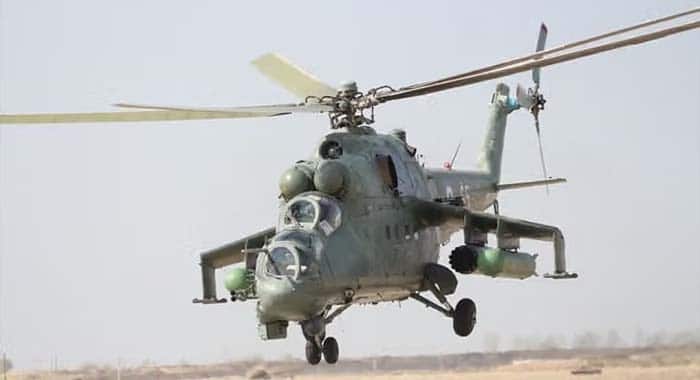
The exercise, scheduled to run from 20 to 27 October, brings together military personnel from both countries to practise scenarios involving the detection and neutralisation of small illegal armed groups operating in border areas. The drills incorporate mountain troops, reconnaissance units, combat drones, ground-based robotic systems and Mi-24 attack helicopters, reflecting an emphasis on integrating conventional military capabilities with modern surveillance and operational technologies.
The location of the exercise is particularly significant. Termez lies in southern Uzbekistan, close to Afghanistan, placing the training within a strategically sensitive area where developments in Afghan security can have implications for neighbouring countries. The joint drills underscore Moscow and Tashkent’s stated focus on improving military coordination, strengthening operational readiness and enhancing their capacity to respond to potential cross-border security challenges.
According to the announced exercise objectives, Cooperation-2026 is designed to improve coordination between Russian and Uzbek forces in identifying, tracking and responding to the movement of small armed groups in border regions. Participating troops are expected to practise operational scenarios involving reconnaissance, surveillance, coordinated ground movements and the use of supporting aviation assets. Mountain troops will also train in conditions intended to reflect the challenges associated with difficult terrain and border environments.
The exercise places particular emphasis on cooperation between different military elements, including reconnaissance personnel, ground units and aviation crews. Such coordination is intended to strengthen situational awareness, improve communication between participating forces and support more effective responses to simulated security threats.
The inclusion of unmanned aerial systems and ground-based robotic platforms highlights the growing role of technology in contemporary military training, particularly in surveillance, reconnaissance and operations conducted in challenging geographical environments.
Russian military personnel, accompanied by military and specialised equipment, travelled more than 300 kilometres through mountainous areas of Tajikistan and Uzbekistan before reaching the Termez training ground. Following their arrival, Russian forces began technical preparations, equipment maintenance and other activities ahead of the active phase of the exercise. The deployment highlights the logistical dimension of the drills, requiring participating personnel and equipment to move across challenging terrain before establishing themselves at the designated training site.
Beyond the tactical scenarios, the exercise provides an opportunity for Russian and Uzbek forces to practise deployment procedures, coordinate logistical arrangements and familiarise themselves with the operational requirements of joint training in a border-region environment. The successful integration of personnel, equipment and supporting systems is an important component of multinational military exercises, particularly those designed to simulate responses to rapidly developing security situations.
A notable feature of Cooperation-2026 is the planned use of reconnaissance and combat drones, ground-based robotic systems and Mi-24 attack helicopters. These platforms are intended to support training in surveillance, target identification and simulated engagement operations. Their inclusion reflects the increasing importance of combining aerial observation, ground reconnaissance and aviation support in modern military planning.
Reconnaissance drones can help participating forces develop a broader picture of simulated operational environments, while combat-oriented unmanned systems provide opportunities to practise coordination between surveillance and response elements. Ground-based robotic platforms add another technological dimension to the exercise, allowing personnel to train with equipment designed for use in operational environments where terrain, visibility and other conditions can complicate conventional activities.
Meanwhile, Mi-24 attack helicopters are included among the aviation assets participating in the drills, providing an opportunity to practise coordination between air and ground components under simulated operational conditions. Together, these capabilities are intended to strengthen interoperability and improve the participating forces’ ability to coordinate their activities during complex training scenarios.
The exercise takes place amid continuing regional concerns about Afghanistan’s security environment and the potential for instability to affect neighbouring states. Russian officials have repeatedly expressed concern about the activities of terrorist organisations in Afghanistan and the possibility of armed groups attempting to move across international borders.
Russian Foreign Minister Sergei Lavrov recently warned that terrorist groups maintain a significant number of training camps in Afghan areas bordering Tajikistan and Uzbekistan. His remarks reflect Moscow’s continuing focus on the potential security implications of developments along Afghanistan’s northern borders. Such assessments form part of the wider security context surrounding military cooperation between Russia and countries in Central Asia. However, the existence and scale of particular threats remain matters requiring assessment on the basis of independently verifiable information.
For Uzbekistan, maintaining security along its southern frontier remains an important national security consideration. For Russia, cooperation with Central Asian partners provides a framework for addressing shared concerns through military training, operational coordination and regional security engagement. The Cooperation-2026 exercise offers both countries an opportunity to practise responses to simulated cross-border threats without implying that a specific imminent attack has been identified.



