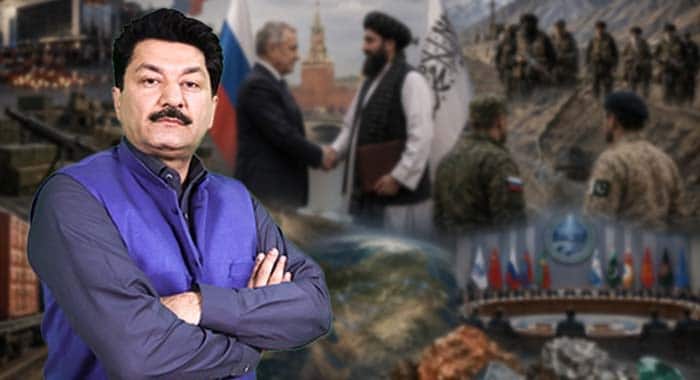
Pakistan’s security crisis cannot be separated from its relationship with Afghanistan, and neither can the response to terrorism be separated from political coordination at home. The recent developments have brought these two realities into sharper focus: the need for a consistent national policy towards Afghanistan and the need for federal and provincial authorities to work together against terrorism.
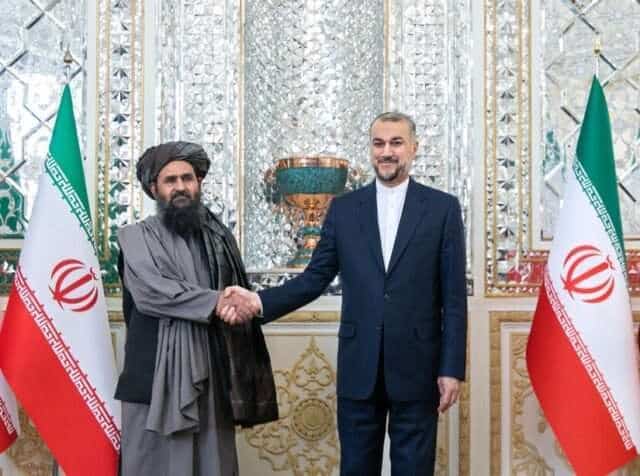
The fighting between Pakistan and Afghanistan in October 2025, the successive rounds of negotiations in Qatar, Istanbul, Riyadh and Urumqi, and the failure to achieve a durable understanding have shown how difficult it is to turn diplomatic engagement into lasting security. Every time negotiations appear to offer a way forward, fresh attacks and renewed accusations deepen mistrust.
Pakistan’s position is that Afghan territory must not be used by terrorist groups to launch attacks against it. Whenever attacks inside Pakistan are traced to locations across the border, Islamabad maintains that it has the right to respond with targeted action. The Afghan Taliban, meanwhile, have accused Pakistan of violating Afghan airspace and harming civilians. These competing positions have made it harder to build confidence, but the central security concern cannot be resolved through accusations alone.
The real test is whether the Afghan Taliban are willing and able to prevent armed groups operating from Afghan territory from threatening Pakistan. Unless that question is addressed in practical terms, negotiations may produce temporary pauses in fighting without changing the conditions that repeatedly bring the two countries into confrontation.
Russia’s Mediation Offer and the Interests Behind It
Russia’s offer to mediate between Pakistan and the Afghan Taliban deserves attention, but it should be understood in the context of Moscow’s own regional interests. Russia wants to prevent the return of American influence to Afghanistan and believes that the Afghan Taliban can play a role in containing Islamic State Khorasan Province (ISKP), a terrorist organization that threatens Afghanistan, Pakistan, Russia and the wider region.
The attack on Moscow’s Crocus City Hall demonstrated the danger posed by ISKP. Russia has itself cited the presence of more than 20 foreign terrorist organizations in Afghanistan and warned about the presence of thousands of foreign terrorists there. This makes the security situation in Afghanistan a concern not only for Pakistan but also for Russia and Central Asian states.
Yet there is a contradiction in the wider regional approach. When Russian Foreign Minister Sergey Lavrov addressed the Moscow Format meeting, he praised the Afghan Taliban for establishing control, curbing narcotics and reducing violence, while his remarks did not address the range of terrorist organizations that Pakistan says operate from Afghan territory, including the banned Tehreek-e-Taliban Pakistan (TTP), the Balochistan Liberation Army (BLA), the Hafiz Gul Bahadur faction and other groups.
From Pakistan’s perspective, this omission matters. The threat cannot be assessed by focusing on ISKP alone while overlooking other organizations that endanger neighboring countries. If Russia genuinely wants to help stabilize the region, the same principle must apply to all terrorist groups, regardless of which government they challenge or which country they target.
At the same time, Russia’s subsequent diplomatic outreach to Pakistan indicates that it is interested in maintaining a workable relationship with Islamabad. During the Russian interior minister’s visit to Pakistan, meetings with senior civilian and military leadership took place while Russian officials were also engaging with Afghan authorities. This parallel diplomacy reflects Moscow’s effort to expand its influence across the region rather than necessarily choosing one side over another.
Pakistan should engage with Russia’s mediation offer, but it must judge the process by its results. Mediation can create a channel for dialogue; it cannot substitute for verifiable commitments, action against terrorist networks and a clear understanding of what each side must do.
The Common Threat That Pakistan and Afghanistan Continue to Miss
There is at least one area where Pakistan and the Afghan Taliban should be able to recognize a shared interest: the threat posed by ISKP. The organization has carried out deadly attacks in Afghanistan and has also targeted Pakistan. Its reach and ideology threaten regional security well beyond the borders of either country.
If Islamabad and Kabul can disagree on many political and security questions, they should still be able to consider whether coordinated action against ISKP is possible. The same applies to Russia and the Central Asian states, which have their own reasons to prevent the group from expanding its operational reach.
But cooperation against one organization cannot be used to excuse inaction against another. Pakistan’s concerns about the TTP and other groups operating from Afghan territory remain separate and pressing. A regional counterterrorism framework would have to address the full range of threats rather than selecting only those that directly affect a particular government.
This is where diplomatic declarations must turn into practical measures. The relevant questions are straightforward: Are terrorist groups being prevented from using Afghan territory? Are their training and operational networks being dismantled? Are cross-border attacks declining? Are the commitments made during negotiations being implemented and verified?
Without answers to these questions, the region will remain caught in a cycle of meetings, statements, temporary understandings and renewed violence.
China’s Economic Ambitions Depend on Regional Security
Russia is not the only power that wants improved relations between Pakistan and Afghanistan. China also has a strong economic and strategic interest in regional stability. Its ambitions for the China-Pakistan Economic Corridor (CPEC), wider Belt and Road Initiative connectivity and possible links with Afghanistan depend on secure routes, reliable trade and protection for the people working on development projects.
Pakistan offers China access to the Arabian Sea through Gwadar Port, while Afghanistan and the Central Asian states represent potential markets and routes for regional commerce. These opportunities cannot be fully realized if border closures persist, trade remains interrupted and security threats place workers and infrastructure at risk.
Chinese engineers and other personnel working on development projects must be able to operate safely. So must Pakistani security personnel and local communities living near important transport and infrastructure routes. Terrorist groups that attack these interests undermine not only Pakistan’s security but also the prospects for regional connectivity.
This is why peace between Pakistan and Afghanistan is not simply a bilateral diplomatic objective. It is a condition for economic cooperation across a much wider region. But economic projects cannot, on their own, resolve the political and security disputes that obstruct them. Sustainable connectivity requires the same thing as sustainable peace: predictable conduct, credible commitments and effective action against those who threaten both.
Pakistan’s Internal Coordination: A Security Imperative
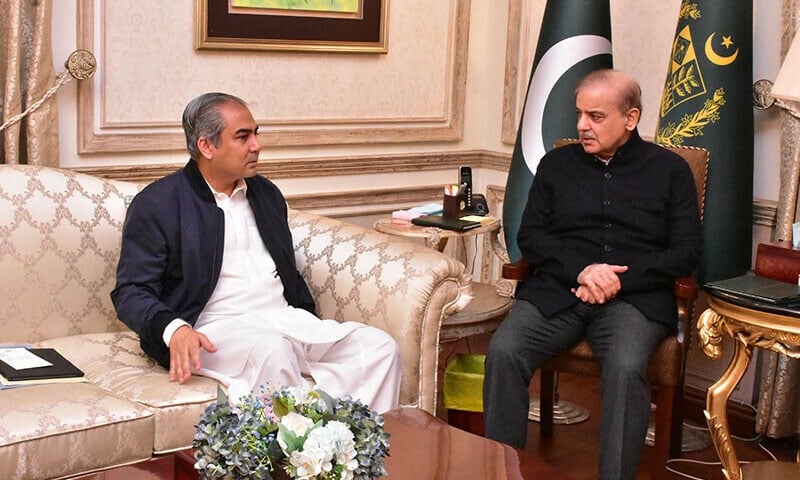
Pakistan’s external security challenges have been compounded by disagreements between the federal government and the provincial government in Khyber Pakhtunkhwa. For years, differences over Afghanistan policy, counterterrorism, the treatment of Afghan nationals and direct engagement with the Afghan Taliban created the impression that the country did not have a consistent approach.
There cannot be two competing foreign policies within one country. Relations with Afghanistan and negotiations on matters involving national security fall within the federal government’s domain, particularly through the relevant diplomatic and security institutions. A provincial government can and should communicate the concerns of its people, especially when they bear the consequences of violence, but those concerns must feed into a coordinated national policy rather than become a parallel diplomatic track.
The same principle applies to counterterrorism. When federal and provincial leaders exchange accusations instead of sharing information, coordinating operations and agreeing on priorities, terrorist groups gain room to maneuver. Political differences do not disappear simply because a new administrative arrangement is introduced, but security cooperation cannot be allowed to depend on which party holds power.
Recent security meetings involving federal and provincial representatives have brought renewed attention to police resources, improved equipment, armored vehicles and compensation for police personnel killed in the line of duty. These are practical matters, not political favors. Police officers in districts such as Lakki Marwat, Bannu and Tank cannot be expected to confront well-equipped terrorist groups without adequate protection, intelligence and operational resources.
Local police and peace committees have raised legitimate concerns about shortages of equipment and their ability to respond to increasingly dangerous threats. If terrorists possess modern weapons, surveillance equipment and other resources, the state must ensure that those responsible for protecting communities are not left at a disadvantage.
Coordination between civilian authorities, the military, police and local communities is therefore essential. It is not enough to hold meetings or issue declarations of unity. The results must be visible in better-equipped police forces, stronger intelligence-sharing, safer communities and fewer successful terrorist attacks.
Governor’s Rule and Emergency Measures Are Not an Instant Cure
The introduction of governor’s rule and emergency-related administrative arrangements in Khyber Pakhtunkhwa has to be understood against this security background. The central argument advanced for these measures is that the prevailing security situation requires a more coordinated administrative response, particularly in the districts most affected by terrorism.
The constitutional provisions cited in this context, including Articles 232 and 234, establish frameworks for exceptional measures under specified circumstances. Their invocation does not remove the need for legal scrutiny, accountability or attention to the rights of citizens. Nor does an administrative change automatically guarantee that terrorism will decline.
The effectiveness of any new arrangement will depend on how it is implemented, whether institutions receive the resources they need and whether security policy becomes more consistent. It will also depend on whether local residents see improvements in their daily lives rather than simply another change in the administrative structure.
No serious observer should expect terrorist organizations to abandon their activities within a few weeks because a new government arrangement has been introduced. These groups have networks, recruitment mechanisms, weapons and sources of support. Disrupting them requires sustained intelligence work, law enforcement, border management, financial investigations and community cooperation.
The purpose of emergency measures should therefore be judged by their results, not by the announcement itself. Are police officers better protected? Are terrorist networks being disrupted? Can people travel without fear? Are schools, businesses and public institutions operating more safely? Are communities receiving the support they need to resist intimidation?
These are the indicators that matter.
Afghan Nationals Must Not Be Confused With Terrorists
Pakistan’s approach to Afghan nationals also requires clarity and consistency. The presence of Afghan refugees and other Afghan citizens in Pakistan is a separate issue from the threat posed by terrorist organizations. Not every Afghan national is a terrorist, and not every undocumented foreign national is involved in criminal activity.
People who must return to Afghanistan should be treated with dignity and in accordance with applicable law and procedures. An orderly return process is preferable to indiscriminate treatment that creates unnecessary suffering or undermines public confidence.
At the same time, humanitarian considerations cannot mean that legitimate security concerns should be ignored. Authorities must be able to identify individuals involved in terrorism, investigate credible evidence and prevent terrorist networks from exploiting migration routes or vulnerable communities.
The policy should be consistent across the country. If enforcement differs substantially between provinces, it can create confusion, encourage political disputes and weaken public confidence in the state’s intentions. A coherent national framework should distinguish between refugees, documented residents, undocumented foreign nationals and individuals suspected of criminal or terrorist activity, with each category handled according to the law.
The same consistency is required in dealings with Afghanistan. Pakistan cannot pursue a clear security policy if domestic political competition repeatedly undermines its implementation or sends contradictory signals to the Afghan Taliban.
Kabul’s Conduct Will Shape the Future of Relations
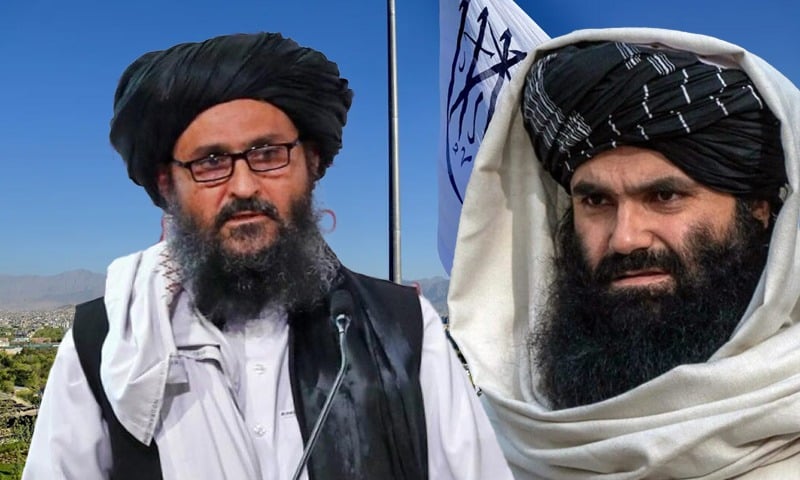
Ultimately, the future of Pakistan-Afghanistan relations depends heavily on the conduct of the Afghan Taliban authorities. Diplomatic engagement can help rebuild communication, and third-party mediation can create opportunities for progress. Neither will be enough if the underlying security concerns remain unresolved.
Pakistan shares a border of approximately 2,640 kilometers with Afghanistan, and the consequences of instability extend beyond Khyber Pakhtunkhwa. Balochistan and major urban centers have also faced terrorist violence. The question of whether Afghan territory is being used by terrorist groups is therefore a national security concern, not merely a provincial dispute.
The Afghan Taliban need to understand that their relationship with Pakistan cannot improve sustainably through diplomatic gestures alone. It requires practical steps to prevent terrorist organizations from using Afghan territory to threaten Pakistan. Pakistan, for its part, must continue to distinguish between targeted counterterrorism measures and broader diplomatic engagement, while ensuring that its actions are based on security assessments and remain proportionate to the threats identified.
There are difficult questions on both sides, but the most important test is whether commitments produce measurable change. If they do, the space for trade, diplomatic engagement and regional cooperation will grow. If they do not, renewed tensions and border disruptions will remain likely features of the relationship.
Political Allegations Must Be Handled Through Evidence
The debate over the possible presence of Pakistani political figures in Afghanistan illustrates another problem: the tendency to turn unverified allegations into political certainties. Questions have been raised about former provincial minister Murad Saeed and claims that he may be in Afghanistan. Such allegations should be assessed through credible evidence and appropriate legal procedures rather than speculation.
The broader principle is more important than any one individual. If a person wanted by Pakistani authorities is confirmed to be in another country, the matter should be handled through lawful channels and the relevant authorities. If the allegation cannot be substantiated, it should not be presented as an established fact.
The Afghan Taliban also have a responsibility to ensure that Afghan territory is not used to facilitate activities that threaten Pakistan’s security or undermine its lawful institutions. But the state must maintain a clear distinction between political opposition and involvement in criminal or terrorist activity. Security policy becomes less credible when allegations, political rhetoric and verified evidence are treated as interchangeable.
A Regional Opening, Not a Guaranteed Breakthrough
Russia’s mediation offer, China’s interest in regional connectivity and renewed coordination between Pakistan’s federal and provincial authorities may create opportunities for progress. None guarantees success. The outcome will depend on whether the parties address the causes of insecurity rather than merely managing the consequences.
For Pakistan, the priorities are clear: maintain a consistent national policy towards Afghanistan, strengthen the capacity of police and security institutions, support communities affected by terrorism, and ensure that political disagreements do not obstruct counterterrorism efforts.
For the Afghan Taliban, the central responsibility is to demonstrate through action that Afghan territory will not be used by terrorist groups to attack neighboring countries. For Russia and China, constructive engagement should mean encouraging practical commitments against all terrorist organizations, not overlooking groups that threaten Pakistan while focusing on those that threaten their own interests.
The ultimate measure of success will not be the number of diplomatic visits or meetings held. It will be whether attacks decline, border communities become safer, trade resumes on a sustainable basis and both countries can build a relationship based on security commitments that are actually honored.
Pakistan needs neither diplomacy without enforcement nor security operations without a political and regional strategy. It needs both, sustained over time and supported by national coordination. Only then can the current crisis become an opportunity to establish a more durable framework for peace.