
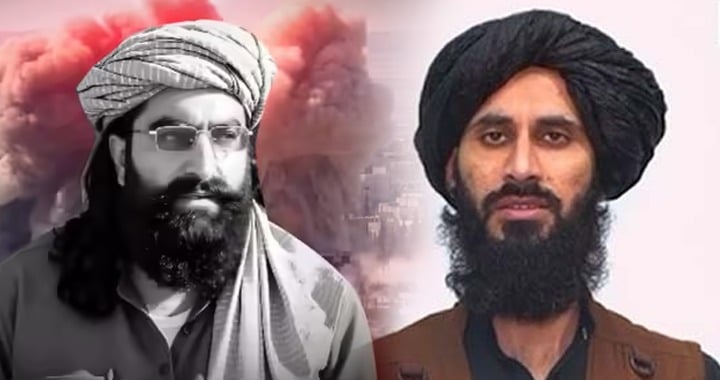
The statement issued by the banned Tehreek-e-Taliban Pakistan (TTP) rejecting the confession of an arrested commander is not merely a denial. It is a window into the growing unease within a network that finds itself under sustained and multi-dimensional pressure.
Militant organizations, enjoying safe havens in Afghanistan under Taliban’s Patronage, rely on secrecy, discipline, and controlled narratives to survive. When a detained commander begins to reveal internal structures, operational linkages, and external connections, that foundation begins to crack. The urgency with which the TTP moved to dismiss these revelations suggests that the threat is real, not imagined.
This raises the first and most immediate question: why respond at all if the claims are baseless? Historically, such groups have ignored isolated allegations. A formal and public rebuttal indicates concern that the information may carry credibility or could resonate with the public.
The second question goes deeper. What exactly are they afraid of? The answer lies in the current phase of counterterrorism operations, widely associated with Operation Ghazab Lil Haq. The name itself has begun to carry weight within militant circles, symbolizing a campaign that combines kinetic action with intelligence penetration.
Arrests are no longer isolated disruptions. They are becoming entry points into the internal ecosystem of these networks. Confessions and disclosures, whether partial or complete, create ripple effects, exposing facilitators, safe routes, and support bases that had remained concealed.
For groups like the TTP, this represents a strategic threat. It is not just about losing fighters, but about losing invisibility.
There is also a narrative battle unfolding. By labeling confessions as propaganda, the TTP is attempting to preempt public acceptance of damaging information. But this approach comes with its own risk. Repeated denials can gradually lose effectiveness, especially when accompanied by visible operational setbacks.
Another layer of the issue is public perception. Years of violence, attacks on civilians, and targeting of security forces have significantly eroded whatever space these groups once claimed within society. Today, their statements are not received in a vacuum, but against a backdrop of widespread rejection.
This leads to a question increasingly being asked by the public: should such groups be believed when they deny allegations, particularly when they are widely seen as operating with external backing and against national stability?
At the same time, the pressure is not limited to one side of the border. The broader environment, including the role of the Afghan Taliban and their handling of such groups, adds complexity to the situation. Calls for verifiable action against these networks are becoming more direct and less negotiable.
Pakistan’s position, in contrast, appears to be hardening. The message being signaled is no longer ambiguous. There are defined choices: dismantle these networks, hand over key figures, or face sustained and escalating consequences.
The psychological impact of this shift is already visible. The language of denial, the urgency of statements, and the defensive posture all point to a network that is no longer operating with the confidence it once projected.
In the end, the current moment is not defined by a single confession or a single arrest. It is defined by a pattern, one in which pressure is mounting, space is shrinking, and the cost of continued militancy is becoming increasingly difficult to absorb.
And that is precisely why the denials sound louder than usual.



