
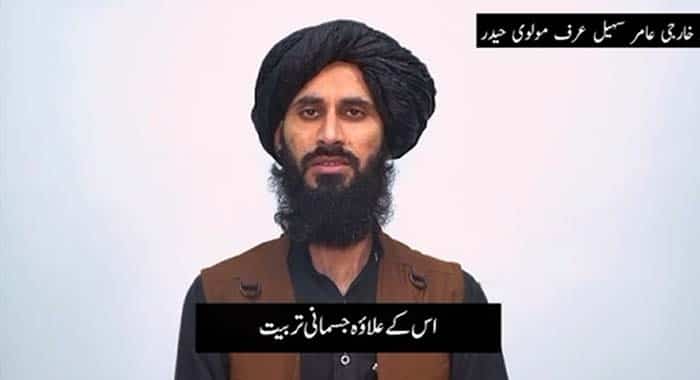
Security officials report the arrest of an individual identified as a suspected Khawarij operative, Amir Sohail, during a counterterrorism operation. According to official and attributed statements, the detainee is said to have made disclosures regarding networks operating across the Pakistan–Afghanistan border region.
Authorities state that the suspect allegedly admitted to being influenced by extremist propaganda targeting Pakistan and later joining Khawarij-linked activity following exposure to such narratives. These claims remain part of an ongoing investigation and have not been independently verified.
According to attributed statements, the individual is alleged to have received training in areas inside Afghanistan, including the province of Paktika, in facilities described by security sources as linked to Khawarij elements. Officials further claim that these networks operate through overlapping structures across multiple armed groups in the region.
The reported statements also allege connections between Khawarij factions and other transnational extremist organizations, alongside claims of financial and logistical support from external sources. These assertions remain unverified and are subject to ongoing investigation.
The detainee is further reported to have been involved in multiple attacks targeting security forces in areas including Bannu, Lakki Marwat, and Mianwali. Authorities state he was apprehended during movement in Peshawar in a targeted counterterrorism operation.
In the alleged statement, the suspect reportedly rejected ideological justifications for Khawarij activity, claiming such groups exploit religious narratives for financial and operational purposes. These remarks are part of a recorded statement presented by security officials and remain under review.
Security analysts, as cited in official briefings, suggest that if verified, the disclosures highlight continuing concerns over organized Khawarij networks operating across border regions. They emphasize the importance of sustained regional coordination in counterterrorism efforts.
Officials have reiterated that investigations are ongoing to verify the suspect’s affiliations, funding channels, and operational linkages.
The report also includes claims by unnamed analysts suggesting that the findings reinforce long-standing concerns regarding cross-border facilitation networks involving Khawarij elements. These interpretations have not been independently confirmed.



