
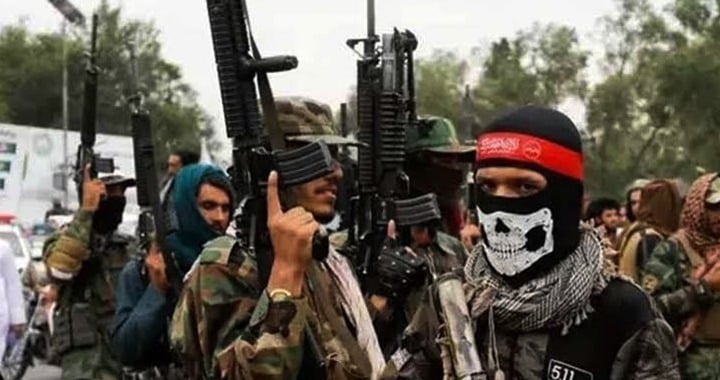
For years, terrorism in Pakistan has been discussed through the names of individual organizations. The banned Tehreek-e-Taliban Pakistan (TTP) is discussed separately, the Balochistan Liberation Army separately, Islamic State Khorasan Province (ISKP) separately and Al-Qaeda as though it belongs to another chapter of history.
That approach is increasingly inadequate.
The recent developments we are witnessing point toward something much more complicated: a terrorist ecosystem in which different organizations retain their own identities but benefit from overlapping networks of ideology, recruitment, training, financing, shelter, technology and propaganda.
This is the significance of the recent discussion around Al-Qaeda’s relationship with the TTP and BLA. The real danger is not necessarily that all these organizations will merge into one formal organization. It is that they do not need to.
They can remain separate while becoming more capable through cooperation.
Al-Qaeda’s New Strength May Be Its Ability to Operate Through Others
Al-Qaeda today does not need to reproduce the structure it had before 9/11 to remain dangerous.
Its influence can be exercised through regional organizations that understand local geography, maintain local recruitment networks and possess their own operational structures. Al-Qaeda can provide expertise, training, ideological direction and connections while allowing other groups to carry out attacks under their own names.
That makes the network harder to dismantle.
The recent identification of Afghan nationals among terrorists operating inside Pakistan adds another layer to this problem. The issue is no longer simply whether a particular terrorist group has ideological links to Afghanistan. The question is whether Afghanistan continues to provide the environment in which these organizations can recruit, train, regroup and prepare for operations across the border.
The Ghulam Khan infiltration attempt demonstrated the physical side of this challenge. The elimination of 27 terrorists attempting to enter Pakistan was not simply a border incident. It was an attempt by an organized terrorist network to move personnel from Afghan territory into Pakistan.
Then came the identification of Afghan nationals among those terrorists.
That matters because it challenges the argument that terrorism inside Pakistan can be treated purely as an indigenous problem.
The Threat Is Also Becoming Technological
The Peshawar CTD operation against ISKP provides another warning.
Five ISKP terrorists, including a key commander, were eliminated near Shamshatoo Camp while allegedly preparing attacks against sensitive institutions, Imambargahs and churches. Weapons, grenades and an improvised explosive device were recovered.
The operation also exposed the operational history of one of the terrorists, who was wanted in numerous terrorism cases and was allegedly involved in previous suicide attacks and target reconnaissance.
This tells us something important.
The terrorist threat is not simply about men carrying rifles across a border. It involves reconnaissance, suicide operations, improvised explosives, target selection, logistics and increasingly sophisticated technology.
The same evolution is visible in terrorist use of drones and other surveillance equipment.
That is why counterterrorism cannot remain confined to the traditional model of finding a hideout and eliminating its occupants. Intelligence must identify the network behind the hideout.
The Digital Battlefield Is Part of the Same War
The enormous number of accounts and pieces of online material blocked by Pakistani authorities provides another part of the picture.
Terrorist organizations no longer need to physically gather hundreds of people to spread propaganda. They can use social media to recruit, intimidate, glorify attacks, circulate false claims and create an exaggerated perception of their strength.
Fear is itself a counterterrorism target.
If a terrorist group can convince ordinary citizens that it is omnipresent, unstoppable and capable of retaliating against anyone who cooperates with the state, it can create an invisible shield around itself.
This is why digital counterterrorism matters.
The physical terrorist may be hiding in a compound. The propaganda supporting him may be sitting in thousands of mobile phones.
The Real Target Must Be the Ecosystem
Pakistan therefore needs to think beyond individual terrorist organizations.
The objective should be to disrupt the complete chain: recruitment, ideological indoctrination, training, movement, financing, weapons acquisition, cross-border facilitation, target reconnaissance, attack execution and propaganda.
If only one link is broken, the network can rebuild.
This is also why Afghanistan matters so much. A terrorist network with access to territory, training facilities and cross-border routes has an advantage that an isolated underground cell does not.
Pakistan has demonstrated repeatedly that it can locate and eliminate high-value terrorists. The challenge now is ensuring that every eliminated commander is replaced by fewer and fewer recruits, rather than allowing the wider network to regenerate across the border.
The war against terrorism has therefore entered a different phase.
Pakistan is no longer confronting isolated groups operating in isolation. It is confronting an ecosystem.
And ecosystems are defeated not by cutting one branch, but by destroying the conditions that allow the entire system to reproduce itself.



