
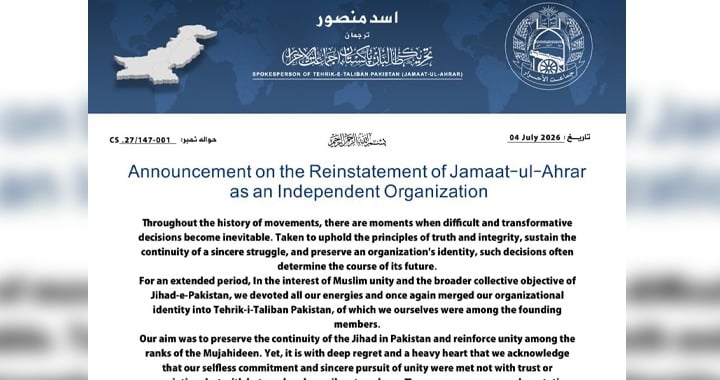
Tehreek-e-Taliban Pakistan (TTP) has suffered a significant internal setback after its former faction, Jamaat-ul-Ahrar (JuA), formally announced that it is ending its affiliation with the umbrella terrorist organization and re-establishing itself as an independent entity.
In a detailed statement issued on Friday, Jamaat-ul-Ahrar’s spokesperson, Asad Mansoor Tarjuman, announced the group’s decision to restore its “complete independent and sovereign organizational status,” effectively reversing its merger with the TTP that took place in 2020.
The terrorist group claimed that it had previously dissolved its separate organizational identity to promote unity among terrorist factions operating in Pakistan. However, it alleged that its leadership’s efforts were met with “betrayal,” “treachery,” and systematic marginalization rather than trust and cooperation.
The statement also referred to the death of the group’s former chief, Khalid Khorasani, and other senior members, alleging that the organization had suffered heavy organizational and human losses following its integration into the TTP.
According to the announcement, Jamaat-ul-Ahrar’s senior leadership reached the decision after what it described as an extensive consultative process. The group declared that it would henceforth operate independently under the leadership of Omar Khorasani.
The statement further asserted that Jamaat-ul-Ahrar would exercise full autonomy over its future policies, operational decisions and organizational affairs, adding that it would continue pursuing its declared objective of enforcing its interpretation of Islamic law in Pakistan.
The announcement marks one of the most significant organizational developments within the TTP network in recent years and is expected to have implications for the structure and dynamics of terrorist groups operating in the region. The declaration also points to apparent internal divisions within the TTP, highlighting longstanding disputes over leadership, organizational control and strategic direction.



