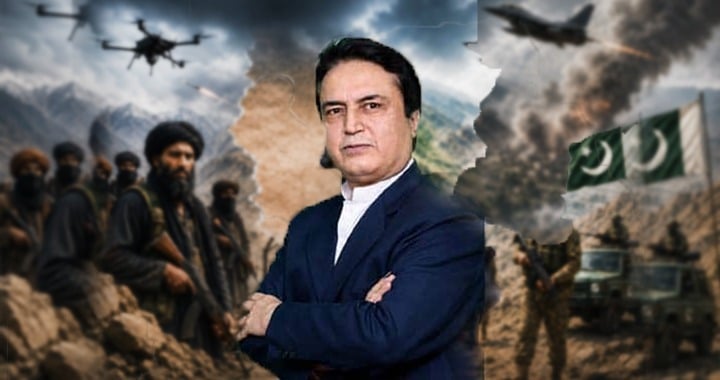
For anyone closely observing Pakistan’s western frontier, it has become increasingly clear that the security environment is no longer confined to isolated incidents or individual districts. What we are witnessing today is a connected and evolving threat stretching from Bajaur and the former tribal districts to Balochistan, where different terrorist organizations operate under different banners but often pursue overlapping objectives. Unless this broader picture is understood, individual operations, however successful, will only address symptoms rather than the wider challenge.
If we look across Khyber Pakhtunkhwa and the former tribal areas, the security situation remains tense. The southern districts, along with the adjoining former tribal agencies, continue to require sustained attention. At the same time, parts of Malakand Division, including Dir and Swat, have once again shown signs of terrorist activity. Reports from the ground suggest that sleeper cells have gradually reactivated, reminding us that terrorism rarely disappears permanently. Instead, it adapts, retreats and waits for opportunities to re-emerge.
This pattern has repeated itself throughout Pakistan’s counterterrorism campaign. Whenever large-scale operations have been launched, security forces have succeeded in clearing affected areas and dismantling terrorist infrastructure. We witnessed this during operations across Malakand, Swat, South Waziristan and North Waziristan. In every major campaign, terrorists were compelled to abandon their positions and retreat, with many relocating to remote mountainous regions or crossing into Afghanistan.
However, retreat should never be mistaken for defeat. These organizations frequently withdraw only to reorganize, recruit, train and prepare for another attempt to infiltrate. They patiently wait until security pressure eases before attempting to return. It is a continuous cycle in which security forces clear an area, terrorists regroup elsewhere, and eventually seek fresh opportunities to penetrate back into previously liberated territory. This strategic behavior explains why counterterrorism requires constant vigilance rather than temporary success.
Another important development that cannot be ignored relates to the negotiations held during former Prime Minister Imran Khan’s tenure. During that period, certain Taliban members were permitted to return to Pakistan under the stated understanding that they wished to reunite with their families. Subsequent developments raised serious questions regarding the long-term consequences of that policy. Pakistan later witnessed attacks, including the killing of a police officer in Swat and the abduction of a serving military officer by terrorists. These incidents demonstrated how security dynamics can change rapidly when terrorist organizations regain operational space.
Today, Bajaur represents one of the most sensitive districts in this evolving environment. Earlier clearance operations required temporary displacement of local populations, who were assured that once terrorist elements had been removed they would be able to return safely to their homes. Many families did return following those operations. Yet accounts emerging from local residents indicate that terrorist presence has gradually increased again.
According to people living in these areas, terrorists are once more moving through villages, visiting mosques, entering hujras and interacting openly with sections of the local population. Such engagement is not accidental. It serves a propaganda purpose by attempting to create the perception that the terrorists have survived the state’s operations and remain capable of influencing events. Winning narratives can sometimes become almost as important as winning firefights, making information and community confidence central components of national security.
Alongside these internal developments, the cross-border dimension has become increasingly significant. Pakistan recently carried out operations in areas adjoining Bajaur across Paktika, Paktia and Kunar, targeting terrorist infrastructure threatening Pakistani territory. During one such operation, a senior TTP commander, initially reported in some quarters as belonging to Jamaat-ul-Ahrar, was eliminated along with two associates. Regardless of organizational labels, removing senior operational commanders weakens terrorist planning capabilities and demonstrates Pakistan’s willingness to strike threats that directly endanger its national security.
The battlefield itself is also changing. Traditional gun battles are no longer the only concern. Small quadcopter drones have begun appearing with increasing frequency along the border. Various terrorist factions, particularly those linked to Hafiz Gul Bahadur, have invested considerable effort in developing operators capable of using commercially available drone technology for surveillance and attacks. Compared with them, the TTP historically possessed fewer trained drone operators, although such capabilities continue to spread between different organizations.
Consequently, Pakistan now faces a security environment in which both state and non-state actors increasingly rely upon drone technology. Security forces are using drones for surveillance and operational purposes, while terrorists are also attempting to exploit the same technology. This emerging technological competition has added another layer of complexity to border security, making conventional counterterrorism methods alone insufficient.
The resulting tension is no longer confined to remote border districts. It has gradually expanded from the former tribal belt towards settled areas, including Peshawar. That geographic expansion should concern every policymaker because it demonstrates how quickly instability can migrate if left unchecked.
If we shift our attention towards Balochistan, the security picture differs in some respects but is connected to the same broader challenge. While terrorist activity in Khyber Pakhtunkhwa is generally more frequent, Balochistan has increasingly become part of the emerging drone dimension. Recent incidents involving drones entering from Afghanistan and targeting areas in Mastung demonstrate that this technology is no longer confined to one theatre of conflict. The danger is gradually expanding across Pakistan’s western frontier.
Until recently, the Afghan Taliban lacked any meaningful capability to threaten Pakistan from the air. Whenever Pakistan conducted cross-border strikes against terrorist hideouts, the Taliban’s response largely remained limited to exchanging fire along border posts. Today, however, the situation appears to be evolving. We have now witnessed repeated instances in which drones originating from Afghan territory have attempted to enter Pakistani airspace. Previous incidents reportedly saw drones reaching areas around Islamabad, Abbottabad, Swabi, Orakzai and Khyber, while the latest episode also included drones directed towards Peshawar, Khyber and Mastung.
Following Pakistan’s recent operations in Paktia, Paktika and Kunar against terrorist elements, including members of the TTP and the Hafiz Gul Bahadur group, the Afghan authorities again claimed that civilians had been affected. Under pressure from domestic opinion, they subsequently claimed retaliatory drone activity against Pakistan. The Islamic Emirate also issued statements asserting that its drones had targeted locations connected with hostile elements. Pakistan, meanwhile, maintained that all four drones launched towards its territory had been neutralized, although one falling drone reportedly injured a woman. Regardless of competing narratives, the emergence of drones as a recurring feature of this confrontation should concern both sides.
The more significant issue lies not in today’s capabilities but in tomorrow’s ambitions. Information emerging from Afghanistan suggests that the Taliban leadership has prioritized three major military objectives. The first is to establish an effective air defence shield capable of limiting Pakistani aerial operations. There has been considerable discussion about their interest in acquiring Russian air defence technology to strengthen Afghanistan’s airspace.
The second objective is to improve drone capabilities. The small quadcopters currently in use are viewed only as an initial step. Reports indicate that efforts are underway to extend their operational range, improve navigation systems and increase their ability to strike specific locations. Such developments, if realized, would significantly alter the security equation along the border.
The third objective is missile development. The Taliban and affiliated armed organizations have previously demonstrated the ability to construct improvised launchers and short-range rocket systems. Should those efforts mature into more capable missile technology, Pakistan would face an even more complicated security environment. The concern, therefore, is not simply what exists today, but what these organizations may possess in the coming years if their military innovation continues unchecked.
For that reason, I believe sustained escalation serves neither Pakistan nor Afghanistan. The two countries share nearly 2,400 kilometers of border, along with deep ethnic, tribal and cultural connections. Any prolonged confrontation risks harming ordinary people on both sides while creating opportunities for hostile actors to exploit instability.
It is equally important to recognize how dramatically relations have changed. There was a time when the Afghan Taliban were widely accused inside Afghanistan of maintaining exceptionally close ties with Pakistan. Critics routinely alleged that senior Taliban figures enjoyed sanctuary in Pakistani cities and that the movement itself operated with Pakistani support. Whether those allegations were accurate or exaggerated, the perception undeniably existed.
Today, the picture is almost the opposite. Public rhetoric has hardened, drone incidents have increased and casualties have occurred on both sides of the border. During recent tensions, senior Taliban officials publicly spoke of responding forcefully to Pakistan, with some making highly ambitious claims about future military action. Such statements reflect how quickly former understandings have given way to mistrust.
In my view, this deterioration benefits neither Islamabad nor Kabul. If Pakistan and Afghanistan remain locked in continuous confrontation, there will inevitably be external actors prepared to exploit those divisions for their own strategic interests. Both countries should remember that those celebrating prolonged instability are unlikely to have either nation’s interests at heart.
Questions are often raised about whether outside powers are directly supplying advanced technology to the Taliban. My assessment is that many of these capabilities stem less from foreign sponsorship and more from years of battlefield adaptation. During the conflict against the United States, Afghan fighters repeatedly demonstrated an ability to innovate with limited resources. They gradually improved their weapons, modified launch systems and adapted to changing battlefield conditions.
The same pattern can be observed within the TTP. As early as 2012 and 2013, the organization experimented with improvised launcher systems. More recently, it has claimed attacks using what it described as the Al-Farooq missile. Whether such claims are fully accurate or partially exaggerated, they illustrate an ongoing effort to expand indigenous capabilities. For organizations that have spent decades fighting insurgencies, transitioning from basic rocket systems to more sophisticated drones and missiles is a logical progression.
Another issue generating considerable debate concerns Taliban commander Juma Khan Fateh and his recent statements regarding the presence of the TTP, the BLA and other terrorist organizations inside Afghanistan. If such claims are accurate, they directly challenge repeated Taliban assurances that Afghan territory is not being used by terrorist groups against neighboring states. The issue deserves serious attention because it touches upon commitments made under international agreements and repeated public assurances.
At the same time, reports about anti-Taliban resistance movements should be approached carefully. While figures such as Juma Khan, Amrullah Saleh and Ahmad Massoud continue to attract attention, social media alone cannot be treated as conclusive evidence of changing realities on the ground. Old videos, recycled footage and unverified claims circulate regularly. Despite sporadic resistance, the Taliban continue to exercise effective control across most of Afghanistan. That reality should not be ignored when assessing the country’s security landscape.
Finally, the relationship between the BLA and the TTP should no longer be viewed in isolation. Over recent years, there have been repeated indications that both organizations have cooperated, provided mutual assistance and coordinated activities where their operational interests overlap. Reports of understandings between them suggest that support may extend beyond ideology into logistics and operational coordination. Although disagreements may occasionally emerge, both organizations ultimately seek to challenge Pakistan’s security institutions and therefore share a convergence of interests.
Pakistan’s response to these evolving threats must remain comprehensive, adaptive and forward-looking. Terrorist organizations are changing their tactics, embracing new technologies and building networks that increasingly transcend provincial and even national boundaries. Successfully confronting this challenge will require not only effective military operations but also sustained intelligence cooperation, technological preparedness, resilient border management and continued public confidence in the state’s ability to protect its citizens. Only through such a multidimensional approach can Pakistan stay ahead of an adversary that is constantly attempting to reinvent itself.