
In a high-stakes geopolitical development, U.S. President Donald Trump has indefinitely extended a fragile ceasefire with Iran, just hours before its expiration, signaling both an opportunity for diplomacy and a deepening atmosphere of mistrust and military readiness across the region.
In a statement issued via social media, President Trump confirmed that the decision followed a formal request from Pakistan, which has been actively mediating between Washington and Tehran. The U.S. leader stated that he had directed American forces to maintain a blockade while remaining fully prepared for potential military action.
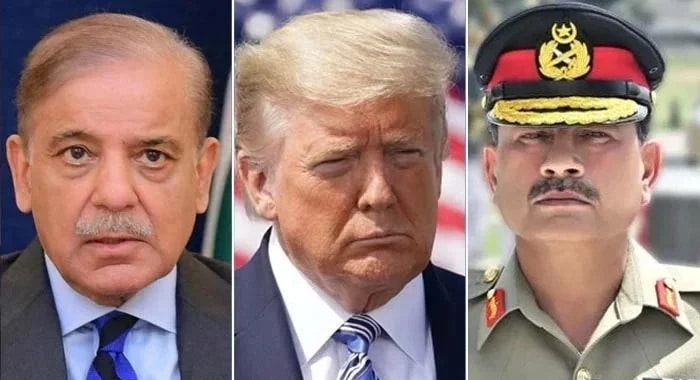
Trump emphasized that the extension would remain in effect until Iranian leadership presents a “unified proposal,” describing Iran’s government as “seriously fractured.” He acknowledged the role of Pakistan’s leadership, including Prime Minister Shehbaz Sharif and Army Chief Field Marshal Syed Asim Munir, in urging restraint to allow diplomatic efforts to proceed.
Prime Minister Shehbaz Sharif publicly welcomed the decision, expressing appreciation for Washington’s willingness to extend the ceasefire. He reaffirmed Pakistan’s commitment to facilitating dialogue and voiced hope for a comprehensive peace agreement during the upcoming second round of talks scheduled in Islamabad.
Deputy Prime Minister and Foreign Minister Ishaq Dar reiterated that dialogue remains the only viable path toward sustainable peace. Pakistan’s diplomatic outreach has also drawn support from key global stakeholders, including China, Saudi Arabia, and Egypt, all of whom have endorsed Islamabad’s mediation efforts.
Despite the extension, Iranian officials expressed strong skepticism regarding U.S. intentions. An advisor to Parliament Speaker Mohammad Baqer Qalibaf described the move as a potential “ploy to buy time” for future military action. Iranian state broadcaster Islamic Republic of Iran Broadcasting (IRIB) reported that Tehran had rejected U.S. conditions for negotiations, asserting that the ceasefire extension was unilateral.
Iranian Foreign Minister Abbas Araghchi condemned the ongoing U.S. naval blockade as an “act of war,” warning that Tehran retains the capability to counter external pressure. Similarly, Foreign Ministry spokesman Esmaeil Baqaei cited “contradictory messages” from Washington as a barrier to engagement.
Senior Iranian leadership, including representatives linked to the Islamic Revolutionary Guard Corps, signaled that negotiations would only occur under conditions recognizing Iran’s strategic position.
The situation remains volatile. The U.S. has maintained a naval blockade and confirmed the interception of vessels allegedly linked to Iranian supply networks. The seizure of an Iranian-flagged ship, Touska, has further intensified tensions, with Tehran demanding its release.
Meanwhile, warnings from Iran’s Revolutionary Guards cautioned regional actors against facilitating attacks, threatening severe consequences for energy infrastructure. The conflict has already disrupted critical maritime routes, including the Strait of Hormuz, leaving thousands of seafarers stranded and impacting global trade.
U.S. Vice President JD Vance delayed a planned visit to Pakistan, reflecting ongoing uncertainty in negotiations. While talks remain possible, U.S. officials indicated that progress depends on Iran’s willingness to engage constructively.
Simultaneously, Washington has introduced a new round of sanctions targeting entities in Iran, Turkey, and the United Arab Emirates, further complicating diplomatic efforts.
The crisis continues to reverberate globally:
- Oil markets remain volatile, with prices briefly exceeding $100 per barrel.
- European and Asian economies are experiencing supply chain disruptions and energy insecurity.
- The International Maritime Organization has raised concerns over stranded vessels and crew.
- Security incidents linked to the conflict have been reported across multiple regions, including Europe and the Middle East.
Additionally, Iran has intensified internal security measures, with thousands reportedly detained amid the ongoing conflict.
While the ceasefire extension offers a narrow window for diplomacy, deep divisions persist. The continuation of military readiness alongside diplomatic engagement underscores the fragile balance between negotiation and escalation.
Analysts warn that without tangible progress in upcoming talks, the region could face a rapid return to open conflict. However, sustained mediation—particularly by Pakistan—may yet provide a pathway toward de-escalation and a broader peace framework.



