
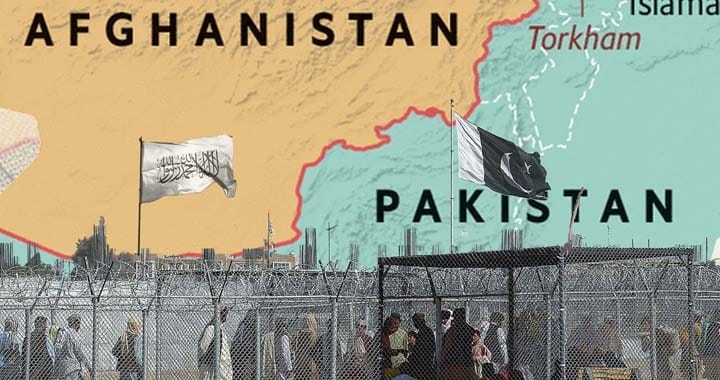
Despite the existence of a China-backed ceasefire framework between Pakistan and Afghanistan, bilateral relations between the two neighboring countries continue to remain deeply complex, fragile, and overshadowed by a persistent crisis of trust, cross-border terrorism concerns, and competing regional alignments. Security and diplomatic observers warn that although multiple rounds of negotiations have taken place through the facilitation of countries including China, Qatar, Türkiye, and Saudi Arabia, meaningful confidence-building between Islamabad and Kabul has yet to materialize, leaving the region vulnerable to renewed instability.
Pakistan’s leadership maintains that the Taliban administration in Afghanistan has failed to take decisive and credible action against terrorist groups allegedly operating from Afghan soil, particularly elements linked to attacks inside Pakistan. Officials in Islamabad argue that Pakistan’s ongoing military operations are specifically directed against infiltrators, terrorist networks, militant hideouts, and verified operational targets rather than against the Afghan people or state institutions.
According to Pakistani authorities, narratives emerging from Kabul accusing Islamabad of aggression are being viewed as politically motivated attempts to divert attention from the core issue of militancy and terrorist safe havens. Although the Afghan Taliban government has repeatedly assured regional and international stakeholders that Afghan territory would not be used against Pakistan or any other country, Pakistani officials believe that these assurances have not yet translated into concrete or verifiable action on the ground.
Analysts note that the continued presence and operational space allegedly enjoyed by banned militant outfits, including Tehreek-e-Taliban Pakistan (TTP), remains the central obstacle preventing normalization of relations between the two countries. Pakistan has consistently emphasized that sustainable peace in bilateral ties cannot be achieved unless Kabul takes serious measures to dismantle militant infrastructure, halt political patronage of extremist organizations, and cooperate in counterterrorism efforts.
Pakistan has also expressed increasing concern over the rapidly expanding ties between India and the Afghan Taliban administration. Security experts in Islamabad argue that the growing strategic understanding between New Delhi and Kabul appears to be increasingly shaped by anti-Pakistan considerations.
Pakistani officials believe that India is attempting to use Afghan territory as part of a broader proxy strategy aimed at destabilizing Pakistan politically, economically, and from a security standpoint by keeping Islamabad entangled in prolonged counterterrorism challenges. Diplomatic observers say Pakistan’s recent gains on the international diplomatic front, particularly in countering Indian narratives and regional pressure campaigns, have reportedly triggered strong reactions within the Indian leadership and the government of Prime Minister Narendra Modi.
However, Islamabad maintains that it does not oppose improved relations between Afghanistan and India in principle. Pakistan’s position, officials say, is that bilateral cooperation between Kabul and New Delhi should not be built upon hostility toward Pakistan or support for anti-Pakistan militant activities. Despite repeated diplomatic initiatives facilitated by China, Saudi Arabia, Qatar, and Türkiye, no major political breakthrough has yet emerged between Pakistan and Afghanistan.
Observers warn that unless meaningful political engagement takes place, the region could move toward deeper confrontation, the consequences of which would extend far beyond the borders of the two countries and impact regional politics, trade, economic connectivity, and security architecture across South and Central Asia. Analysts argue that instead of drifting toward conflict, both countries should have developed a joint counterterrorism mechanism aimed at intelligence-sharing, coordinated operations, border management, and regional stabilization.
Security experts stress that the Afghan Taliban administration bears a major responsibility in addressing Pakistan’s concerns by taking decisive action against the TTP and other militant organizations accused of orchestrating attacks inside Pakistan. Political analysts emphasize that war cannot provide a lasting solution to the challenges confronting the region, particularly at a time when both Pakistan and Afghanistan are already facing significant internal political, economic, and security pressures.
They argue that even in the event of military escalation, the two countries would eventually have to return to the negotiating table, making diplomatic engagement the only sustainable long-term path forward.
Pakistan’s recent diplomatic engagement during tensions involving Iran and the United States has been widely viewed as an example of proactive regional diplomacy. Observers believe Islamabad may now need to adopt a similarly intensive diplomatic strategy regarding Afghanistan by engaging major regional and global stakeholders, including China, Saudi Arabia, Russia, and the United States, to collectively pressure Kabul into abandoning support for militant networks and pursuing constructive political engagement with Pakistan.
At the same time, Pakistani security officials maintain that counterterrorism operations against confirmed militant hideouts and operational bases will continue wherever credible threats exist. China is increasingly being viewed as the most influential external actor capable of mediating between Pakistan and Afghanistan due to its extensive economic and strategic interests in both countries.
Beijing has made substantial investments under the China-Pakistan Economic Corridor (CPEC), the Belt and Road Initiative (BRI), regional infrastructure projects, and mineral development sectors. Regional analysts note that the persistence of terrorism and instability directly threatens Chinese strategic and economic interests in the region.
For this reason, China is believed to be actively pursuing both overt diplomatic engagement and behind-the-scenes shuttle diplomacy aimed at reducing tensions between Islamabad and Kabul.Diplomatic sources point out that Chinese delegations have maintained continuous contact with both capitals, while high-level communications between Pakistani and Afghan leaderships have frequently involved Chinese facilitation and coordination.
So far, six rounds of trilateral or China-supported diplomatic engagements between Pakistan and Afghanistan have reportedly taken place, with efforts still ongoing to create a stable framework for long-term political understanding. Observers believe China has already played a critical role in reducing recent tensions between the two countries and may remain the only major power capable of bringing both sides back to sustained political dialogue and eventual reconciliation.
Key issues under discussion between Pakistan and Afghanistan reportedly include:
- Peaceful resolution of border disputes
- Enhanced bilateral cooperation against terrorism
- Restoration of trade and transit connectivity
- Revival of broader regional economic integration
- Protection of Belt and Road Initiative (BRI) projects
- Security of infrastructure and investment corridors
- Addressing Pakistan’s concerns regarding TTP activities
Experts argue that the Afghan Taliban government could initiate a meaningful improvement in relations by seriously addressing Pakistan’s security concerns and demonstrating practical action against militant groups operating from Afghan territory. Because China is largely viewed by both sides as a relatively neutral and acceptable stakeholder, its role in facilitating dialogue and confidence-building continues to grow in significance.
Analysts conclude that if Pakistan and Afghanistan continue to engage through Chinese mediation, the possibility of military escalation could significantly decrease while new opportunities for political reconciliation, economic cooperation, and regional stability may emerge. China’s diplomatic approach, observers note, often focuses on presenting mutually acceptable formulas that allow both parties to preserve strategic interests while avoiding direct confrontation. However, much will depend on whether Kabul and Islamabad are willing to capitalize on these diplomatic openings or continue operating within an atmosphere of confrontation and mistrust.
Experts caution that prolonged hostility and strategic coldness between the two neighboring countries could create even greater regional complications in the future and potentially push Afghanistan further toward India’s strategic orbit a development that Islamabad views with increasing concern. In this evolving geopolitical environment, policymakers stress that Pakistan must proceed with caution, strategic patience, and sustained diplomacy while simultaneously safeguarding its national security interests.



