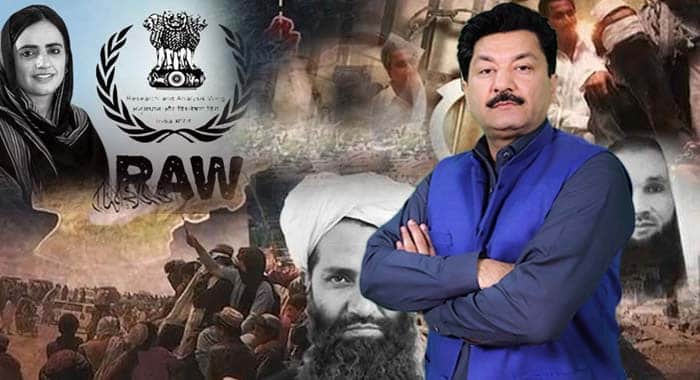
(Fida Adeel)
Afghanistan today stands at a delicate and increasingly uncertain intersection of politics, ideology, and governance. On the surface, the country appears to be under consolidated control following the return of the Taliban to power. Yet beneath this appearance lies a far more complicated reality one shaped by internal divisions, competing power centers, ideological disagreements, and mounting external pressures.
The central question that now emerges is not whether the Taliban control Afghanistan they clearly do but whether they govern it as a unified state or as a fragmented network of factions operating under a shared banner but different interpretations of authority.
This internal complexity is no longer an abstract political debate. It is shaping governance in real time, influencing diplomacy, security policy, humanitarian conditions, and Afghanistan’s relationship with its neighbors and the wider world.
Afghanistan is not a politically uniform space. With 34 provinces, vast ethnic diversity, and complex tribal structures, governance has always required negotiation and accommodation. However, under the current system, this diversity has not translated into institutional inclusivity.
Instead, power has become concentrated within a narrow political framework that struggles to maintain internal coherence. While officials claim representation across ethnic groups including Uzbeks, Hazaras, and communities from the north critics argue that this representation is limited and often symbolic rather than structural.
In provinces such as Badakhshan, tensions reflect the uneven nature of authority. Border sensitivity, security incidents, and local disputes illustrate how provincial dynamics can diverge significantly from central decision-making. In such areas, governance often depends on local commanders who operate with varying degrees of autonomy.
This creates a pattern where the state does not function as a single administrative unit, but rather as multiple layers of authority that do not always move in coordination. One of the most defining features of Afghanistan’s current political structure is the informal duality between Kabul and Kandahar. Kabul serves as the administrative and diplomatic capital, where ministries operate and international engagements are managed. Kandahar, however, is widely regarded as the ideological and strategic center where key decisions are shaped and ultimately directed.
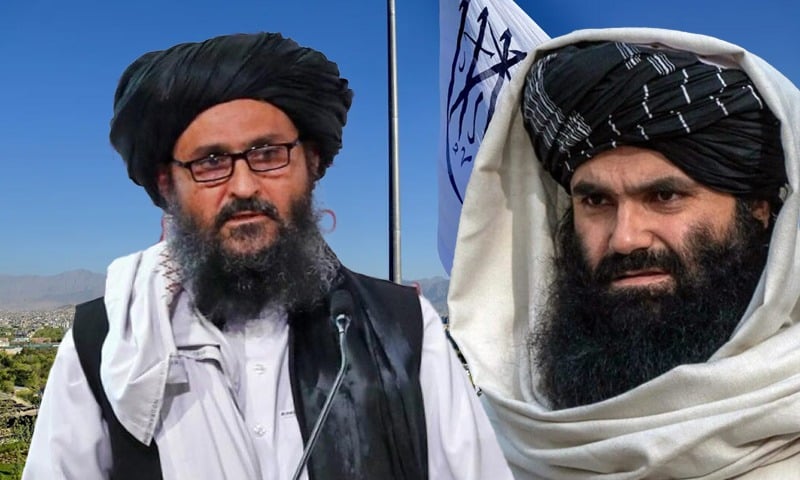
This division has created an unusual governance model: administrative execution in one city, and strategic decision-making in another. The influence of figures associated with the movement’s founding legacy, including Mullah Omar, continues to shape ideological direction, while newer leadership figures such as Mullah Yaqub represent evolving but still internally contested approaches to governance.
The result is a system where authority is not always centralized in practice, even if it is presented as such in rhetoric.
Despite projecting unity, internal divisions within the Taliban system are increasingly visible. These divisions are not formal political parties but ideological and strategic clusters that differ on governance philosophy and external relations. One group favors diplomatic engagement with the international community, arguing that Afghanistan’s survival depends on trade, recognition, and cooperation with neighbors such as Pakistan and China. Another faction rejects external dependence, promoting a more isolationist vision of governance that prioritizes sovereignty over international integration.
A third and increasingly influential group is focused on security dynamics, particularly regarding militant activity linked to organizations such as Tehrik-i-Taliban Pakistan and other regional actors. This faction’s priorities often conflict with both diplomatic and ideological camps. These divisions do not remain theoretical. They directly influence policy decisions, border management, and Afghanistan’s diplomatic posture.
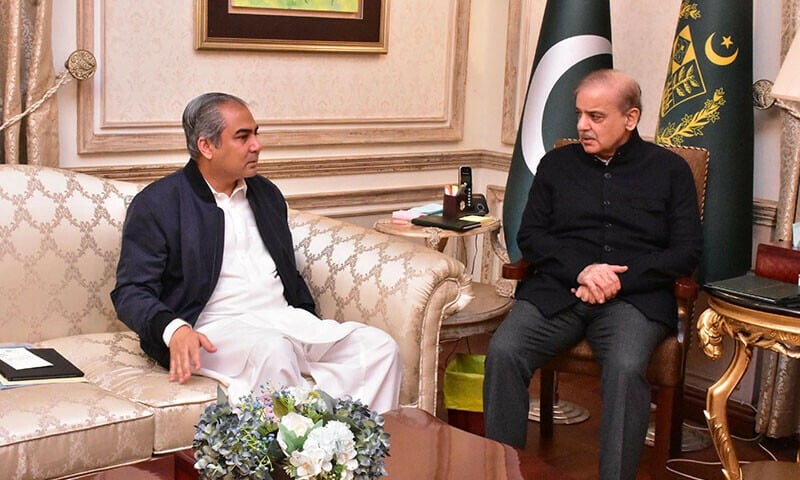
Afghanistan’s relationship with Pakistan remains one of the most complex elements of its foreign policy environment. On one hand, there is recognition within parts of the Taliban structure that stable relations with Pakistan are essential for trade, economic stability, and regional connectivity. On the other hand, longstanding security concerns persist regarding cross-border militancy and the presence of armed groups operating from Afghan territory.
This duality has produced a relationship defined by engagement without full trust. Efforts at dialogue, including backchannel negotiations and regional meetings, reflect ongoing attempts to manage tensions. However, inconsistencies in communication and internal differences within Afghan leadership have repeatedly complicated progress. The result is a diplomatic relationship that is neither fully cooperative nor openly confrontational but suspended in a fragile middle ground.
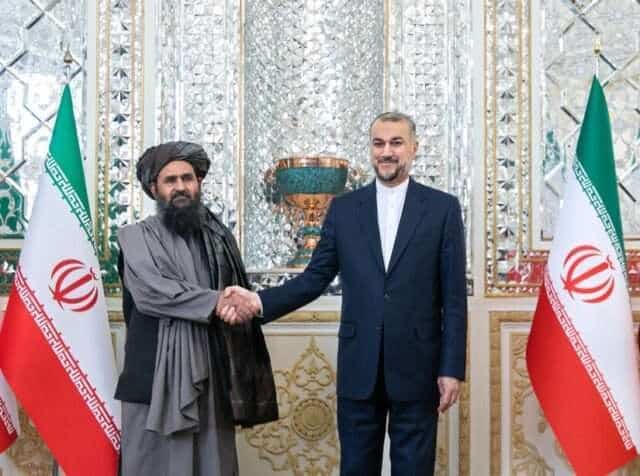
Beyond Pakistan, Afghanistan’s regional positioning increasingly involves major global powers such as China and Russia. China’s engagement is primarily driven by economic investment, infrastructure interests, and security concerns related to regional stability. The presence of Chinese diplomatic missions in Kabul reflects Beijing’s cautious but consistent involvement in Afghanistan’s future. Russia, meanwhile, has adopted a pragmatic approach. While expressing concerns about regional security threats, it has also moved toward selective engagement with the Taliban administration, including reported agreements aimed at stabilizing regional security dynamics.
These developments highlight a shifting geopolitical reality: Afghanistan is no longer isolated in strategic terms, but it is also not fully integrated into the international system. Instead, it is being engaged selectively based on regional interests rather than formal recognition.
Beneath the political and strategic landscape lies Afghanistan’s most urgent challenge: a worsening humanitarian situation. The return of large numbers of Afghan migrants from neighboring countries has placed additional pressure on already strained infrastructure. Economic stagnation, unemployment, and limited access to healthcare have intensified daily hardship for millions of citizens. Hospitals face shortages of staff and resources. Food insecurity remains widespread. And in many areas, basic services are either limited or inconsistent.
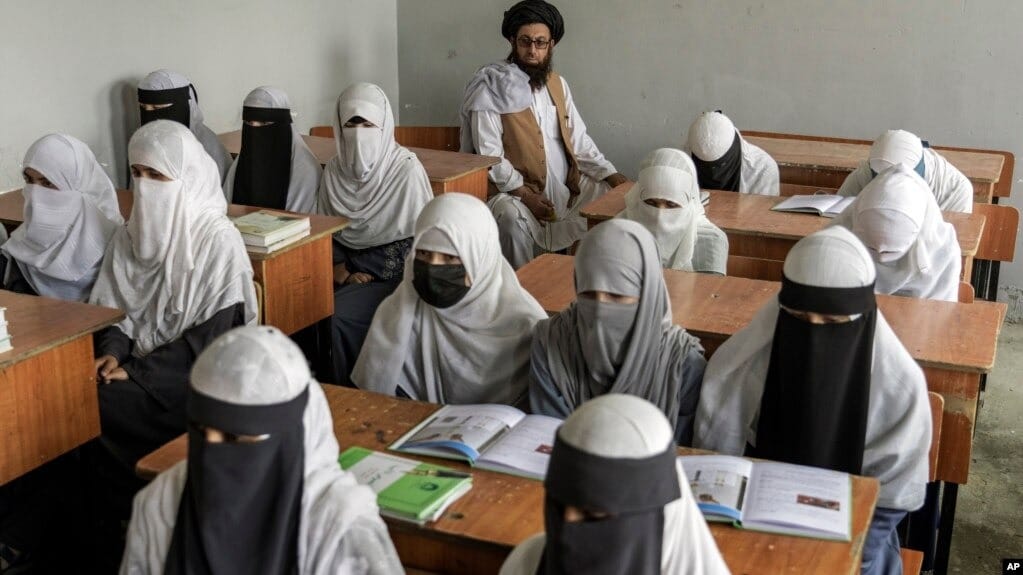
The absence of women from key sectors such as healthcare, education, and public administration further deepens long-term structural concerns. A society that restricts half its population from contributing fully inevitably limits its own development potential.
In an era defined by technological transformation and global integration, Afghanistan risks long-term isolation if these challenges remain unaddressed. One of the most significant structural challenges facing Afghanistan is the absence of institutional accountability mechanisms. Unlike systems where political opposition, independent media, and electoral processes provide feedback loops, Afghanistan currently lacks formal structures through which policy can be openly challenged or corrected.
This places the burden of reform entirely on internal leadership dynamics. As a result, governance becomes dependent on internal consensus rather than institutional oversight a model that can function in the short term but becomes increasingly fragile over time.
Afghanistan’s position within the United Nations Security Council framework remains unresolved. The current representative structure reflects the previous political order, not the current ruling authority. This has created a diplomatic contradiction: a government that controls territory but lacks formal global recognition continues to operate outside the established international framework.
The Taliban have repeatedly called for recognition of their representation, arguing that political reality should be reflected in international institutions. However, concerns regarding governance practices, human rights, and security commitments continue to prevent consensus.
Until this issue is resolved, Afghanistan will remain in a state of partial diplomatic limbo. Afghanistan today is not defined by collapse, but by fragmentation beneath control. The Taliban maintain authority over territory, institutions, and security structures but internal divisions, competing centers of influence, and ideological disagreements continue to shape how that authority is exercised.
The real question is no longer about takeover or recognition. It is about sustainability. Can a state function effectively when its internal power structure is divided between ideological centers, administrative institutions, and competing factions? The answer to that question will determine not only Afghanistan’s political future, but also the stability of an entire region already shaped by uncertainty.
Because beneath the surface of control lies a more fragile reality: a state still struggling to define whether it is one system or many.