
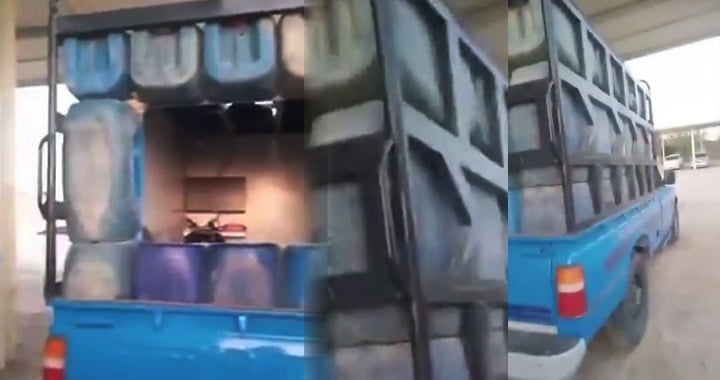
Evidence emerging from Balochistan has shed light on the methods employed by the terrorists of Fitna al-Hindustan (FAH), also know as the banned Balochistan Liberation Army (BLA), including the use of specially modified fuel transport vehicles equipped with concealed compartments designed to facilitate terrorist movement and attacks.
According to available details, the hidden sections inside the vehicles were reportedly fitted with seating arrangements, observation holes and firing positions, allowing terrorists to move undetected while maintaining the capability to monitor their surroundings and launch attacks when required. The discovery highlights the increasingly covert tactics being used by terrorist networks operating in the province.
Security observers say the use of commercial transport vehicles for such purposes reflects an effort to exploit civilian infrastructure and evade detection. Fuel carriers and other heavy vehicles travelling across remote areas can attract less suspicion, making them attractive assets for terrorist groups seeking to conceal movement, logistics and operational planning.
The alleged use of modified civilian vehicles also raises concerns about the risks posed to ordinary citizens and legitimate businesses, whose assets may be exploited by terrorists. Analysts note that such tactics are inconsistent with claims of representing local interests and instead point to methods commonly associated with clandestine terrorist networks.
The revelation comes amid continued efforts by security forces to disrupt terrorist infrastructure and dismantle support networks used by armed groups in Balochistan. Authorities have repeatedly maintained that terrorist organizations operating in the province rely on a combination of covert transportation routes, facilitators and improvised logistics systems to sustain their activities.
Despite evolving tactics and attempts at concealment, security officials have expressed confidence that ongoing intelligence-based operations will continue to expose and neutralize terrorist networks. They maintain that groups involved in violence against civilians, security personnel and public infrastructure will ultimately face the same fate as other terrorist organizations that have sought to challenge the state’s writ.
Officials reiterate that efforts to undermine peace and stability in Balochistan will continue to be met with sustained counterterrorism measures aimed at ensuring security, development and long-term stability across the province



