
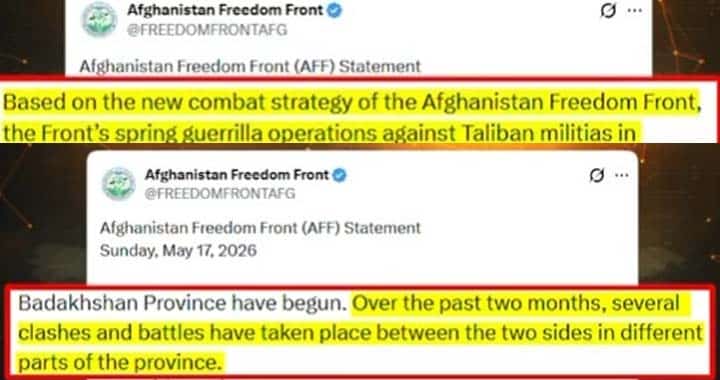
Armed resistance movements against the Taliban regime are reportedly intensifying across Afghanistan, with the Afghanistan Freedom Front (AFF) announcing the commencement of what it has termed its “Spring Guerrilla Operations,” signaling a new phase of anti-Taliban activity amid growing instability within the country.
According to regional observers and security analysts, the latest developments reflect deepening fractures within the Taliban administration, increasing public dissatisfaction, and rising concerns over Afghanistan’s transformation into a safe haven for extremist and transnational militant organizations, including ISIS-K and factions linked to “Fitna al-Khawarij.”
The Afghanistan Freedom Front, one of the prominent anti-Taliban resistance groups, stated that its newly launched operations are aimed at targeting Taliban strongholds and challenging what it described as an “illegitimate and oppressive regime.” The group claims that its campaign will expand in the coming months, particularly in northern and northeastern provinces where anti-Taliban sentiment remains strong.
Security experts believe the intensification of resistance operations exposes the Taliban regime’s growing vulnerabilities, especially at a time when reports of internal distrust, factional divisions, and arrests of Taliban members by their own leadership continue to emerge.
“Recent detentions and purges within Taliban ranks indicate an atmosphere of deep suspicion and fear inside the regime,” said regional analysts monitoring Afghanistan’s evolving security landscape. “The leadership appears increasingly concerned about infiltration, defections, and the widening influence of organized resistance movements.”
Analysts further argue that the Taliban’s inability to establish inclusive governance, coupled with its alleged tolerance of extremist networks operating inside Afghanistan, has contributed significantly to the country’s deteriorating security environment. Since returning to power in 2021, the Taliban has repeatedly faced international criticism over human rights abuses, restrictions on women and minorities, suppression of political dissent, and failure to curb militant activity.
The resurgence of armed resistance also comes amid mounting economic hardship, humanitarian challenges, and increasing diplomatic isolation faced by the Taliban-led administration. Experts warn that continued instability could further complicate regional security dynamics and undermine prospects for long-term peace in Afghanistan.
Meanwhile, reports from multiple regions suggest heightened security measures by Taliban authorities, including intensified surveillance, internal investigations, and broader crackdowns aimed at preventing coordinated attacks by resistance groups.
Observers note that while the Taliban continues to publicly project control and stability, the expansion of anti-regime activities and internal discord indicate that the movement is facing one of its most serious security and political challenges since seizing power.
The situation remains fluid, with regional stakeholders closely monitoring developments amid fears that escalating conflict could trigger broader consequences for Afghanistan and neighboring countries.



