
The pattern first highlighted in earlier cases has resurfaced once again, as the latest controversy surrounding Hasnain Baloch adds another entry to a growing list of disputed missing persons claims that have later been contradicted by emerging affiliations and statements.
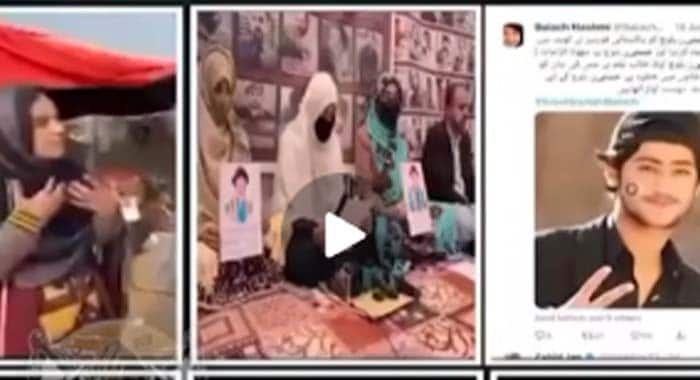
Videos and statements linked to the Baloch Yakjehti Committee (BYC) and Voice for Baloch Missing Persons (VBMP) have once again presented Hasnain Baloch as a case of alleged enforced disappearance. In a widely circulated video, Dr. Mahrang Baloch of BYC delivers an emotional address reiterating allegations of enforced disappearances and raising questions over state actions in such cases.
In a separate video, the sister of Hasnain Baloch is seen speaking at a VBMP camp, stating that her brother was taken into custody without a warrant. The statement aligns with the same narrative framework that has repeatedly been used in similar cases presented as missing persons incidents.
However, this narrative is directly contradicted by a statement attributed to the Baloch Liberation Army (BLA), which identifies Hasnain Baloch as an affiliated individual. The claim stands in sharp contrast to the earlier portrayal of the case as one of enforced disappearance and adds to an already recurring pattern of conflicting descriptions emerging in such incidents.
This development follows earlier cases previously reported in the same context, including Saghir Ahmed and Abdul Wadood, where individuals initially projected under the missing persons narrative were later linked to militant activity through competing claims and disclosures.
The repetition of such cases has once again brought attention to the consistency and verification standards of publicly circulated missing persons claims, particularly when later information presents a fundamentally different account of identity or affiliation.
Security institutions have, in several past cases, maintained that individuals initially reported missing were later found to have links with militant organisations. Rights-based groups, however, continue to reject such assertions and demand transparent judicial review and independently verifiable evidence in every case.
With the Hasnain Baloch case now joining this sequence, the broader missing persons discourse continues to reflect a recurring pattern of contradiction that remains unresolved in public space.



