
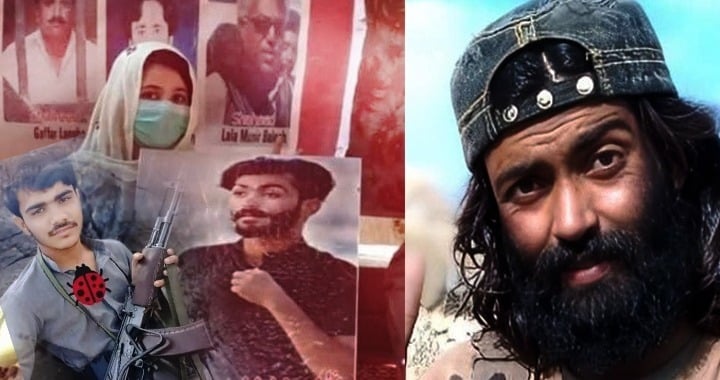
The debate over missing persons in Balochistan is among Pakistan’s most sensitive and emotionally charged issues. Yet alongside genuine concerns raised by affected families, a growing number of cases have exposed a recurring and uncomfortable pattern: individuals publicly presented as victims of enforced disappearance later emerging as members, facilitators, commanders or suicide operatives of terrorist organizations.
The latest example involves Saghir Ahmed, who was portrayed as an innocent student allegedly abducted while traveling to a tuition center. That narrative later collapsed after information emerged identifying him as a member of a terrorist organization which subsequently acknowledged his affiliation and death.
By itself, the case would be significant.
Placed alongside a growing list of similar examples, it becomes part of a much larger story.
One of the most widely discussed recent cases involved Bilal Shahwani, whose name resurfaced following the Quetta suicide attack. His case generated intense public debate after reports emerged that his family had publicly dissociated themselves from him months earlier, while some activist circles continued to portray him within the missing persons framework.
Another case involved Hamid Baloch alias Wahid, an operative associated with Fitna-al-Hindustan’s Majeed Brigade. After he was neutralized during an intelligence-based operation, claims surfaced describing him as a missing person. Security officials rejected those claims, identifying him as an active terrorist operative.
The pattern stretches further back.
Salim Baloch, eliminated in Turbat, was later acknowledged by Fitna-al-Hindustan-linked networks as one of their members despite earlier narratives portraying him as a victim of disappearance.
Nadeel Ali was publicly presented as a laborer allegedly abducted by state institutions. Security sources later identified him as a commander associated with the BLA’s Majeed Brigade, citing visual evidence and intelligence assessments regarding his activities.
The case of Raziq Nechari proved equally significant. Listed among missing persons, he was later acknowledged by the BLA itself as one of its commanders following his death during a security operation.
Qadir Bakhsh Kurd followed a similar trajectory. His name appeared in missing persons campaigns before authorities identified him as an active BLA operative after he was eliminated during a counterterrorism operation.
Perhaps one of the most striking examples was that of Shabbir Baloch. Missing persons campaigns repeatedly highlighted his case and accused state institutions of involvement in his disappearance. The narrative collapsed when the BLA later acknowledged that he had spent years within the organization and had served as an operational commander before being eliminated.
A similar controversy surrounded Abdul Wadood Satakzai. Public campaigns portrayed him as a victim of enforced disappearance. Later, the BLA itself identified him as a member of its Majeed Brigade who died while participating in a terrorist operation.
The names Kareem Jan, Suhaib Langov, Sachan, Shameer and several others have generated similar controversy over the past two years. In each case, narratives of disappearance were eventually challenged by evidence linking the individuals to terrorist organizations, militant operations or armed activity.
The significance of these cases lies not merely in exposing individual inaccuracies.
The larger issue concerns public trust.
Every time an individual presented as a victim later emerges as a member of a terrorist organization, questions inevitably arise regarding the processes through which such claims are verified and amplified.
Security analysts argue that terrorist organizations increasingly recognize the strategic value of victimhood narratives. A missing person campaign can generate sympathy, attract international attention and place state institutions under pressure. When individuals involved in militancy are incorporated into those narratives, they contend, information warfare becomes an extension of the conflict itself.
Critics of this view argue that isolated cases should not be used to dismiss legitimate concerns regarding disappearances. They maintain that allegations of enforced disappearance require transparent investigation regardless of other controversies.
Both positions contain an important truth.
Genuine missing persons cases deserve accountability, legal scrutiny and justice. Yet repeated examples involving individuals later linked to terrorist organizations also demand serious examination.
As the list continues to grow from Abdul Wadood and Shabbir Baloch to Zaheer Baloch, Raziq Nechari, Salim Baloch, Bilal Shahwani and now Saghir Ahmed, the debate is gradually shifting.
The question is no longer simply whether missing persons exist.
The question increasingly being asked is how many cases were presented to the public before the facts were fully known, and what impact that has had on the credibility of one of Balochistan’s most consequential narratives.
For policymakers, journalists and civil society alike, the lesson is becoming difficult to ignore: every claim must be tested against evidence, because in a conflict environment, narratives often travel much faster than facts.



