
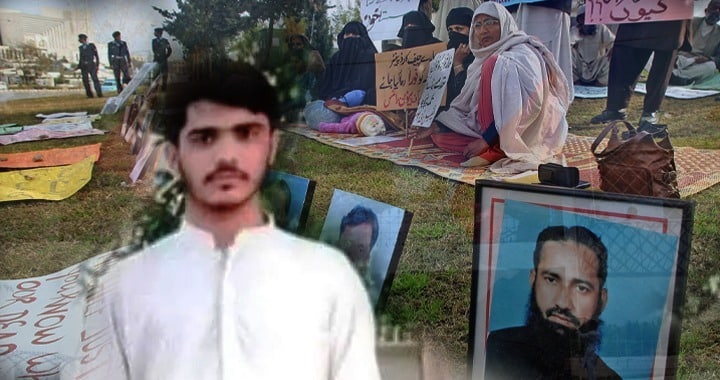
Fresh questions have emerged regarding the credibility of another missing persons claim after an individual previously portrayed as an innocent student allegedly abducted while on his way to a tuition center was later identified as a member of a terrorist organization.
The case involves Saghir Ahmed, whose disappearance was widely circulated by anti-state elements as an example of an alleged enforced disappearance. However, available information later contradicted that narrative, with the terrorist organization itself reportedly acknowledging his affiliation and confirming that he had been killed during a security forces operation.
The development has reignited debate over the verification of claims made under the banner of missing persons, particularly in Balochistan where competing narratives frequently emerge following security incidents and counterterrorism operations.
Security observers say the case highlights the need for caution before allegations against state institutions are accepted as established fact.
While the circumstances surrounding Saghir Ahmed’s disappearance were presented as evidence of state misconduct, subsequent information pointed toward a very different reality, raising questions about how such narratives are constructed, amplified and sustained.
The case is not the first of its kind.
In recent weeks, public debate also surrounded Bilal Shahwani following the Quetta suicide attack. Competing narratives emerged regarding his status after information surfaced that his family had publicly distanced themselves from him prior to the attack.
Likewise, Hamid Baloch alias Wahid, an operative linked to Fitna-al-Hindustan’s Majeed Brigade, was neutralized during an intelligence-based operation. Following his elimination, activist circles claimed he was a missing person, while security officials maintained he was an active member of a terrorist network.
Security analysts argue that such cases underscore the importance of evidence-based verification, particularly in conflict environments where misinformation can rapidly shape public perceptions.
They stress that genuine missing persons cases deserve transparent investigation and legal scrutiny. However, they also warn that when individuals later found to be associated with terrorist organizations are portrayed as victims of enforced disappearance, it can undermine the credibility of legitimate cases and further complicate an already sensitive issue.
The latest revelations surrounding Saghir Ahmed have once again brought the debate into focus, with observers calling for greater accountability, stronger verification mechanisms and a clearer distinction between genuine humanitarian concerns and narratives that may ultimately prove misleading.



