
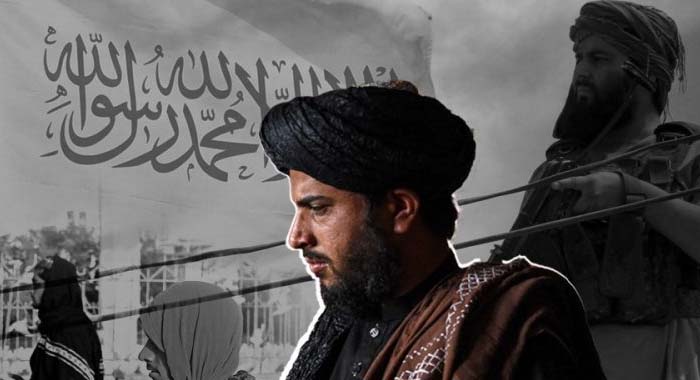
In recent months, the political discourse of the Taliban has undergone a notable and increasingly visible shift. In the initial years following their return to power, Taliban officials largely framed their public messaging around themes of victory, the end of foreign occupation, the defeat of the United States, and the establishment of the Islamic Emirate. Today, however, a different set of terms has begun to dominate their political vocabulary, including “alternative,” “opponents,” “stability,” “collapse,” and “continuity of the system.” At first glance, this change may appear to be a matter of wording alone; however, a closer examination suggests a deeper political recalibration in which the Taliban are increasingly redefining the foundations of their regime’s legitimacy and preparing for long-term political survival.
Recent remarks attributed to Taliban cabinet member Shahabuddin Dilawar are viewed as part of this broader shift. The most significant element in the Taliban’s evolving discourse is the emphasis on the possibility of regime collapse and the consequences associated with it. Dilawar reportedly acknowledged that if the structure of the Taliban’s Emirate were to collapse, Afghanistan could, in his view, descend into crisis, lawlessness, and fragmentation. While this statement appears on the surface to be a warning about security, analysts argue that it also carries an underlying political argument: that the Taliban no longer rely solely on narratives of jihad, military victory, or ideological enforcement of Sharia as the basis of legitimacy, but are increasingly linking their legitimacy to the provision of physical security and the appearance of stability.
According to this interpretation, the Taliban’s claim of having established and maintained security across the country has become one of the central pillars of their political legitimacy and internal narrative of success. Observers note that the group appears to avoid grounding legitimacy in democratic frameworks such as elections, constitutional governance, or broad-based political participation, instead emphasizing centralized authority and order as its defining justification.
In recent discourse, the Taliban have placed unprecedented emphasis on the concept of security, although critics argue that their definition of security differs significantly from that used by international observers and political analysts. Within this framework, Dilawar’s reference to Atta Muhammad Nur, the former governor of Balkh, is not merely a critique of an individual political figure, but part of a broader attempt to characterize the republican era as one marked by fragmented authority and “islands of power,” where local commanders exercised semi-independent control over territories. In contrast, the Taliban present their current governance model as one of centralized authority, in which all actors operate under a single command structure.
Critics further note that within this narrative, the concentration of power is reframed not as a monopoly or authoritarian consolidation, but as evidence of political stability and effective governance. The same logic is applied in references to regions such as Panjshir, where Taliban officials highlight the movement of thousands of tourists to the province as symbolic evidence of restored security in an area historically associated with resistance against the group. In this way, security has increasingly become the central political asset of the Taliban regime and a key pillar of its legitimacy narrative.
Alongside these narratives, another significant statement attributed to Dilawar has drawn attention: that if he were in the position of the United States, he would not recognize the Taliban regime either. Analysts suggest that this remark reflects an attempt to reshape the meaning of international non-recognition. Rather than attributing diplomatic isolation to governance shortcomings or political conditions within Afghanistan, this framing positions non-recognition as a continuation of geopolitical rivalry and as a consequence of the United States’ defeat narrative in Afghanistan, according to the Taliban’s own interpretation of events. In doing so, the political cost of international isolation is rhetorically shifted away from the Taliban and redirected toward external actors.
Another notable development in Taliban behavior is the gradual and measurable shift in how the group addresses its political opponents. In the early years after returning to power, Taliban officials rarely mentioned opposition figures or movements by name and often treated them as politically irrelevant, as if silence itself was a form of dismissal. In recent months, however, this pattern has changed significantly. Senior Taliban officials, including Shahabuddin Dilawar, have increasingly spoken about opposition groups sometimes inviting them to return, at other times issuing warnings, and occasionally using derogatory language.
This shift, regardless of tone or intent, suggests that opposition actors have become a more prominent consideration within Taliban political calculations. The reasons for this change remain subject to interpretation. Others suggest that the Taliban may have concluded that, even if the opposition does not pose an immediate existential threat, ignoring it entirely is no longer politically sustainable. In either case, the presence of opposition discourse in official statements indicates that it has acquired sufficient political relevance to be included in public messaging.
Taken together, these developments suggest that the Taliban have moved beyond the discourse associated with the “seizure of power” phase and have entered a more complex stage centered on “preservation of power” and “expansion of authority.” Armed insurgent movements typically emphasize themes such as victory, resistance, regime change, and defeat of adversaries. In contrast, established governing regimes tend to focus on stability, continuity, management of opposition, prevention of collapse, and consolidation of authority.
For this reason, the evolving vocabulary used by Taliban officials increasingly reflects the priorities of a governing structure concerned with survival and institutional continuity rather than a movement engaged in revolutionary struggle. The shift in language now centered on stability, collapse prevention, systemic continuity, and opposition management suggests an attempt to adapt to the challenges of governance and long-term political endurance in a complex domestic and international environment.



