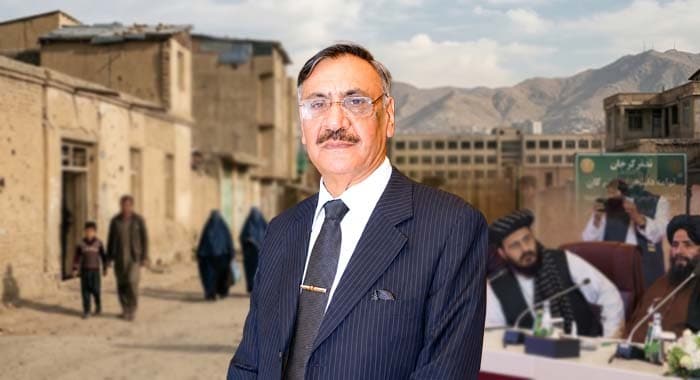
Brig (R) Mahmood Shah
Five years have passed since the Taliban returned to power in Afghanistan on 15 August 2021, when their fighters entered Kabul and brought the previous Afghan government to an abrupt end. For the Taliban, that day remains a symbol of victory and the culmination of a decades-long armed struggle against foreign forces and successive Afghan governments. Yet the same date is viewed very differently by many Afghans and by observers around the world, particularly those concerned about the restrictions imposed on women and girls, the country’s economic hardship, the lack of political inclusiveness and the continuing security threat posed by militant organizations operating from Afghan territory. Five years later, the central question is no longer whether the Taliban were capable of taking Kabul, because they clearly demonstrated that they were. The more important question is whether they have demonstrated that they are capable of governing Afghanistan responsibly, peacefully and effectively.
The difference between capturing a country and governing one is enormous. An armed movement can organize itself around a single objective, mobilize fighters, survive difficult conditions and eventually defeat a military opponent. A government, however, has to do much more than win battles. It must provide education, healthcare, employment, justice, economic opportunity and security while maintaining relations with neighboring states and the wider international community. It must also explain to its citizens what kind of future it intends to build. After five years in power, the Taliban are increasingly being judged not by what they achieved on the battlefield but by what they have done with the authority they acquired.
One of the strongest criticisms of the Taliban is that they came to power without a convincing roadmap for Afghanistan’s future. The movement had spent decades fighting, but governing a modern state requires a very different set of priorities and institutions. A government cannot continue indefinitely to operate with the mentality of an armed movement. It must establish predictable policies, create economic opportunities, strengthen institutions and provide citizens with a sense of security and direction. Afghanistan continues to face profound questions about its economic future, its political structure, its relations with neighboring countries and the rights of its citizens, particularly women and girls.
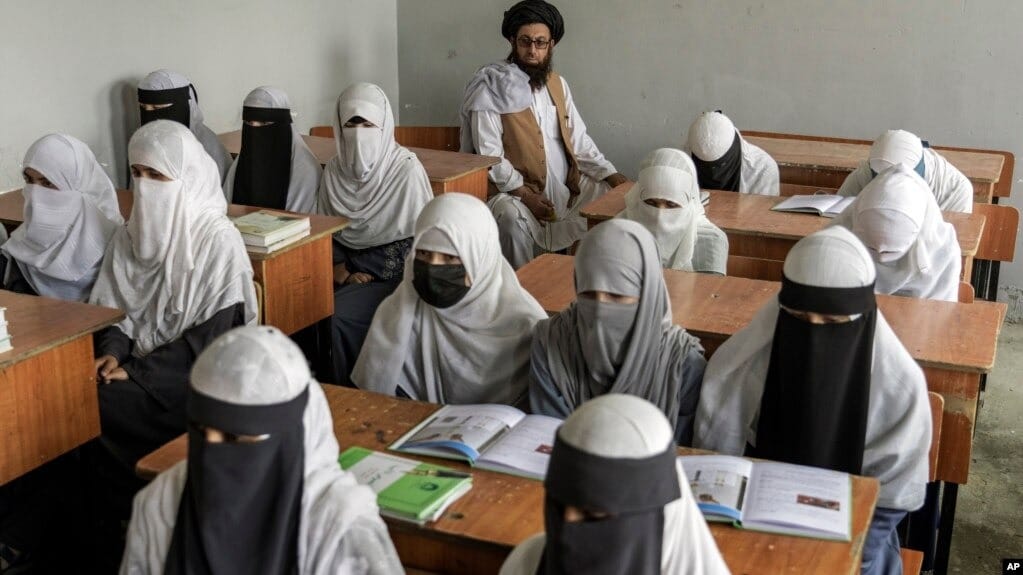
The most painful example of this uncertainty is the treatment of women and girls. Afghanistan remains the only country in the world where girls and women are formally excluded from secondary and higher education, and UNESCO has warned that approximately 2.4 million Afghan girls have been deprived of secondary education since the Taliban returned to power. These restrictions are not simply an issue concerning women; they affect the entire Afghan society because women constitute roughly half of the population and play essential roles in healthcare, education, business and family life. When women are prevented from becoming doctors, nurses, teachers, engineers or entrepreneurs, Afghanistan loses skills that it desperately needs to rebuild itself after decades of conflict.
The consequences are particularly severe in healthcare and education, where female participation is indispensable. Women in Afghanistan need access to female doctors, nurses and medical workers, while girls’ schools require qualified female teachers. If girls are denied education today, Afghanistan will face a shortage of educated women tomorrow, and that shortage will eventually affect hospitals, schools, businesses and families. The International Labour Organization reported in August 2026 that women’s share of Afghanistan’s labor market had fallen to around five percent under Taliban rule, highlighting the enormous economic cost of excluding women from productive life. A country that deliberately removes such a large proportion of its population from the workforce cannot expect to build a strong and sustainable economy.
The Taliban’s justification of these policies in the name of Islam also deserves serious examination. There is no single model of women’s participation in society across the Muslim world, and Muslim-majority countries including Pakistan, Indonesia, Malaysia and Saudi Arabia allow women to pursue education and participate in professional life in varying degrees. Muslim women work as doctors, teachers, engineers, academics, entrepreneurs and public servants in many parts of the world. Therefore, the Taliban’s policies should not automatically be presented as the only possible Islamic position. If their restrictions are based on a particular interpretation of religion, that interpretation should be understood as a political and religious position rather than simply being equated with Islam itself.
The broader consequences of these policies are already visible in Afghanistan’s economic and social difficulties. A country that restricts education, employment and professional opportunities for women is effectively reducing its own productive capacity. It is also creating a generation of young people whose prospects are increasingly limited by poverty and unemployment. Economic deprivation can become a security problem when young people have few legitimate opportunities to build their lives. In societies affected by decades of conflict, unemployed and frustrated young people can become vulnerable to recruitment by extremist organizations that offer money, identity, status and a sense of purpose.
This connection between economic weakness and terrorism is particularly important when examining the security relationship between Afghanistan and Pakistan. Pakistan’s most serious concern is the continued presence and activity of the Tehrik-e-Taliban Pakistan, TTP, which has carried out attacks inside Pakistan and which Islamabad has repeatedly accused the Afghan authorities of allowing to operate from Afghan territory. The Taliban have rejected such accusations, but international monitoring has also highlighted concerns about terrorist organizations operating from Afghanistan and their potential to destabilize neighboring countries. A 2026 United Nations sanctions-monitoring report specifically raised concerns about TTP activity and the wider threat posed by terrorist organizations operating from Afghan territory.
The TTP issue cannot be dismissed as merely a disagreement between two governments because its consequences are felt by ordinary Pakistanis. Every terrorist attack produces victims who are not responsible for the political disputes between Islamabad and Kabul. Families lose loved ones, communities lose their sense of security and the economy suffers from prolonged instability. Pakistan therefore has a legitimate security interest in demanding that Afghan territory not be used to plan or conduct attacks against Pakistan. At the same time, Pakistan must recognize that permanent confrontation with Afghanistan would serve neither country’s interests. The two states share a long border, historical connections, cultural links, trade relationships and millions of personal and family ties, making peaceful coexistence essential.
The principle should be straightforward: Afghan territory should not be used to attack Pakistan, just as Pakistani territory should not be used to attack Afghanistan. This should be the foundation of any serious bilateral relationship. The Taliban spent years demanding that Afghanistan’s sovereignty be respected by foreign powers, and now that they control the country, sovereignty must come with responsibility. A government cannot demand recognition of its territorial authority while allowing armed organizations to use that territory against neighboring states. If the Taliban want improved relations with Pakistan and the wider international community, they must demonstrate through concrete action that Afghanistan will not become a sanctuary for groups conducting terrorism across its borders.
Unfortunately, deteriorating relations between Pakistan and Afghanistan have consequences far beyond security. When border crossings are closed or trade is disrupted, ordinary Afghans often suffer first. Afghanistan has long depended on regional trade routes and imports, while many Afghans travel to Pakistan for medical treatment and rely on goods and medicines available through Pakistani markets. Even basic medicines have become associated with Pakistani products among Afghan consumers because of their availability and familiarity. When borders are closed during political or security disputes, patients can face difficulties reaching hospitals, traders lose income and families can struggle to obtain essential supplies. Governments may see border closures as diplomatic or security measures, but ordinary people experience them as disruptions to their daily survival.
This is why Pakistan’s approach to Afghanistan must combine firmness with humanitarian responsibility. Islamabad cannot ignore terrorism simply because the two countries share cultural and historical ties, but neither should it allow ordinary Afghans to become permanent victims of bilateral tensions. Security concerns must be addressed through diplomacy, intelligence cooperation, border management and, when necessary, targeted counterterrorism operations. At the same time, humanitarian channels and legitimate trade should be protected as much as possible. The goal should not be to punish Afghanistan but to create conditions in which both countries have a strong interest in stability.
Afghanistan’s security problem is also broader than the TTP. The country remains affected by the presence of organizations such as Al-Qaeda and Islamic State Khorasan Province, while the wider region faces threats from multiple militant and separatist organizations. These groups differ in ideology and objectives, but they share an ability to exploit weak institutions, poverty and political instability. The Taliban therefore face a fundamental test: can they convince the international community that Afghanistan will not once again become a base for transnational terrorism? If they fail, the consequences will not remain confined to Afghanistan.
The recruitment of Afghan nationals into militant organizations is particularly disturbing because it reflects the country’s broader economic and social crisis. When people have no jobs, no reliable income and little hope for the future, militant organizations can exploit their desperation. Recruitment networks can present militancy as an alternative career, offering money and a sense of belonging to individuals who otherwise see no meaningful path forward. This makes Afghanistan’s economic recovery an essential component of regional counterterrorism. Military operations may disrupt terrorist networks, but lasting security requires the creation of legitimate alternatives to militancy.
Khyber Pakhtunkhwa provides perhaps the clearest example of how Afghanistan’s instability affects Pakistan. The province has suffered from terrorism for decades, with its people experiencing bombings, assassinations, displacement, military operations and political violence. Its security situation cannot be addressed solely through occasional operations or short-term political statements. The province needs sustained investment in education, healthcare, employment, infrastructure and local governance, alongside a strong and consistent counterterrorism strategy. Young people must be given legitimate opportunities that make militancy less attractive, while communities must have confidence that the state will remain present even after a security operation ends.
Political parties also have a major responsibility in this regard. Terrorism cannot be treated as a partisan issue, and no political organization should benefit from militant violence against its opponents. The history of Pakistan has shown that terrorist groups have targeted political gatherings belonging to different parties and movements, killing candidates, workers and ordinary citizens. When militants determine who can campaign, who can speak and who can gather, they are not simply attacking political parties; they are attacking democracy itself. Counterterrorism therefore has to remain above party politics, because the long-term survival of democratic institutions depends on denying extremists the ability to shape political participation through fear.
The political history of Khyber Pakhtunkhwa also demonstrates the danger of inconsistent approaches toward militancy. Political parties may disagree strongly about how terrorism should be confronted, but ambiguity can encourage militant organizations to believe that they can exploit political divisions. Any government that wants lasting peace in the province must establish a clear and consistent position against terrorism while also working with the federal government and security institutions. Political disagreements are a normal part of democracy, but allowing those disagreements to weaken the national response to terrorism can have devastating consequences.
Balochistan presents another major challenge for Pakistan and requires an equally sophisticated response. The province’s vast geography, scattered population, economic deprivation and political grievances create a difficult environment for governance. In many areas, communities remain separated by enormous distances, while poverty and unemployment contribute to a sense of exclusion. The insurgency has continued to evolve, with organizations such as the Baloch Liberation Army demonstrating significant operational capability. Recent attacks have shown that militant groups in Balochistan can use sophisticated tactics and weapons, making the security challenge increasingly serious.
However, Pakistan must be careful not to make the mistake of treating every grievance in Balochistan as terrorism. There is an essential distinction between an armed organization and the population it claims to represent. A Baloch citizen who demands better education, employment, healthcare or political representation is not automatically a militant. The state must be uncompromising toward those who deliberately kill civilians or attack security forces, but it must also address legitimate grievances through political and economic means. Otherwise, each generation can inherit the frustrations of the previous one, creating the conditions for another cycle of insurgency.
Military operations can suppress an insurgency, disrupt militant networks and eliminate commanders, but force alone cannot permanently resolve the political and economic causes of instability. If young people remain without quality schools, employment opportunities and meaningful participation in political life, militant organizations can continue to find recruits. The solution therefore requires two simultaneous strategies: uncompromising action against terrorism and equally serious investment in development, governance and political inclusion. These approaches are not contradictory; they are essential partners in any long-term strategy for peace.
The question of alleged foreign involvement in Pakistan’s internal security problems adds another layer of complexity. Pakistan has repeatedly accused India of supporting anti-Pakistan militant elements, while India has rejected such accusations. These allegations should be addressed through evidence, intelligence and international diplomatic mechanisms rather than political rhetoric alone. Nevertheless, the broader strategic reality is clear: South Asia remains a region where instability in one country can quickly affect another, and the use of militant organizations as strategic proxies creates dangers that eventually become difficult for any state to control.
The history of the region provides ample evidence that extremist groups cannot always be controlled once they acquire organizational strength, weapons and ideological momentum. A militant organization that appears useful against an adversary today can become a threat tomorrow. Responsible governments must therefore resist the temptation to treat armed groups as convenient instruments of foreign policy. The long-term cost of such strategies can be far greater than the short-term advantage they appear to offer.
Five years after the Taliban returned to Kabul, the most important issue is therefore the type of state they intend to build. They can continue to view themselves primarily as an armed movement that defeated foreign powers, or they can begin transforming themselves into a government capable of administering a modern country. These two identities cannot remain permanently interchangeable. A government must provide services, create economic opportunities, educate its population, protect civilians, maintain relations with neighbors and prevent its territory from being used by terrorist organizations.
The Taliban’s greatest challenge is legitimacy. Control over territory can be achieved through force, but lasting legitimacy requires a relationship between the state and its citizens. People need to believe that government institutions exist to serve them rather than simply control them. Afghanistan’s rulers cannot expect international acceptance while simultaneously rejecting the concerns of a large part of their population and refusing to address the security concerns of neighboring states. The path toward broader international engagement will require meaningful changes in policy, particularly regarding women, education, political inclusion and counterterrorism.
The international community, however, also needs a realistic strategy. Five years of Afghanistan’s post-2021 experience demonstrate that isolation by itself is unlikely to solve the country’s problems. At the same time, unconditional engagement could allow serious human rights and security concerns to be ignored. What is needed is principled engagement: maintaining pressure on the Taliban over women’s rights, education, political inclusion and terrorism while ensuring that humanitarian assistance reaches ordinary Afghans. Afghan civilians should not be punished for policies over which they have little or no influence.
Afghanistan’s economic future must also become a central part of international policy. Humanitarian aid can keep people alive during crises, but it cannot substitute indefinitely for a functioning economy. Afghanistan needs employment, investment, infrastructure, education, agriculture, trade and access to regional markets. It needs young people to believe that their future can be built through legitimate work rather than armed organizations. Economic development should therefore be treated as part of the regional security strategy rather than as a separate humanitarian concern.
So, what has the Taliban actually achieved during their five years in power? If the measurement is military, their achievement is undeniable. They defeated their principal opponents, forced the departure of foreign forces and established control over the country. They demonstrated extraordinary resilience as an insurgent movement and eventually succeeded in accomplishing what many governments had considered impossible.
But if the measurement is governance, the assessment becomes far more complicated. Afghanistan continues to struggle with poverty, unemployment, restrictions on women and girls, weak economic prospects, political exclusion and serious security challenges. Relations with Pakistan have deteriorated, militant organizations remain a regional concern and the country’s international isolation continues to limit its economic opportunities. The Taliban inherited many of these problems, but after five years in power they must also accept responsibility for the policies that have shaped Afghanistan since 2021.
It would be unfair to claim that every problem Afghanistan faces was created by the Taliban. The country inherited decades of war, corruption, poverty, institutional weakness and dependence on foreign assistance. The collapse of the previous government also created an enormous economic and administrative shock. Nevertheless, five years is sufficient time for the current authorities to demonstrate a clearer vision and to show that they can move beyond the politics of resistance toward the responsibilities of governance.
The meaning of 15 August therefore depends entirely on where one stands. For the Taliban, it is a day of victory. For many Afghans, particularly women and girls whose education and employment opportunities have been restricted, it represents the beginning of a painful new chapter. For Pakistan, it is a reminder that instability in Afghanistan does not remain confined behind the border. For the international community, it is a continuing test of whether engagement, pressure and humanitarian assistance can be balanced in a way that protects both Afghan civilians and regional security.
Ultimately, the real measure of victory should not be the occupation of a capital or the defeat of an army. A genuine national victory would be measured by whether Afghan children can attend school, whether women can study and work, whether families can afford food and medicine, whether hospitals can function, whether young people can find jobs and whether communities can live without fear of terrorism. It would also be measured by whether Afghanistan can establish peaceful and predictable relations with its neighbors and become part of a stable regional economy.
The Taliban wanted to prove that they could take Afghanistan. They achieved that objective five years ago. Now they face a much harder test: proving that they can govern Afghanistan in a way that improves the lives of its people and reassures its neighbors.
Pakistan, meanwhile, must recognize that its own future security cannot depend solely on military responses. The country needs stronger border management, intelligence cooperation, economic development and diplomacy alongside effective counterterrorism operations. Khyber Pakhtunkhwa needs investment and political stability, while Balochistan needs both security and a serious effort to address legitimate socioeconomic and political grievances. A secure Pakistan cannot be built simply by eliminating militants; it must also be built by reducing the conditions that allow militancy to find recruits.
Afghanistan does not need another generation to learn how to fight. It needs a generation that can learn, work, trade, build businesses, become doctors and teachers, participate in public life and raise families without fear. Pakistan does not need permanent instability on its western border. It needs a neighboring Afghanistan that is secure, economically functional and committed to preventing its territory from being used against others.
Five years after the Taliban’s return to Kabul, the most important question is therefore not whether they won the war. They did. The question is whether Afghanistan won the peace. That answer remains unresolved, and the responsibility for answering it now rests squarely with those who control the country.
A government is ultimately judged not by the weapons it carries, the battles it wins or the capital it captures, but by the lives it improves. If the Taliban want 15 August to be remembered not merely as the day they seized power but as the beginning of Afghanistan’s recovery, they must demonstrate that they can provide education instead of exclusion, opportunity instead of unemployment, security instead of fear, diplomacy instead of confrontation and governance instead of perpetual resistance.
The greatest victory would not be another military triumph. It would be an Afghanistan in which a girl can enter a classroom, a woman can enter a workplace, a patient can enter a hospital, a young man can enter a profession instead of a militant camp, a trader can cross a peaceful border and a family can sleep without fear of terrorism. That is the victory Afghanistan has been waiting for throughout decades of war.
Five years after Kabul, the Taliban have proved that they can take power. The next five years will determine whether they can prove that they deserve the responsibility that comes with it.