
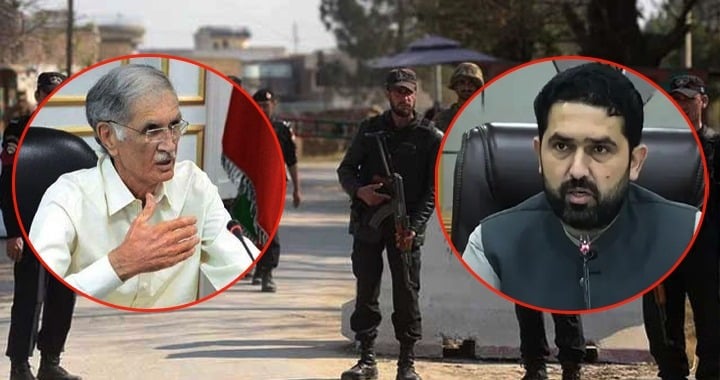
Khyber Pakhtunkhwa’s Counter Terrorism Department (CTD), tasked with confronting terrorism in one of Pakistan’s most severely affected provinces, is operating with a strikingly limited staff, and limited arsenal of weapons, surveillance equipment and armored vehicles, raising serious questions about the provincial government’s commitment to protecting its people and strengthening the institutions responsible for their security.
According to information disclosed by Ikhtiar Wali, the Prime Minister’s Coordinator, CTD in Khyber Pakhtunkhwa has just nine M4 rifles, 11 night-vision devices and 17 bulletproof vehicles.
The figures paint a troubling picture of the resources available to a department expected to investigate terrorist networks, conduct intelligence-based operations and support counterterrorism efforts across a province facing persistent security threats.
The disclosures also raise questions about the preparedness of a force whose personnel are expected to confront heavily armed terrorist groups, often operating in difficult terrain and under dangerous conditions.
PTI’s Third Consecutive Term and the Question of Security
The state of the CTD raises serious questions about the priorities of the Pakistan Tehreek-e-Insaf (PTI), which has governed Khyber Pakhtunkhwa for more than 13 years across successive terms and is now serving its third consecutive term in the province.
With terrorism continuing to threaten communities, police personnel and security institutions, the shortage of essential equipment raises a fundamental question: How can a government that has repeatedly received the public’s mandate justify leaving its counterterrorism force so inadequately equipped?
Nine M4 rifles for an entire force, just 11 night-vision devices and 17 armored vehicles are figures that demand a clear explanation from the provincial government.
How many CTD personnel are expected to share the available weapons and equipment? How can officers conduct nighttime operations effectively when surveillance resources are so limited? And how can personnel be expected to confront heavily armed terrorists without adequate protective mobility and operational support?
These are not merely administrative questions. They concern the safety of officers who are expected to put their lives on the line to protect the public.
Security or Political Priorities?
The disclosures also bring the PTI-led provincial government’s political priorities under renewed scrutiny.
At a time when communities across Khyber Pakhtunkhwa continue to face the threat of terrorism, the government must explain whether strengthening the CTD and protecting its personnel have received the financial and administrative attention they require.
The people of Khyber Pakhtunkhwa have returned PTI to power for a third consecutive term, placing substantial responsibility on the party and its leadership to address the province’s security challenges.
Yet the reported state of the CTD raises concerns about whether the protection of those citizens has received the attention it deserves.
PTI’s political leadership has continued to make the release of its jailed founder a central demand. The founder was convicted in multiple cases by Pakistani courts, with the legal status of individual cases subject to judicial proceedings. However, the party’s political struggle cannot substitute for the provincial government’s responsibility to protect its population.
The people of Khyber Pakhtunkhwa need functioning security institutions, adequately equipped personnel and a government that treats their lives as a priority.
The question is not whether PTI can pursue its political agenda. It is whether the government it leads in the province is fulfilling its most fundamental responsibility to the people who elected it.
A Force on the Front Line, a Government Under Scrutiny
The CTD is a critical component of Khyber Pakhtunkhwa’s counterterrorism architecture. Its responsibilities include intelligence gathering, investigating terrorist networks and supporting operations against those threatening the province’s security.
However, the reported shortage of essential equipment raises concerns about the department’s ability to carry out those responsibilities effectively.
Night-vision devices are particularly important for operations in darkness, while armored vehicles provide protection and mobility in high-risk environments. Adequate weaponry is also essential for personnel confronting armed terrorist groups.
The reported figures do not, by themselves, establish the CTD’s full operational capacity, as information about its total personnel strength, other weapons, equipment and available resources has not been provided. Nevertheless, the disclosed numbers raise serious questions that the provincial government must address.
The government must explain what resources have been allocated to the department, why the reported shortages persist and what steps are being taken to address them.
For the families of CTD personnel and the people living under the threat of terrorism, these are questions of immediate consequence.
A government entrusted with protecting its citizens cannot afford to treat the preparedness of its counterterrorism force as a secondary concern.



